Rosa canina
Apothecary Rose
Rosa gallica
L. Species


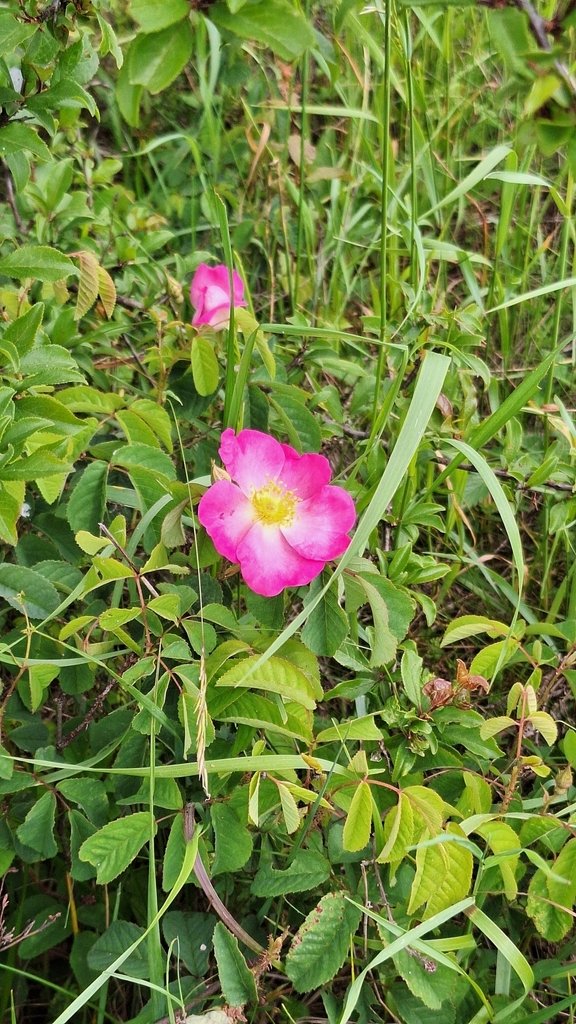

- Botanical name
- Rosa gallica
- Also known as
- Apothecary Rose, Cabbage Rose, French Rose, Hungarian Rose, Officinal Rose, Provence Rose, Red Rose, Red Rose (of Lancaster), Red Rose of Lancaster, Red-Rose-of-Lancaster
- Family
- Rosaceae
- Genus
- Rosa
- Flowering period
- June
- Height
- 80–120 cm
- Spread
- 100–150 cm
- Hardiness
- Fully hardy (RHS H6)
- Reference
- World Flora Online
How to grow Apothecary Rose
Full sun
Low to moderate once established
Fertile, well-drained; tolerates poorer soil than most roses
Neutral to slightly alkaline
Planting
An old shrub rose grown on its own roots, which suckers to form a low thicket. Plant it where that spreading habit is useful rather than a nuisance, and give it sun for the scent to develop.
Pruning
It flowers once, on wood made the previous year, so prune after flowering rather than in spring. Shorten the flowered shoots and take out old or weak stems at the base.
Propagation
Detach rooted suckers in autumn or winter — much the simplest method on an own-root plant.
Pests and diseases
Prone to mildew in dry soil and still air. Blackspot occurs but old gallicas generally shrug it off better than modern hybrid teas.
Value to wildlife
The single species and near-single forms are good for bees; the heavily double old cultivars much less so.
Notes
One flush only, in June, and no repeat. That is the trade for the scent and the hardiness, and it is worth being clear about before planting it as a border centrepiece.
This guidance was researched and written by GardenDecoded — see our editorial policy for how guides are checked and reviewed.
Other names for this plant
These names have all been used for Rosa gallica but are no longer the accepted name. You may still meet them on old labels, in books, or in nursery catalogues.
Rosa arvina
Rosa assimilis
Rosa atropurpurea
Rosa austriaca
Rosa austriaca f. calida
Rosa austriaca f. haplodonta
Rosa austriaca f. pannonica
Rosa austriaca f. pumila
Rosa austriaca unranked magnifica
Rosa austriaca unranked pygmaea
Rosa austriaca var. atropurpurea
Rosa austriaca var. calida
Rosa austriaca var. cordifolia
Rosa austriaca var. dearmata
Rosa austriaca var. delanata
Rosa austriaca var. elata
Rosa austriaca var. flaccida
Rosa austriaca var. fruticans
Rosa austriaca var. haplodonta
Rosa austriaca var. leiophylla
Rosa austriaca var. magnifica
Rosa austriaca var. officinalis
Rosa austriaca var. pumila
Rosa austriaca var. subglandulosa
Rosa belgica
Rosa centifolia var. provincialis
Rosa centifolia var. subnigra
Rosa centifolia var. tricolor
Rosa cordata
Rosa cordifolia
Rosa cordifolia f. parvifolia
Rosa cordifolia f. robustifolia
Rosa cordifolia var. robinifolia
Rosa crenatula
Rosa crenulata
Rosa czackiana
Rosa czakiana
Rosa elata
Rosa flectidenta
Rosa gallica f. acuta
Rosa gallica f. adenophora
Rosa gallica f. anacantha
Rosa gallica f. assimilis
Rosa gallica f. atropurpurea
Rosa gallica f. austriaca
Rosa gallica f. bestepensis
Rosa gallica f. clavata
Rosa gallica f. columnifera
Rosa gallica f. cordata
Rosa gallica f. delanata
Rosa gallica f. elata
Rosa gallica f. elata
Rosa gallica f. fejerdensis
Rosa gallica f. flaccida
Rosa gallica f. globulosa
Rosa gallica f. grandicalyx
Rosa gallica f. haplodonta
Rosa gallica f. hispida
Rosa gallica f. lagenoides
Rosa gallica f. latisepala
Others in Rosa
GardenDecoded is an educational gardening reference. Botanical data comes from World Flora Online and GBIF; growing guidance is our own. Always check a plant's toxicity and local invasiveness status before planting, and never eat or apply a plant based on this site alone.