Ribes nigrum
Cultivated Gooseberry
Ribes uva-crispa
L. Species


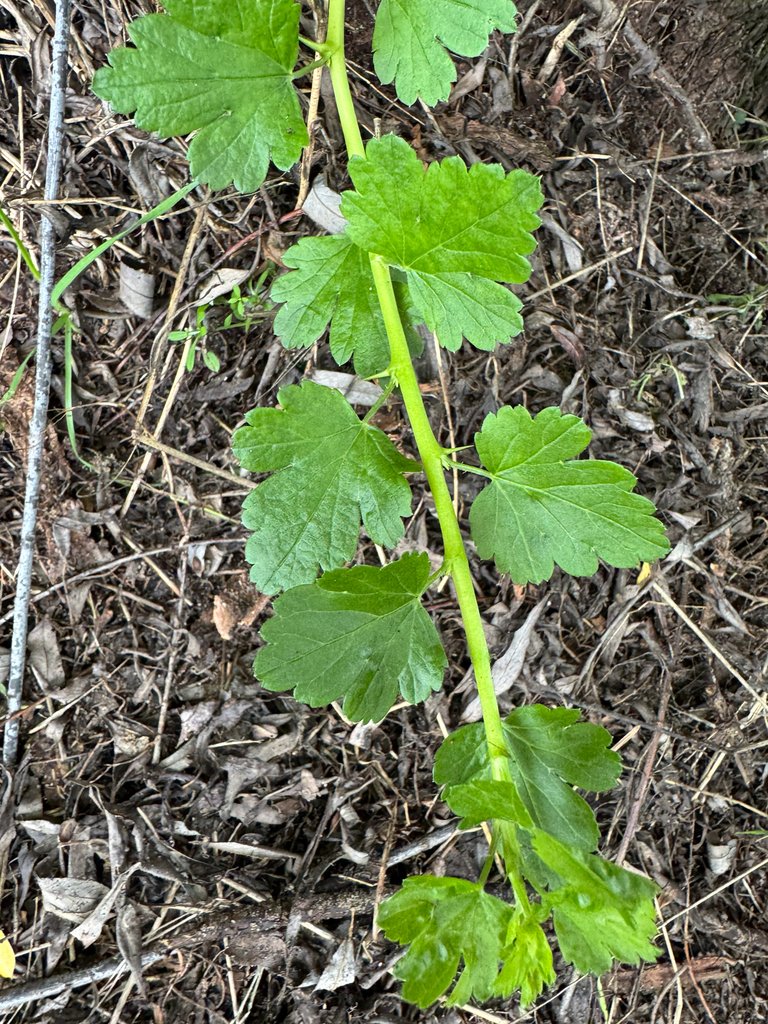


- Botanical name
- Ribes uva-crispa
- Also known as
- Common-Gooseberry, Cultivated Gooseberry, English Gooseberry, European Gooseberry, Garden Gooseberry, Gooseberry, Whitecurrant
- Family
- Grossulariaceae
- Genus
- Ribes
- Flowering period
- April to May
- Height
- 90–150 cm
- Spread
- 90–150 cm
- Hardiness
- Fully hardy (RHS H6)
- Reference
- World Flora Online
How to grow Cultivated Gooseberry
Full sun to partial shade
Moderate; water in dry spells as fruit swells
Fertile, well-drained; dislikes waterlogging
Slightly acid to neutral
Planting
Plant bare-root from late autumn to early spring, at the same depth it grew before — unlike blackcurrants, gooseberries are grown on a short clear leg. Space bushes 1.2-1.5 m apart. They also train well as cordons against a wall or fence, which makes picking a thorny plant much less unpleasant.
Pruning
Prune in winter to an open goblet shape with a clear stem, cutting main branch leaders back by about a quarter and shortening sideshoots to two or three buds. An open centre lets in air, reduces mildew and makes picking easier. A light summer shortening of new sideshoots in June or July also helps.
Propagation
Hardwood cuttings taken in autumn, with the lower buds rubbed off to maintain the clear leg. Rooting is slower and less certain than with blackcurrants.
Pests and diseases
Gooseberry sawfly is the major problem: larvae can strip a bush to bare stems within days in late spring, so check leaf undersides in the centre of the bush from May and pick them off. American gooseberry mildew coats shoots and fruit with grey-white felt, worse on congested bushes. Birds take the buds in winter.
Value to wildlife
Early spring flowers are worked by bees; the thorny structure gives small birds good nesting cover.
Notes
Thin the crop in late May or June and use the thinnings for cooking — the fruit left behind will size up properly for eating fresh.
This guidance was researched and written by GardenDecoded — see our editorial policy for how guides are checked and reviewed.
Other names for this plant
These names have all been used for Ribes uva-crispa but are no longer the accepted name. You may still meet them on old labels, in books, or in nursery catalogues.
Grossularia spinosa
Grossularia uva
Grossularia uva-crispa
Oxyacanthus uva-crispa
Ribes crispum
Ribes grossularia var. sylvestre
Ribes grossularia var. uva-crispa
Ribes spinosum var. glabrum
Ribes uva-crispa subsp. austroeuropaeum
Ribes uva-crispa subsp. reclinatum
Ribes uva-crispa var. sylvestre
Ribes uva-crispa var. sylvestris
Others in Ribes
GardenDecoded is an educational gardening reference. Botanical data comes from World Flora Online and GBIF; growing guidance is our own. Always check a plant's toxicity and local invasiveness status before planting, and never eat or apply a plant based on this site alone.