Prunus laurocerasus
Sloe Berry
Prunus spinosa
L. Species

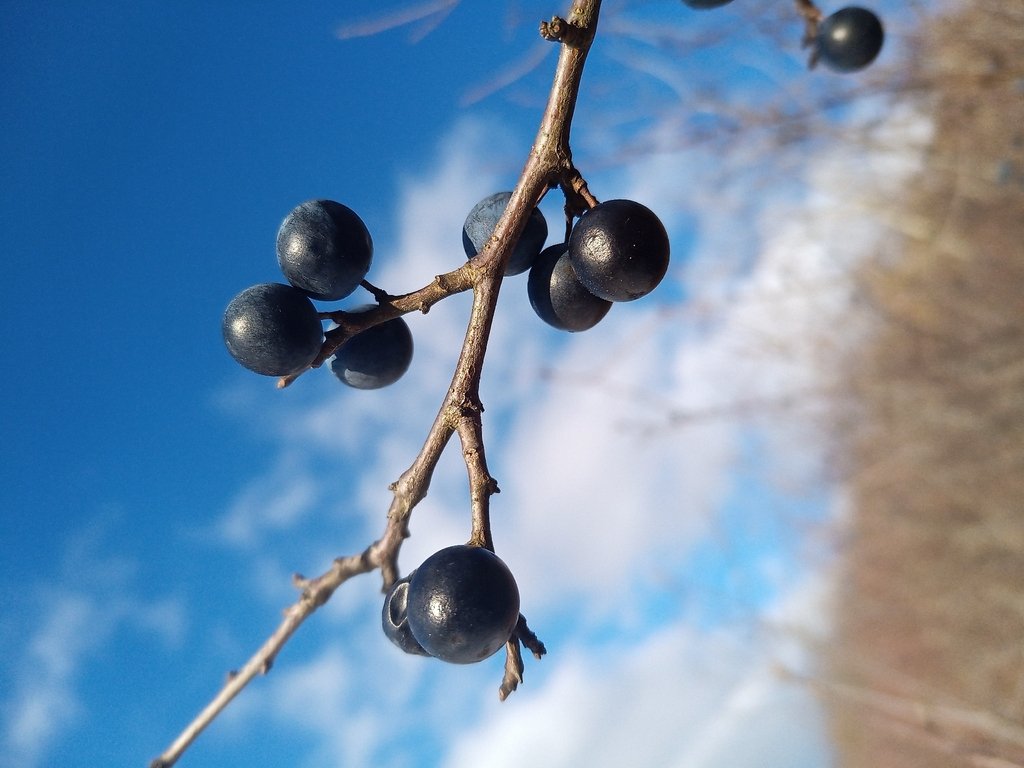


- Botanical name
- Prunus spinosa
- Also known as
- Blackthorn, Sloe, Sloe Berry, Sloe of Europe, Sloe, Blackthorn
- Family
- Rosaceae
- Genus
- Prunus
- Flowering period
- March to April
- Height
- 3–6 m
- Spread
- 3–4 m
- Hardiness
- Fully hardy (RHS H7)
- Reference
- World Flora Online
How to grow Sloe Berry
Full sun to light shade
Low once established; water only in the first two seasons
Most soils, including heavy clay; tolerates poor ground
Acid, neutral or alkaline
Planting
Plant bare-root whips between November and March, spaced about 30 cm apart for a hedge or 45 cm for a double staggered row. Firm in well and keep the base weed-free for the first two years. It suckers freely, so keep it away from lawns and borders you want to stay tidy.
Pruning
Trim hedges in winter once the berries have gone, or leave until late winter if you want the sloes. Cutting in spring or summer removes the flowering wood and the following autumn's crop. Older hedges respond well to laying or hard cutting back to a stump, which they regrow from readily.
Propagation
Easiest from suckers lifted with a root in autumn or winter. Seed needs a long cold period and often takes two winters to come up, so sow in autumn in pots left outdoors and be patient. Hardwood cuttings in late autumn work but strike unreliably.
Pests and diseases
Generally trouble-free. Silver leaf and blossom wilt can affect it as with other Prunus, which is another reason to prune in winter rather than in wet spring weather.
Value to wildlife
One of the earliest nectar sources of the year, valuable to bees emerging in March. The dense thorny growth gives excellent nesting cover, and the sloes feed thrushes and blackbirds into winter.
Notes
The thorns are long and cause unpleasant puncture wounds that can turn septic — wear thick gloves and eye protection when cutting. Sloes need frost, or a spell in the freezer, before they are worth picking.
This guidance was researched and written by GardenDecoded — see our editorial policy for how guides are checked and reviewed.
Other names for this plant
These names have all been used for Prunus spinosa but are no longer the accepted name. You may still meet them on old labels, in books, or in nursery catalogues.
Druparia spinosa
Prunus acacia
Prunus acacia
Prunus acacia-germanica
Prunus amygdaliformis
Prunus communis
Prunus communis prol. depressa
Prunus communis prol. erythrocalyx
Prunus communis prol. latiflora
Prunus communis prol. oxypyrena
Prunus communis prol. pubescens
Prunus communis prol. subinermis
Prunus communis subsp. spinosa
Prunus communis subvar. cinerea
Prunus communis subvar. ellipsoides
Prunus communis subvar. stenopetala
Prunus communis unranked coronata
Prunus communis unranked depressa
Prunus communis unranked erythrocalyx
Prunus communis unranked foecundissima
Prunus communis unranked latiflora
Prunus communis unranked lucida
Prunus communis unranked oxypyrena
Prunus communis unranked pubescens
Prunus communis unranked rubella
Prunus communis unranked subinermis
Prunus communis var. spinosa
Prunus curdica
Prunus densa
Prunus densiflora
Prunus domestica var. spinosa
Prunus ericiflora
Prunus erythrocalyx var. rubella
Prunus glomerata
Prunus insititia var. brachypoda
Prunus insititia var. spinosa
Prunus kurdica
Prunus moldavica
Prunus ovata
Prunus podolica
Prunus polymorpha unranked spinosa
Prunus pubescens unranked acuminata
Prunus spinosa f. acuminata
Prunus spinosa f. arborescens
Prunus spinosa f. brachypoda
Prunus spinosa f. cinerea
Prunus spinosa f. coaetanea
Prunus spinosa f. densiflora
Prunus spinosa f. erythrocalyx
Prunus spinosa f. genuina
Prunus spinosa f. genuina
Prunus spinosa f. globosodrupacea
Prunus spinosa f. kefaliana
Prunus spinosa f. major
Prunus spinosa f. marginata
Prunus spinosa f. maritima
Prunus spinosa f. microcarpa
Prunus spinosa f. microsphaera
Prunus spinosa f. ovalidrupacea
Prunus spinosa f. ovata
Others in Prunus
GardenDecoded is an educational gardening reference. Botanical data comes from World Flora Online and GBIF; growing guidance is our own. Always check a plant's toxicity and local invasiveness status before planting, and never eat or apply a plant based on this site alone.