Iris sibirica
Bearded iris
Iris × germanica
L. Species

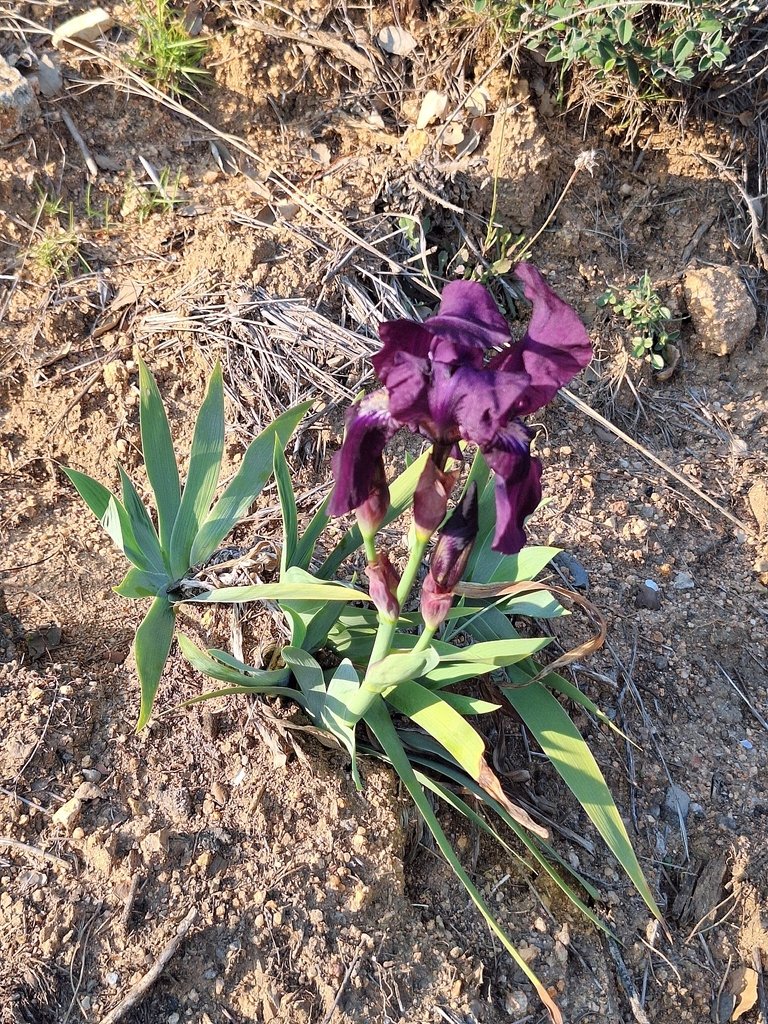


- Botanical name
- Iris × germanica
- Family
- Iridaceae
- Genus
- Iris
- Flowering period
- May to June
- Height
- 60–100 cm
- Spread
- 30–45 cm
- Hardiness
- Fully hardy (RHS H7)
- Reference
- World Flora Online
How to grow Bearded iris
Full sun
Low once established; avoid summer watering of the rhizomes
Sharply drained, moderately fertile
Neutral to alkaline
Planting
Plant or move in mid to late summer, after flowering. Set the rhizome so its top is visible at the soil surface, facing the sun, with the roots spread beneath it. Do not mulch over the rhizome and do not plant where taller neighbours will shade it by midsummer.
Pruning
Snap off spent flower stems at the base. Leave the leaves to feed the rhizome and only remove them once they brown; cutting foliage back hard in summer weakens next year's flowering.
Propagation
Lift and split clumps every three years or so in summer. Keep the young fans from the outside of the clump, cut the leaves back to a short fan to reduce wind rock, and throw away the old exhausted rhizome.
Pests and diseases
Iris leaf spot causes brown blotches on the foliage in damp summers; remove affected leaves. Rhizomes buried too deep or sitting in wet soil can rot away at the base.
Value to wildlife
Limited. The flowers are visited by bumblebees, which are heavy enough to work into them, but the season is short.
Notes
Shy flowering is nearly always overcrowding, too much shade, or a rhizome planted too deep. Baking in summer sun is part of how this plant sets flower buds.
This guidance was researched and written by GardenDecoded — see our editorial policy for how guides are checked and reviewed.
Other names for this plant
These names have all been used for Iris × germanica but are no longer the accepted name. You may still meet them on old labels, in books, or in nursery catalogues.
Iris alba
Iris amoena
Iris atroviolacea
Iris australis
Iris belouinii
Iris biliottii
Iris buiana
Iris buiana var. virescens
Iris buriensis
Iris croatica
Iris croatica
Iris cypriana
Iris deflexa
Iris florentina var. alba
Iris florentina var. pallida
Iris florentinaeoides
Iris florentinoides
Iris germanica unranked variegata
Iris germanica var. alba
Iris germanica var. amas
Iris germanica var. askabadensis
Iris germanica var. australis
Iris germanica var. denticulata
Iris germanica var. fontarabie
Iris germanica var. gypsea
Iris germanica var. kharput
Iris germanica var. lurida
Iris germanica var. nepalensis
Iris germanica var. pumila
Iris germanica var. sivas
Iris glauca
Iris humei
Iris laciniata
Iris latifolia
Iris lurida
Iris macrantha
Iris mesopotamica
Iris murorum
Iris neglecta
Iris nepalensis
Iris nostras
Iris nudicaulis var. plicata
Iris nyaradyana
Iris pallida
Iris pallida subsp. australis
Iris piatrae
Iris plicata
Iris redouteana
Iris repanda
Iris rothschildii
Iris sambucina
Iris spectabilis
Iris squalens
Iris squalens var. biflora
Iris squalens var. rosea
Iris superba
Iris tardiflora
Iris trojana
Iris varbossania
Iris variegata var. lurida
Others in Iris
GardenDecoded is an educational gardening reference. Botanical data comes from World Flora Online and GBIF; growing guidance is our own. Always check a plant's toxicity and local invasiveness status before planting, and never eat or apply a plant based on this site alone.