Allium sativum
Giant Onion
Allium giganteum
Regel Species
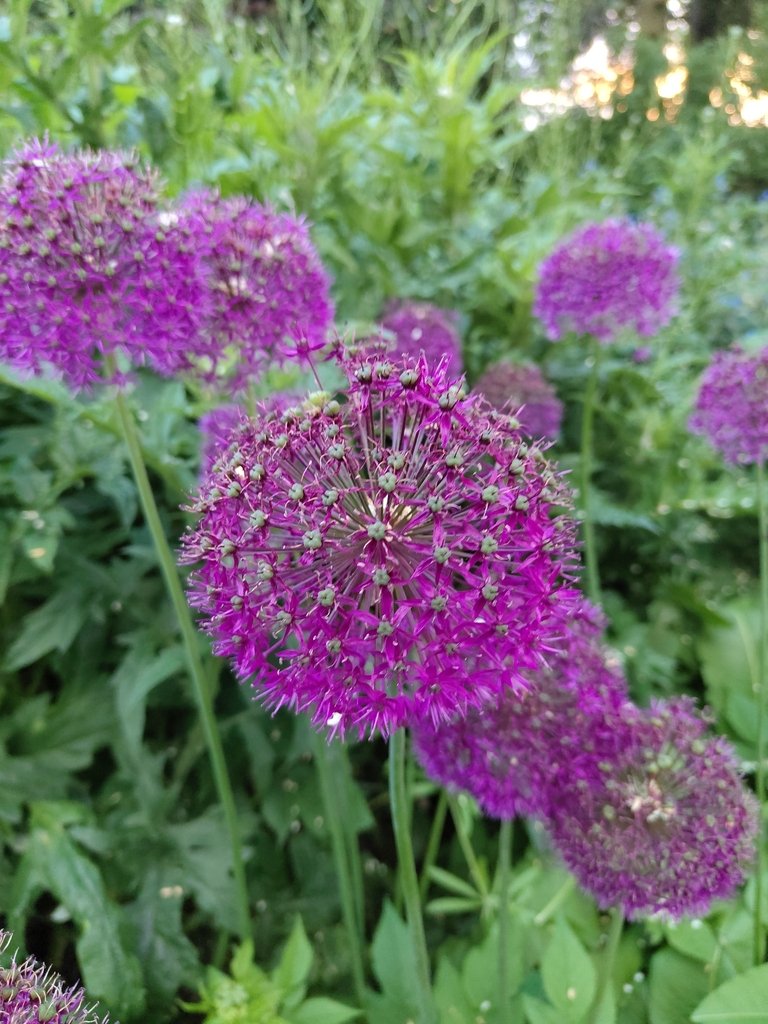
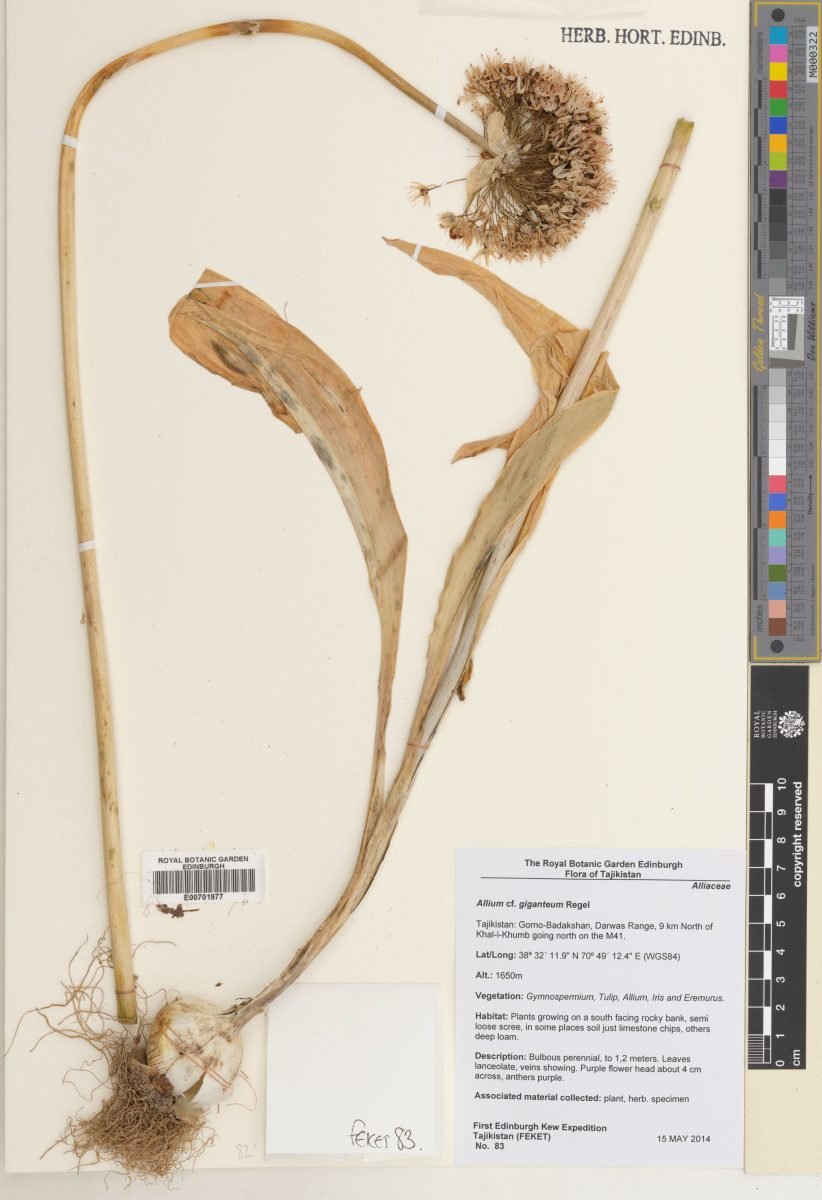


- Botanical name
- Allium giganteum
- Also known as
- Giant Onion
- Family
- Amaryllidaceae
- Genus
- Allium
- Flowering period
- June to July
- Height
- 120–180 cm
- Spread
- 15–25 cm
- Hardiness
- Fully hardy (RHS H5)
- Reference
- World Flora Online
How to grow Giant Onion
Full sun
Low; keep dry when dormant in summer
Well-drained, moderately fertile soil; add grit on heavy ground
Neutral to alkaline
Planting
Plant the bulbs in autumn, about 20 cm deep and 25–30 cm apart, in the sunniest and best-drained spot you have. Plant them behind lower perennials, because the strappy leaves start to yellow and collapse just as the flower opens and want hiding.
Pruning
Never remove the leaves while they are still green, even though they look untidy — the bulb is refilling itself. Leave the seed heads standing after flowering; they hold their shape into autumn.
Propagation
Lift and separate offsets when the clump is dormant in late summer. Seed is possible but takes several years to reach flowering size.
Pests and diseases
Allium rust shows as orange pustules on the leaves; allium leaf miner and downy mildew also occur. Bulbs rot in wet, heavy soil over winter.
Value to wildlife
Bees work the drumstick heads intensively during the few weeks they are open.
Notes
It often flowers magnificently in the first year from a bought bulb and then dwindles in later years, particularly on heavy or damp soil. Many gardeners treat it as a short-term planting and add new bulbs each autumn.
This guidance was researched and written by GardenDecoded — see our editorial policy for how guides are checked and reviewed.
Other names for this plant
These names have all been used for Allium giganteum but are no longer the accepted name. You may still meet them on old labels, in books, or in nursery catalogues.
Allium procerum
Others in Allium
GardenDecoded is an educational gardening reference. Botanical data comes from World Flora Online and GBIF; growing guidance is our own. Always check a plant's toxicity and local invasiveness status before planting, and never eat or apply a plant based on this site alone.