Wisteria × formosa
Chinese Wisteria
Wisteria sinensis
(Sims) DC. Species


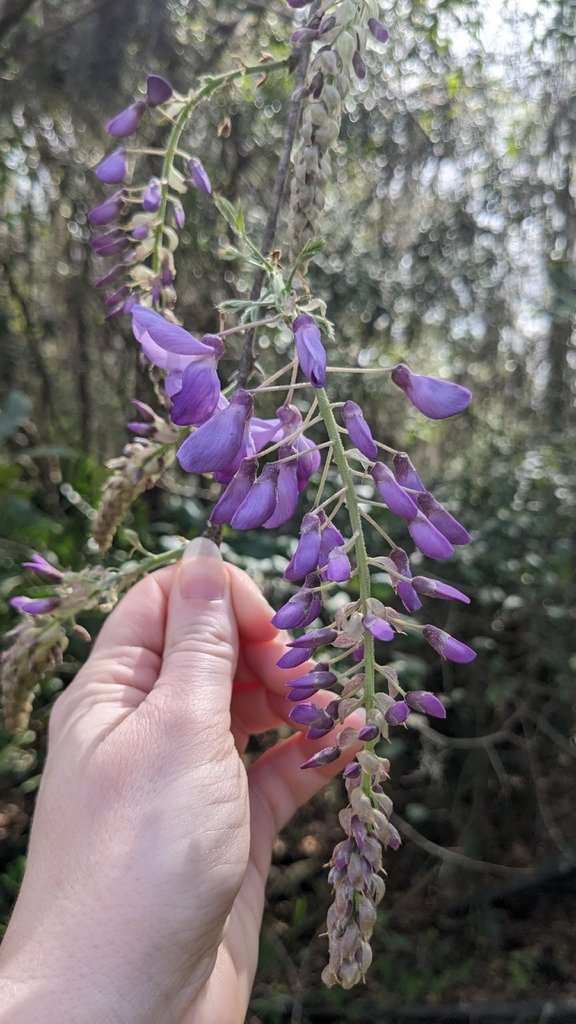


- Botanical name
- Wisteria sinensis
- Also known as
- Chinese Wisteria, Chinese-Glycine
- Family
- Fabaceae
- Genus
- Wisteria
- Flowering period
- May
- Height
- 6–12 m
- Spread
- 3–8 m
- Hardiness
- Fully hardy (RHS H6)
- Reference
- World Flora Online
How to grow Chinese Wisteria
Full sun; south- or west-facing wall for reliable flowering
Moderate; water well in dry spells during July and August when next year's buds form
Deep, fertile, moist but well-drained
Acid, neutral or alkaline
Planting
Plant in autumn or spring against very substantial supports — heavy-gauge wire on strong vine eyes, not a garden trellis, because a mature plant is heavy enough to pull a fitting out of a wall. Buy a grafted, named plant in flower if you can: seed-raised wisteria can take fifteen years to bloom, if it ever does. Keep the stems away from gutters and window frames, which they will crush.
Pruning
Prune twice a year. In July or August, shorten the whippy new side shoots to about five or six leaves. In January or February, cut those same shoots back again to two or three buds. This is what produces the short flowering spurs — without it you get a great deal of growth and very few flowers.
Propagation
Layering in spring is the most reliable amateur method, though it takes a year or more to root. Basal softwood cuttings in early summer with bottom heat are possible but not easy.
Pests and diseases
Wisteria scale and brown scale appear as flat brown discs on the stems. Honey fungus can kill established plants. Poor flowering is far more often a pruning or planting-depth problem than a disease.
Value to wildlife
The flowers attract bees during their short late-spring season.
Notes
Frost at the wrong moment can brown the buds in an exposed position, which is the usual reason for a missed year on an otherwise well-pruned plant. The seeds are known to be poisonous — check its toxicity status before planting where children or pets have access.
This guidance was researched and written by GardenDecoded — see our editorial policy for how guides are checked and reviewed.
Other names for this plant
These names have all been used for Wisteria sinensis but are no longer the accepted name. You may still meet them on old labels, in books, or in nursery catalogues.
Apios sinensis
Glycine chinensis
Glycine comosa
Glycine sinensis
Kraunhia chinensis
Millettia chinensis
Millettia sinensis
Rehsonia brevidentata
Rehsonia sinensis
Rehsonia villosa
Wistaria sinensis
Wisteria brevidentata
Wisteria chinensis
Wisteria chinensis
Wisteria consequana
Wisteria polystachya
Wisteria praecox
Wisteria sinensis f. alba
Wisteria sinensis var. alba
Wisteria sinensis var. albiflora
Wisteria sinensis var. brevidentata
Wisteria sinensis var. villosa
Wisteria villosa
Others in Wisteria
GardenDecoded is an educational gardening reference. Botanical data comes from World Flora Online and GBIF; growing guidance is our own. Always check a plant's toxicity and local invasiveness status before planting, and never eat or apply a plant based on this site alone.