Vitis × novae-angliae
Common Grapevine
Vitis vinifera
L. Species
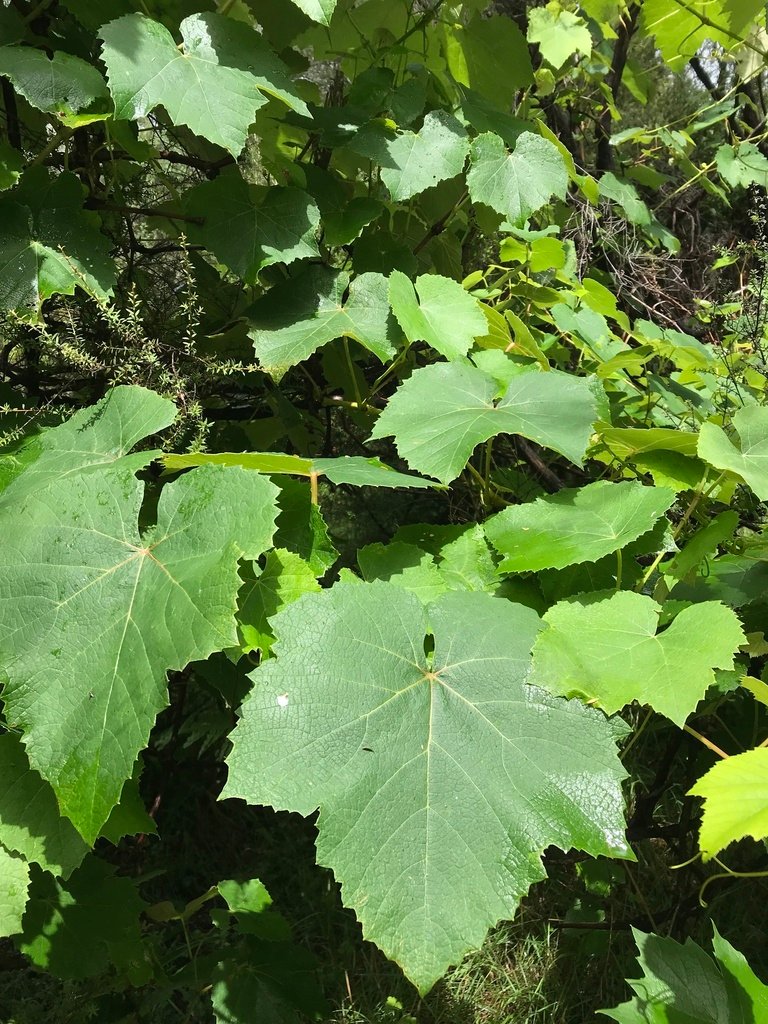
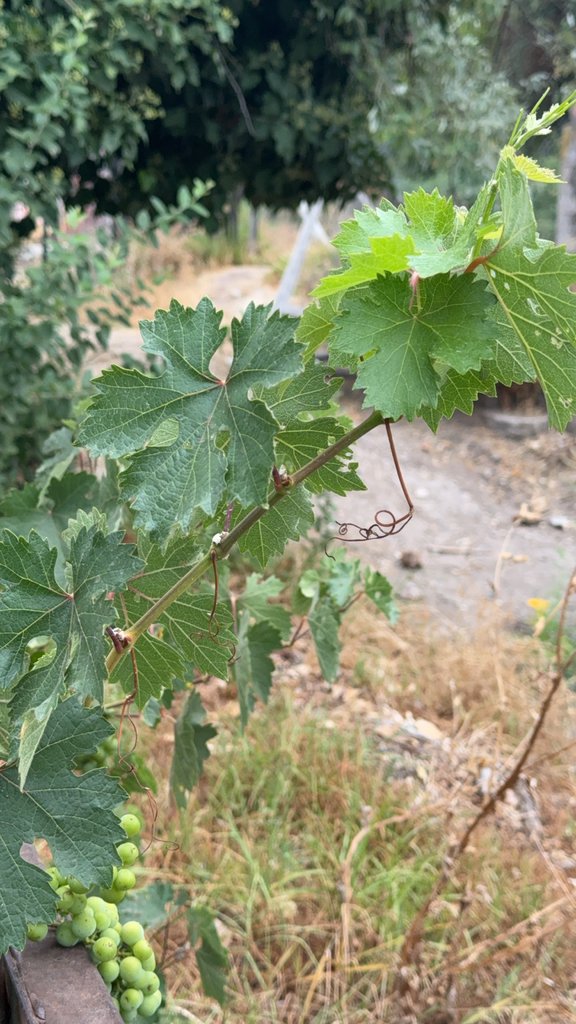
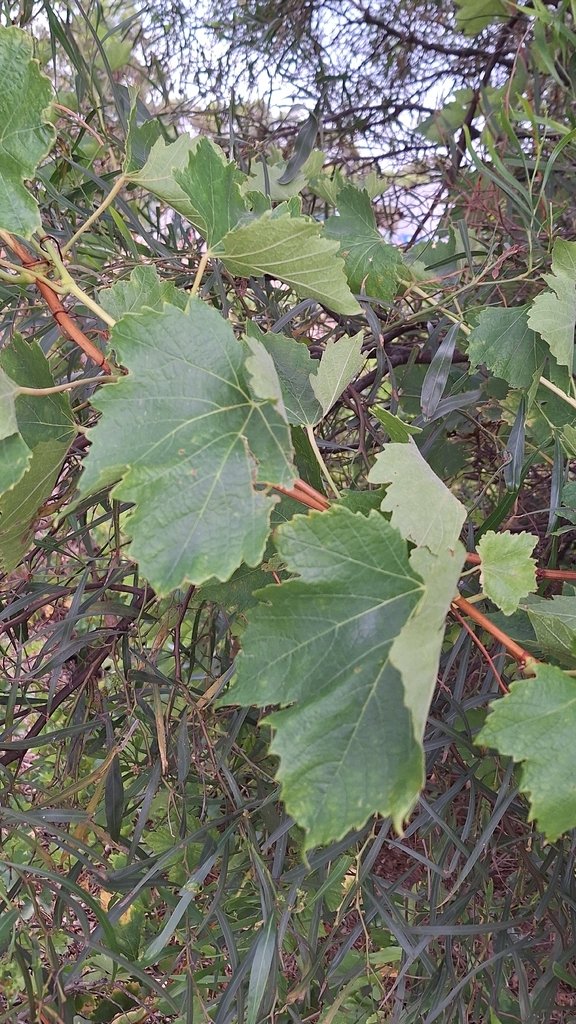


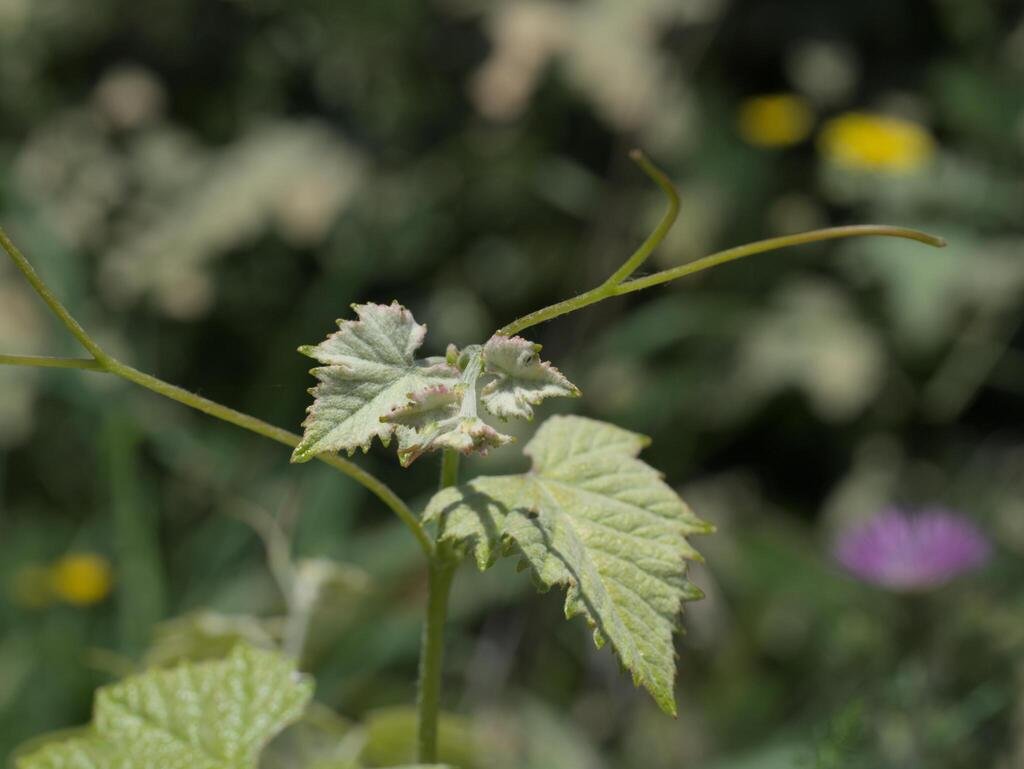
- Botanical name
- Vitis vinifera
- Also known as
- Common Grapevine, European Grape, Grape, Grape Vine, Grape-Vine, Grapevine, Vine, Wild Grape, Wine Grape
- Family
- Vitaceae
- Genus
- Vitis
- Flowering period
- June
- Height
- 3–8 m
- Spread
- 2–5 m
- Hardiness
- Fully hardy (RHS H5)
- Reference
- World Flora Online
How to grow Common Grapevine
Full sun; a warm sheltered wall in most of the UK
Moderate; water deeply in dry spells while fruit is swelling
Free-draining, not over-rich; stony or gravelly ground suits it
Neutral to alkaline
Planting
Plant between autumn and early spring in the sunniest, most sheltered spot you have, with permanent horizontal wires to train onto. Choose an outdoor variety bred for a cool climate rather than a dessert grape meant for a glasshouse — this decides whether you get ripe fruit or not. Do not plant into heavily manured ground.
Pruning
Prune in midwinter, when the vine is fully dormant — cutting after the sap rises in late winter causes serious bleeding that is hard to stop. The standard method is to build a permanent rod or cordon and cut all side shoots back to one or two buds each winter. In summer, pinch back the new growth a couple of leaves beyond each bunch.
Propagation
Hardwood cuttings taken at winter pruning root well: use pencil-thick prunings about 25 cm long, insert in gritty compost and leave in a cold frame.
Pests and diseases
Powdery mildew and grey mould (botrytis) on the bunches are the main outdoor problems, both worse in a still, damp season — open up the canopy by removing leaves around the fruit in late summer. Wasps and birds take ripening grapes; bagging individual bunches is the only reliable answer.
Value to wildlife
Limited value beyond the wasps and birds that take the fruit.
Notes
Restrict the crop rather than letting every bunch set — a young vine carrying too much fruit ripens none of it properly. Expect a real harvest from the third or fourth year, not the first.
This guidance was researched and written by GardenDecoded — see our editorial policy for how guides are checked and reviewed.
Other names for this plant
These names have all been used for Vitis vinifera but are no longer the accepted name. You may still meet them on old labels, in books, or in nursery catalogues.
Cissus vinifera
Maerklinia viridis
Noachia macrophylla
Palatina dichotoma
Palatina dissecta
Palatina macrocarpa
Palatina oblonga
Palatina septemloba
Palatina sinuata
Palatina sylvestris
Palatina tilicefolia
Palatina wisilocensis
Schamsia ligustrica
Sickleria brevicirrhata
Thalesia rubrivenia
Tyrtamia revoluta
Vitis apiana
Vitis apiifolia
Vitis apiifolia unranked laciniosa
Vitis apyrena
Vitis bosturgaiensis
Vitis cebennensis
Vitis corinthiaca
Vitis cylindrica
Vitis densiflora
Vitis farinosa
Vitis gmelinii
Vitis guilelmi
Vitis hyrcanica
Vitis kozmae
Vitis kozmae var. zemplenica
Vitis laciniosa
Vitis laxiflora
Vitis mediterranea
Vitis mensarum
Vitis moschata
Vitis orientalis
Vitis praecox
Vitis saccharina
Vitis silvestris
Vitis singularis
Vitis sinuosa
Vitis subacerifolia
Vitis succinea
Vitis sylvestris
Vitis sylvestris subsp. anebophylla
Vitis sylvestris subsp. trichophylla
Vitis sylvestris var. sativa
Vitis tinctoria
Vitis trichophylla
Vitis turbinata
Vitis usunachmatica
Vitis vinifera f. apiifolia
Vitis vinifera f. purpurea
Vitis vinifera subsp. sativa
Vitis vinifera subsp. sylvestris
Vitis vinifera unranked silvestris
Vitis vinifera var. acerbi
Vitis vinifera var. alba
Vitis vinifera var. albida
Others in Vitis
GardenDecoded is an educational gardening reference. Botanical data comes from World Flora Online and GBIF; growing guidance is our own. Always check a plant's toxicity and local invasiveness status before planting, and never eat or apply a plant based on this site alone.