Veronica × affinis
Koromiko
Veronica salicifolia
G.Forst. Species



- Botanical name
- Veronica salicifolia
- Family
- Plantaginaceae
- Genus
- Veronica
- Flowering period
- July to September
- Height
- 100–200 cm
- Spread
- 100–200 cm
- Hardiness
- Hardy in most of the UK (RHS H4)
- Reference
- World Flora Online
How to grow Koromiko
Full sun to light shade
Low once established; water through the first summer
Free-draining, moderately fertile
Neutral to slightly alkaline
Planting
Plant in spring so the roots are established before winter. It takes salt wind well and is a good informal hedge or windbreak in coastal gardens. Avoid heavy soil that stays wet over winter, which is what usually kills it rather than cold alone.
Pruning
Trim lightly after flowering to keep the shape tight. It will break from older wood better than lavender, but hard renovation is still a gamble on an old plant.
Propagation
Semi-ripe cuttings in late summer root readily in a gritty compost. This is much more reliable than seed, which gives variable plants.
Pests and diseases
Generally trouble-free. Leaf spot can disfigure foliage in wet seasons on plants in stagnant air; improving airflow usually settles it.
Value to wildlife
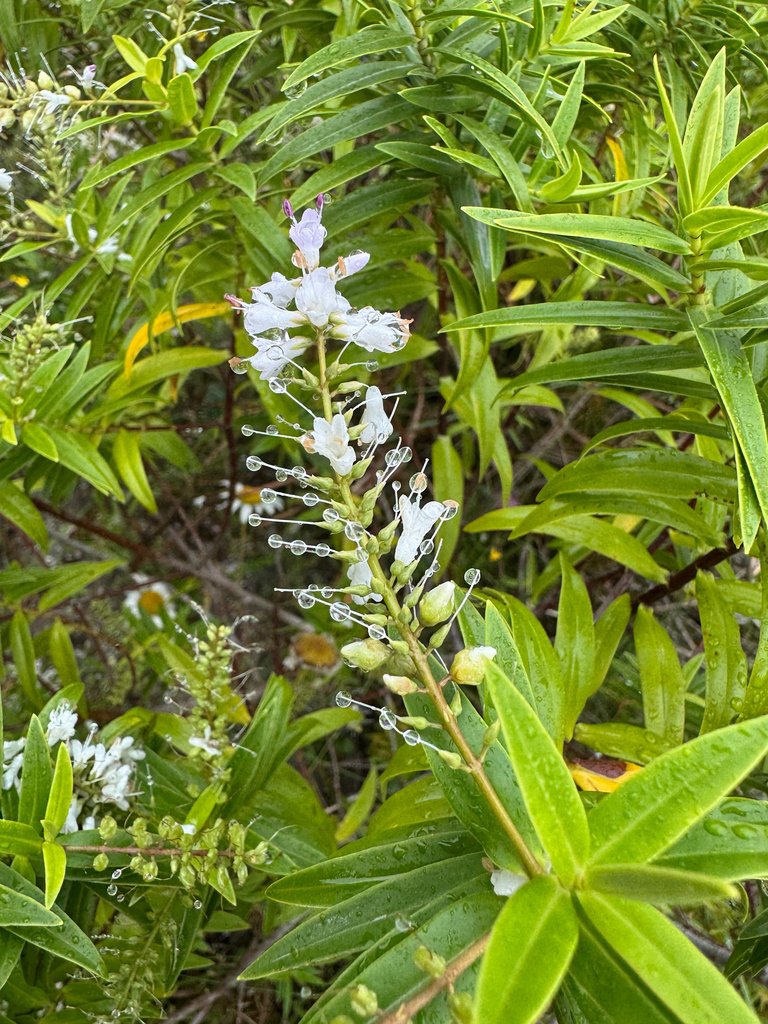
The long white racemes are worked heavily by bees and hoverflies at a useful point in late summer.
Notes
Inland gardens on cold clay will find this short-lived. Treat it as a plant to replace every eight to ten years rather than a permanent structure.
This guidance was researched and written by GardenDecoded — see our editorial policy for how guides are checked and reviewed.
Other names for this plant
These names have all been used for Veronica salicifolia but are no longer the accepted name. You may still meet them on old labels, in books, or in nursery catalogues.
Hebe fonkii
Hebe salicifolia
Panoxis salicifolia
Veronica fonkii
Veronica forsteri
Others in Veronica
GardenDecoded is an educational gardening reference. Botanical data comes from World Flora Online and GBIF; growing guidance is our own. Always check a plant's toxicity and local invasiveness status before planting, and never eat or apply a plant based on this site alone.