Symphytum × bicknellii
Common Comfrey
Symphytum officinale
L. Species

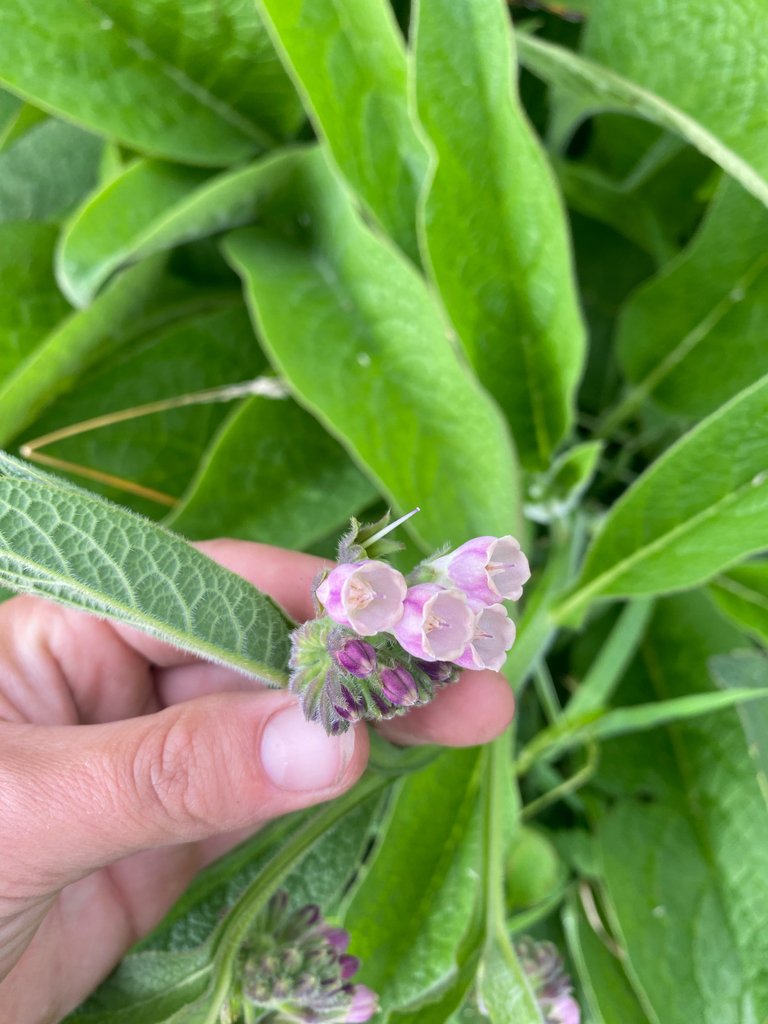

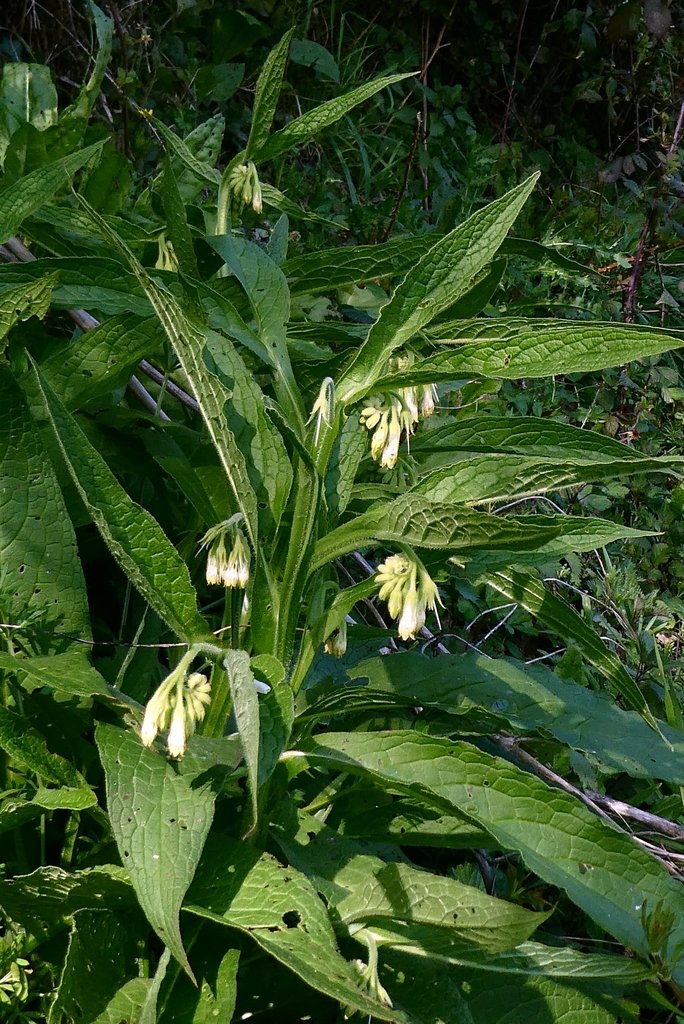

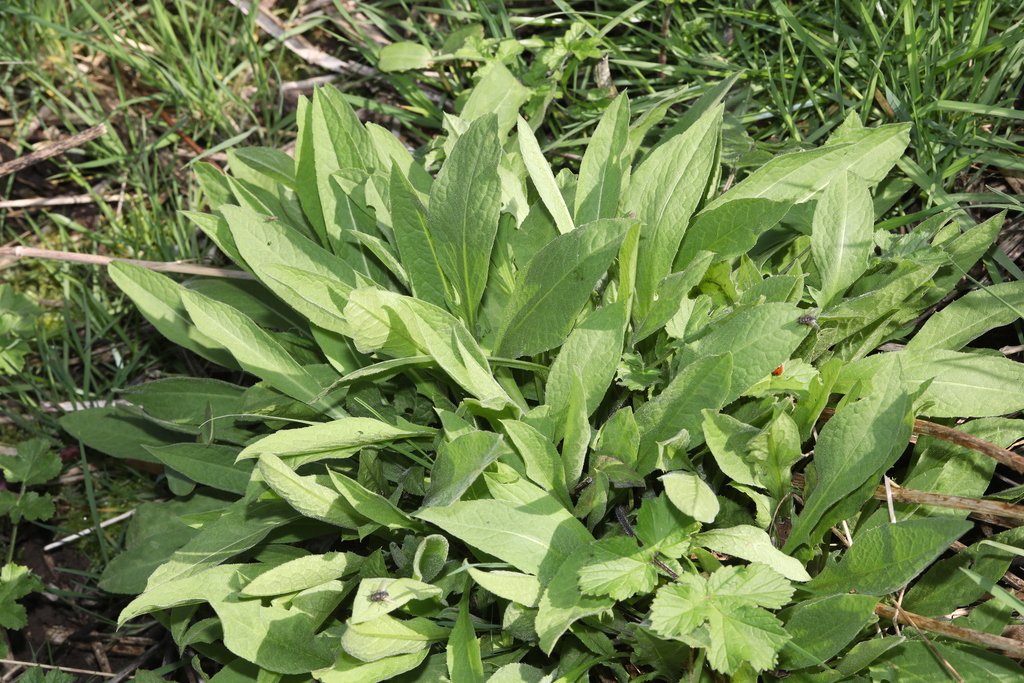
- Botanical name
- Symphytum officinale
- Also known as
- Boneset, Bruisewort, Comfrey, Common Comfrey, Consound, Healing-Herb, Healingherb, Knitbone, Slippery-Root
- Family
- Boraginaceae
- Genus
- Symphytum
- Flowering period
- May to July
- Height
- 90–120 cm
- Spread
- 60–100 cm
- Hardiness
- Fully hardy (RHS H7)
- Reference
- World Flora Online
How to grow Common Comfrey
Full sun to partial shade
Moderate; tolerates damp ground and dislikes prolonged drought
Deep, moisture-retentive soil; heavy ground is no obstacle
Acid to alkaline
Planting
Plant in spring or autumn where it can stay — the roots go deep and it is very hard to remove once settled. A damp corner, the edge of a wild area or a dedicated bed near the compost heap all work better than a mixed border.
Pruning
Cut the whole plant to near ground level two or three times between late spring and late summer. It regrows quickly, and the cut foliage is the traditional raw material for comfrey liquid feed or as a nitrogen-rich compost activator.
Propagation
Divide in spring or autumn, or take root cuttings in winter — even short pieces of root will grow. This ease of propagation is exactly why it is so persistent when you want it gone.
Pests and diseases
Largely untroubled. Rust and mildew occasionally mark the leaves late in the season; cutting the plant down clears it.
Value to wildlife
The nodding tubular flowers are heavily worked by long-tongued bumblebees, and short-tongued bees often bite through the base of the flower to reach the nectar. Early and prolific enough to matter in spring.
Notes
This species sets viable seed and spreads, unlike the sterile Bocking cultivars grown for green manure. If you want comfrey purely for feed and not for the wildflower value, a sterile clone is the less invasive choice.
This guidance was researched and written by GardenDecoded — see our editorial policy for how guides are checked and reviewed.
Other names for this plant
These names have all been used for Symphytum officinale but are no longer the accepted name. You may still meet them on old labels, in books, or in nursery catalogues.
Consolida major
Consolida major
Symphytum album
Symphytum ambiguum
Symphytum besseri
Symphytum bohemicum
Symphytum commune
Symphytum consolida
Symphytum elatum
Symphytum majus
Symphytum microcalyx
Symphytum molle
Symphytum patens
Symphytum peregrinum
Symphytum rakosiense
Symphytum stenophyllum
Others in Symphytum
GardenDecoded is an educational gardening reference. Botanical data comes from World Flora Online and GBIF; growing guidance is our own. Always check a plant's toxicity and local invasiveness status before planting, and never eat or apply a plant based on this site alone.