Solanum tuberosum
Garden Tomato
Solanum lycopersicum
L. Species


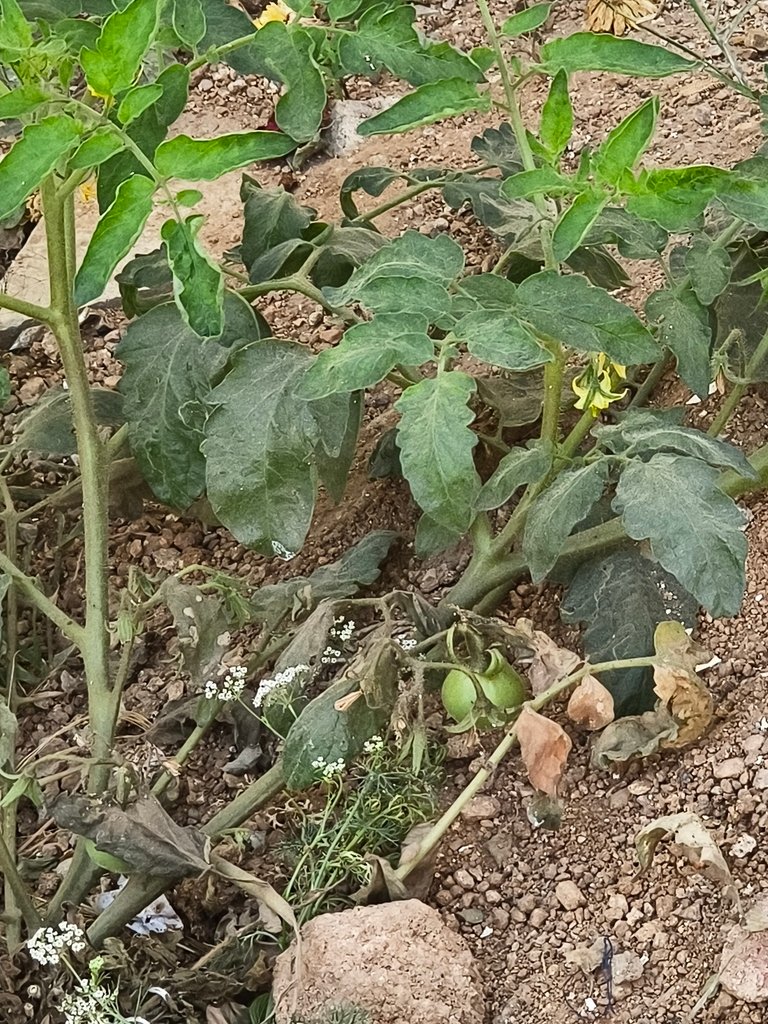

- Botanical name
- Solanum lycopersicum
- Also known as
- Garden Tomato, Tomato
- Family
- Solanaceae
- Genus
- Solanum
- Flowering period
- June to September
- Height
- 60–200 cm
- Spread
- 40–60 cm
- Hardiness
- Tender (RHS H1c)
- Reference
- World Flora Online
How to grow Garden Tomato
Full sun; the more heat and light the better
Frequent and even; irregular watering causes fruit problems
Fertile, well-drained; good-quality compost in containers
Slightly acid to neutral
Planting
Sow indoors from late February for greenhouse crops or late March for outdoor ones, at around 18C. Pot on as they grow and plant out only after the last frost, hardening off first. Outdoors, pick the warmest sheltered spot; in much of the UK a greenhouse gives a markedly more reliable crop.
Pruning
Cordon (indeterminate) types need the sideshoots pinched out from the leaf axils weekly, tying the single stem to a cane or string. Stop the plant by pinching the tip two leaves above the fourth or fifth truss outdoors. Bush (determinate) types need no pinching at all — check which you have before you start removing shoots.
Propagation
From seed. Sideshoots pinched from cordons root easily in water or compost if you want extra plants. Saved seed from open-pollinated cultivars comes true; F1 seed does not.
Pests and diseases
Blight is the main outdoor risk in warm wet summers, browning leaves and stems and rotting fruit — blight-resistant cultivars are the practical answer as there is no home treatment. Blossom end rot, a sunken dark patch at the base of the fruit, is caused by uneven watering rather than by any pathogen. Under glass, expect whitefly and red spider mite.
Notes
Start a high-potassium liquid feed once the first truss has set and continue weekly. The foliage and stems are not edible and are best kept away from where children or pets graze; check current toxicity guidance from an authoritative source if that is a concern.
This guidance was researched and written by GardenDecoded — see our editorial policy for how guides are checked and reviewed.
Other names for this plant
These names have all been used for Solanum lycopersicum but are no longer the accepted name. You may still meet them on old labels, in books, or in nursery catalogues.
Amatula flava
Amatula rubra
Lycopersicon amplipinnatum
Lycopersicon cerasiforme
Lycopersicon cerasiforme var. cerasiforme
Lycopersicon cerasiforme var. cognitum
Lycopersicon cerasiforme var. leptophyllum
Lycopersicon cerasiforme var. rotundilobum
Lycopersicon cordiforme
Lycopersicon densifolium
Lycopersicon esculentum
Lycopersicon esculentum f. esculentum
Lycopersicon esculentum f. esculentum
Lycopersicon esculentum f. pyriforme
Lycopersicon esculentum subsp. esculentum
Lycopersicon esculentum subsp. galenii
Lycopersicon esculentum subsp. humboldtii
Lycopersicon esculentum subsp. typicum
Lycopersicon esculentum subvar. detgrandifolioaurantium
Lycopersicon esculentum subvar. detgrandifolioroseum
Lycopersicon esculentum subvar. detgrandifoliorubrum
Lycopersicon esculentum subvar. detvalidoaurantium
Lycopersicon esculentum subvar. detvalidocitreum
Lycopersicon esculentum subvar. detvalidoluteum
Lycopersicon esculentum subvar. detvalidorubrum
Lycopersicon esculentum subvar. detvulgareaurantium
Lycopersicon esculentum subvar. detvulgarecitreum
Lycopersicon esculentum subvar. detvulgareluteum
Lycopersicon esculentum subvar. detvulgareroseum
Lycopersicon esculentum subvar. detvulgarerubrum
Lycopersicon esculentum subvar. detvulgarerufum
Lycopersicon esculentum subvar. detvulgarevariegatum
Lycopersicon esculentum subvar. esculentum
Lycopersicon esculentum subvar. flaviocarpum
Lycopersicon esculentum subvar. indetgrandifolioaurantium
Lycopersicon esculentum subvar. indetgrandifolioluteum
Lycopersicon esculentum subvar. indetgrandifolioroseum
Lycopersicon esculentum subvar. indetgrandifoliorubrum
Lycopersicon esculentum subvar. indetvalidoaurantium
Lycopersicon esculentum subvar. indetvalidorubrum
Lycopersicon esculentum subvar. indetvalidovariegatum
Lycopersicon esculentum subvar. indetvulgarealbum
Lycopersicon esculentum subvar. indetvulgareaurantium
Lycopersicon esculentum subvar. indetvulgarebrunneorubrum
Lycopersicon esculentum subvar. indetvulgarechlorocoralli
Lycopersicon esculentum subvar. indetvulgarechlorosarcum
Lycopersicon esculentum subvar. indetvulgarecitreum
Lycopersicon esculentum subvar. indetvulgareluteum
Lycopersicon esculentum subvar. indetvulgareroseum
Lycopersicon esculentum subvar. indetvulgarerubrum
Lycopersicon esculentum subvar. indetvulgarerufum
Lycopersicon esculentum subvar. indetvulgarevariegatum
Lycopersicon esculentum subvar. luteocarpum
Lycopersicon esculentum subvar. nanovalidoaurantium
Lycopersicon esculentum subvar. nanovalidorubrum
Lycopersicon esculentum subvar. nanovulgareaurantium
Lycopersicon esculentum subvar. nanovulgareroseum
Lycopersicon esculentum subvar. nanovulgarerubrum
Lycopersicon esculentum subvar. rhodocarpum
Lycopersicon esculentum subvar. rosicarpum
Others in Solanum
GardenDecoded is an educational gardening reference. Botanical data comes from World Flora Online and GBIF; growing guidance is our own. Always check a plant's toxicity and local invasiveness status before planting, and never eat or apply a plant based on this site alone.