Salvia divinorum
Introduced Sage
Salvia pratensis
L. Species


- Botanical name
- Salvia pratensis
- Also known as
- Introduced Sage, Meadow Clary, Meadow Sage, Prairie-Meadow Sage
- Family
- Lamiaceae
- Genus
- Salvia
- Flowering period
- June to July
- Height
- 45–90 cm
- Spread
- 30–45 cm
- Hardiness
- Fully hardy (RHS H7)
- Reference
- World Flora Online
How to grow Introduced Sage
Full sun
Low to moderate; drought tolerant once established
Well-drained, moderately fertile; good on chalk
Neutral to alkaline
Planting
Plant or sow in spring in an open, sunny position on free-draining soil. It suits meadow-style and prairie planting and grows well on chalk and limestone. Avoid rich, damp ground, where it grows lax and short-lived.
Pruning
Cut the flowered stems back to the basal rosette as soon as the main flush fades and a useful second flowering often follows in late summer.
Propagation
Sow seed in spring; it germinates readily and plants flower in their second year. It self-seeds modestly where the soil is open.
Pests and diseases
Generally trouble-free. Slugs may take seedlings and early spring growth.
Value to wildlife
Strong bee forage, particularly for bumblebees, and the flowers hold up well through hot dry weather when other nectar sources fade.
Notes
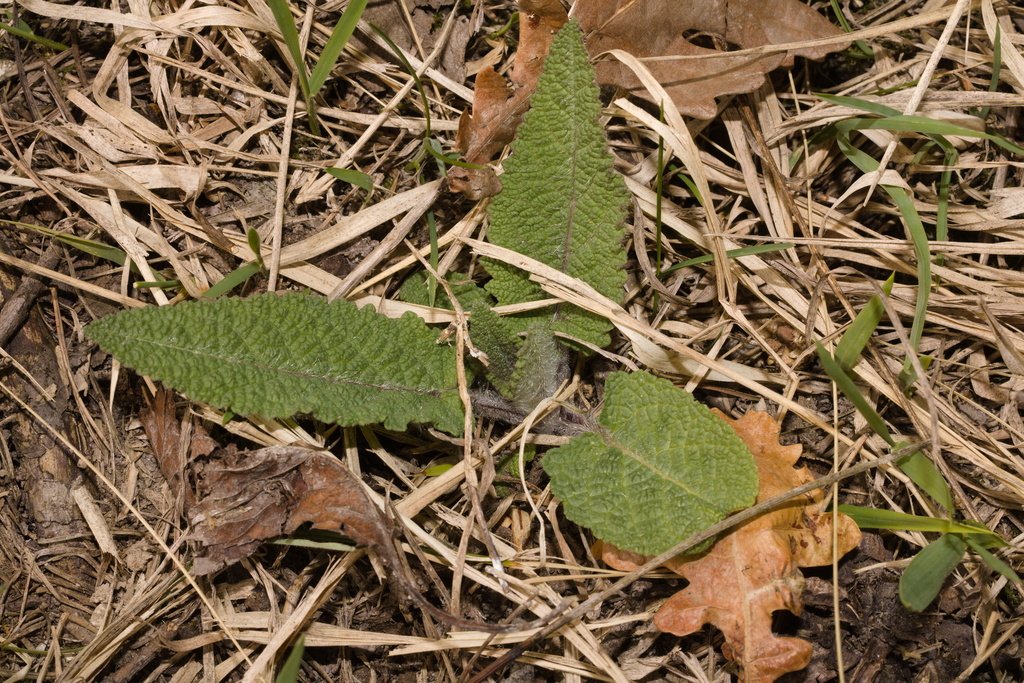
The plant forms a flat basal rosette that needs sun; do not let taller neighbours smother it. In Britain the wild form is rare and legally protected, so use nursery-raised plants and never collect from the wild.
This guidance was researched and written by GardenDecoded — see our editorial policy for how guides are checked and reviewed.
Other names for this plant
These names have all been used for Salvia pratensis but are no longer the accepted name. You may still meet them on old labels, in books, or in nursery catalogues.
Gallitrichum pratense
Plethiosphace pratensis
Salvia pratensis var. caerulea
Sclarea pratensis
Others in Salvia
GardenDecoded is an educational gardening reference. Botanical data comes from World Flora Online and GBIF; growing guidance is our own. Always check a plant's toxicity and local invasiveness status before planting, and never eat or apply a plant based on this site alone.