Robinia × ambigua
Black Locust
Robinia pseudoacacia
L. Species
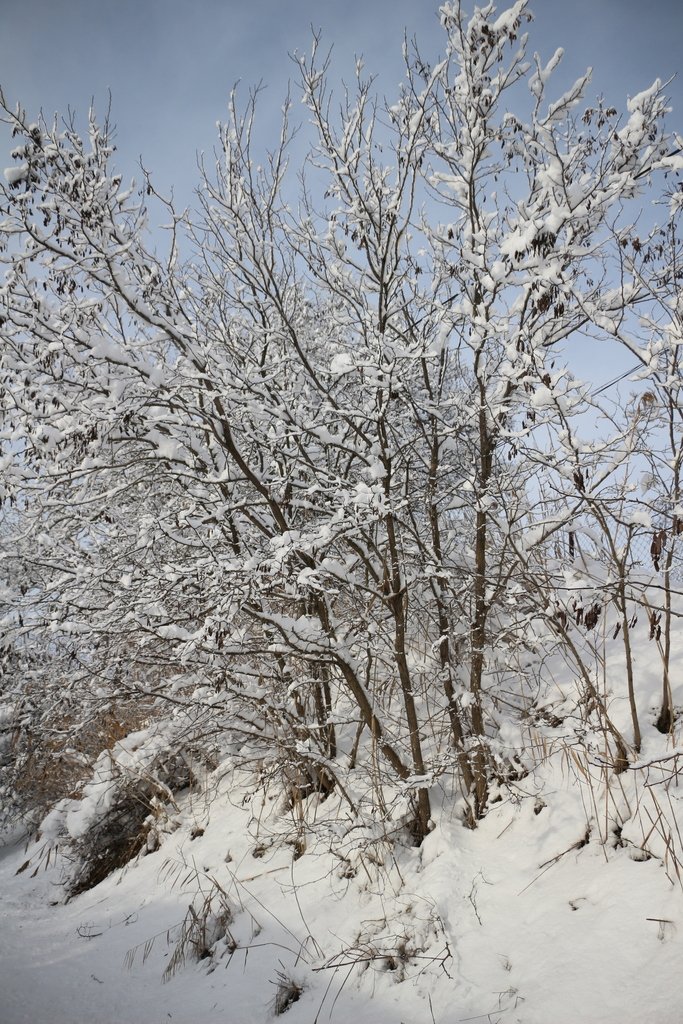


- Botanical name
- Robinia pseudoacacia
- Also known as
- Black Locust, False Acacia, False-Acacia, Locust, Locust Tree, Yellow Locust
- Family
- Fabaceae
- Genus
- Robinia
- Flowering period
- June
- Height
- 12–25 m
- Spread
- 8–15 m
- Hardiness
- Fully hardy (RHS H6)
- Reference
- World Flora Online
How to grow Black Locust
Full sun
Low; drought-tolerant once established
Well-drained; tolerates poor, dry and sandy ground
Acid, neutral or alkaline
Planting
Plant in autumn or early spring in an open, sunny position sheltered from strong wind. Stake young trees properly for the first few years — the wood is brittle and the crown catches wind. Keep it well away from drains, paving and lawns, as it suckers persistently from damaged roots.
Pruning
Prune in late summer or early autumn to limit bleeding, taking out dead and crossing wood. Avoid hard cutting back, which provokes a mass of vigorous, weakly attached regrowth. Remove suckers at the root rather than cutting them at ground level, or you get three back for every one.
Propagation
Suckers and root cuttings are the simplest route. Seed germinates after scarification and soaking, though named forms will not come true from it.
Pests and diseases
Largely untroubled by pests in the UK. The main problem is limb failure — branches break out in summer gales, so inspect mature trees over paths and seating.
Value to wildlife
The hanging white flower racemes are heavily worked by bees in June and produce a distinctive honey.
Notes
It fixes nitrogen and will thrive on rubble and poor urban soil where little else does, but it is a spreader — suckering, self-seeding and considered invasive in parts of Europe. Think carefully before planting it near open countryside. All parts including the bark and seeds have a poisonous reputation, so check its toxicity status before planting where children or pets have access.
This guidance was researched and written by GardenDecoded — see our editorial policy for how guides are checked and reviewed.
Other names for this plant
These names have all been used for Robinia pseudoacacia but are no longer the accepted name. You may still meet them on old labels, in books, or in nursery catalogues.
Aeschynomene pseudoacacia
Derris robusta var. assamica
Pseudacacia odorata
Pseudacacia vulgaris
Pseudo-acacia vulgaris
Robinia acacia
Robinia amorphifolia
Robinia angulata
Robinia aurea
Robinia bessoniana
Robinia bullata
Robinia camusetii
Robinia coluteoides
Robinia cornigera
Robinia crispa
Robinia cylindrica
Robinia decaisneana
Robinia dissecta
Robinia echinata
Robinia edwardsiifolia
Robinia fastigiata
Robinia fastigiataaureovariegata
Robinia fragilis
Robinia inermis
Robinia inermis unranked fastigiata-aureovariegata
Robinia inermis unranked pendula
Robinia inermis var. rehderi
Robinia jaspidea
Robinia latisiliqua
Robinia linearis
Robinia ludoviciana
Robinia microphylla
Robinia monophylla-fastigiata
Robinia monophylla-pendula
Robinia monophyllus
Robinia myrtifolia
Robinia patula
Robinia pendula
Robinia pendula
Robinia pendulina
Robinia pinnata
Robinia pringlei
Robinia procera
Robinia pseudacacia
Robinia pseudoacacia f. amorphifolia
Robinia pseudoacacia f. atropurpurea
Robinia pseudoacacia f. aurea
Robinia pseudoacacia f. bessoniana
Robinia pseudoacacia f. coluteoides
Robinia pseudoacacia f. crispa
Robinia pseudoacacia f. decaisneana
Robinia pseudoacacia f. dependens
Robinia pseudoacacia f. dissecta
Robinia pseudoacacia f. erecta
Robinia pseudoacacia f. frisia
Robinia pseudoacacia f. inermis
Robinia pseudoacacia f. linearis
Robinia pseudoacacia f. microphylla
Robinia pseudoacacia f. monophylla-pendula
Robinia pseudoacacia f. myrtifolia
Others in Robinia
GardenDecoded is an educational gardening reference. Botanical data comes from World Flora Online and GBIF; growing guidance is our own. Always check a plant's toxicity and local invasiveness status before planting, and never eat or apply a plant based on this site alone.