Pieris floribunda
Japanese Pieris
Pieris japonica
(Thunb.) D.Don ex G.Don Species
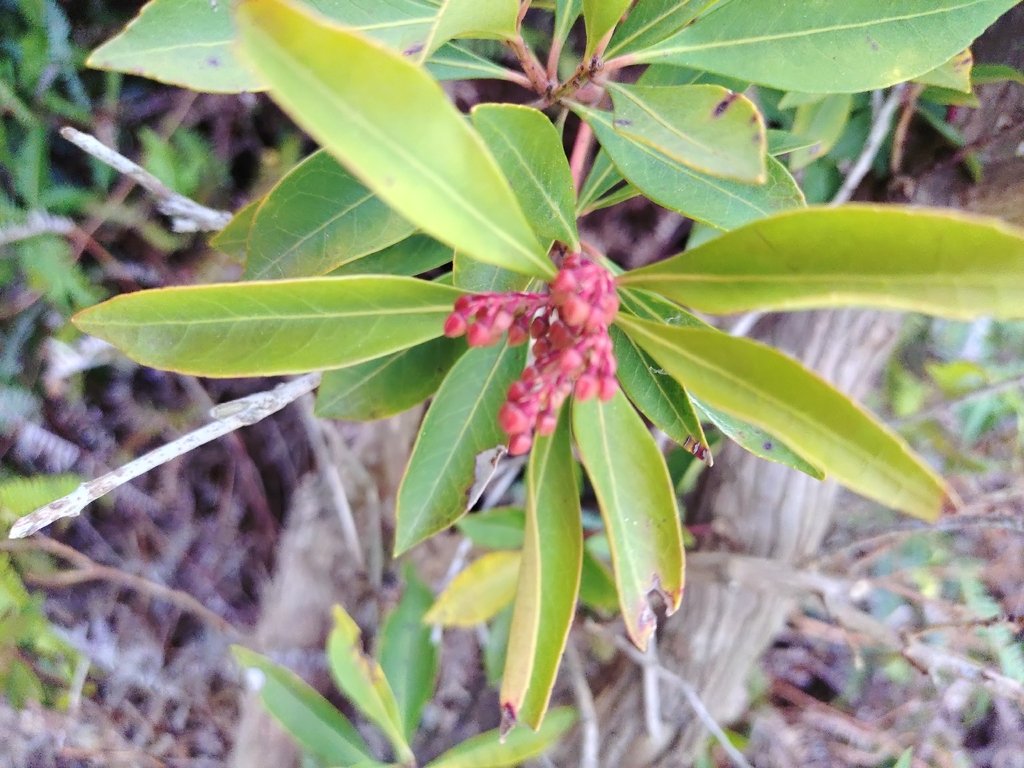
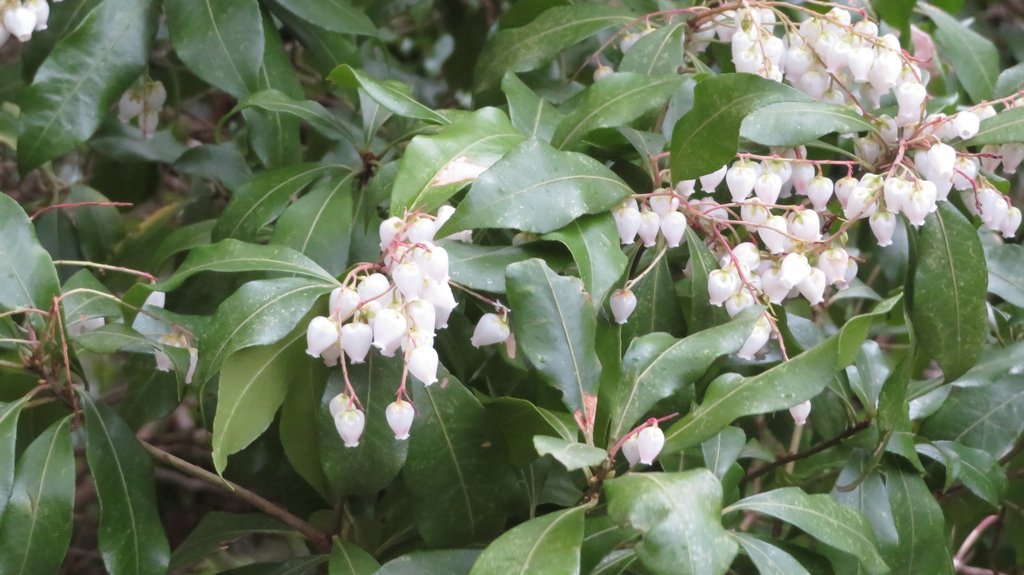
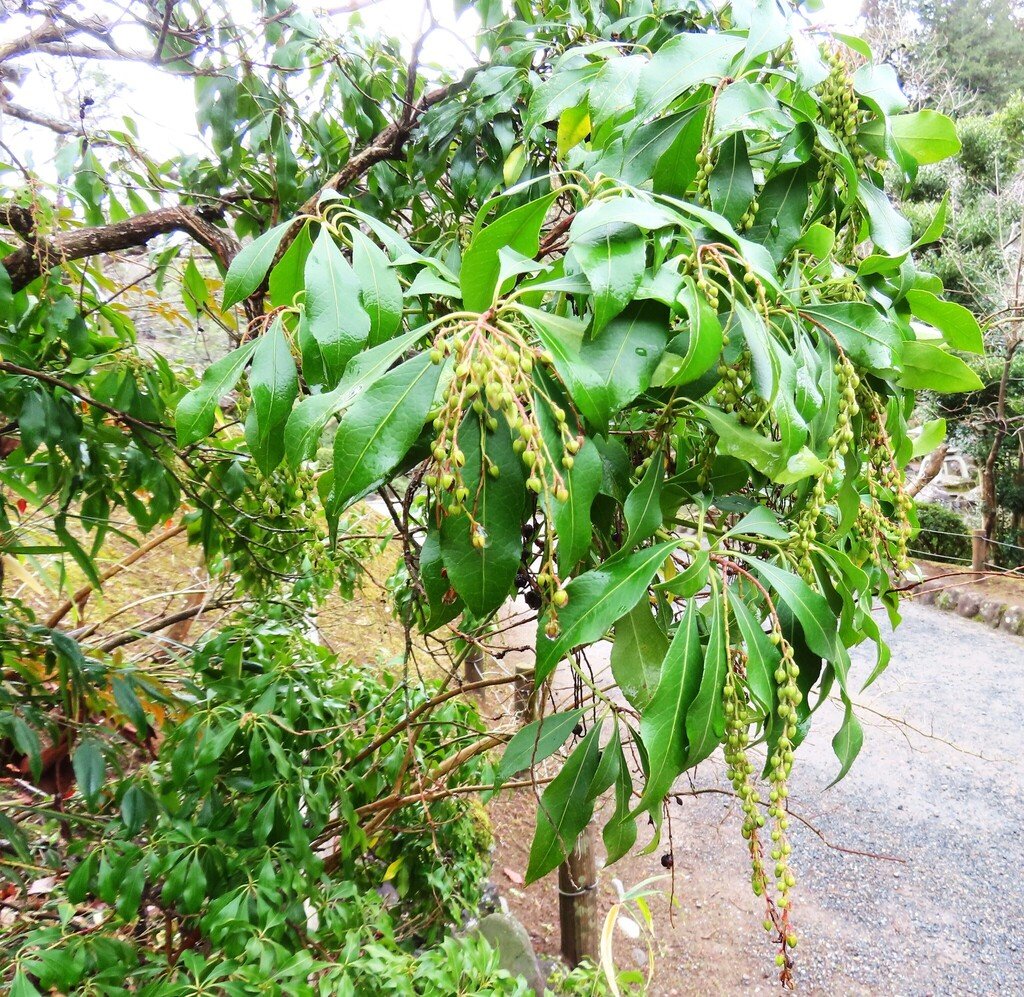
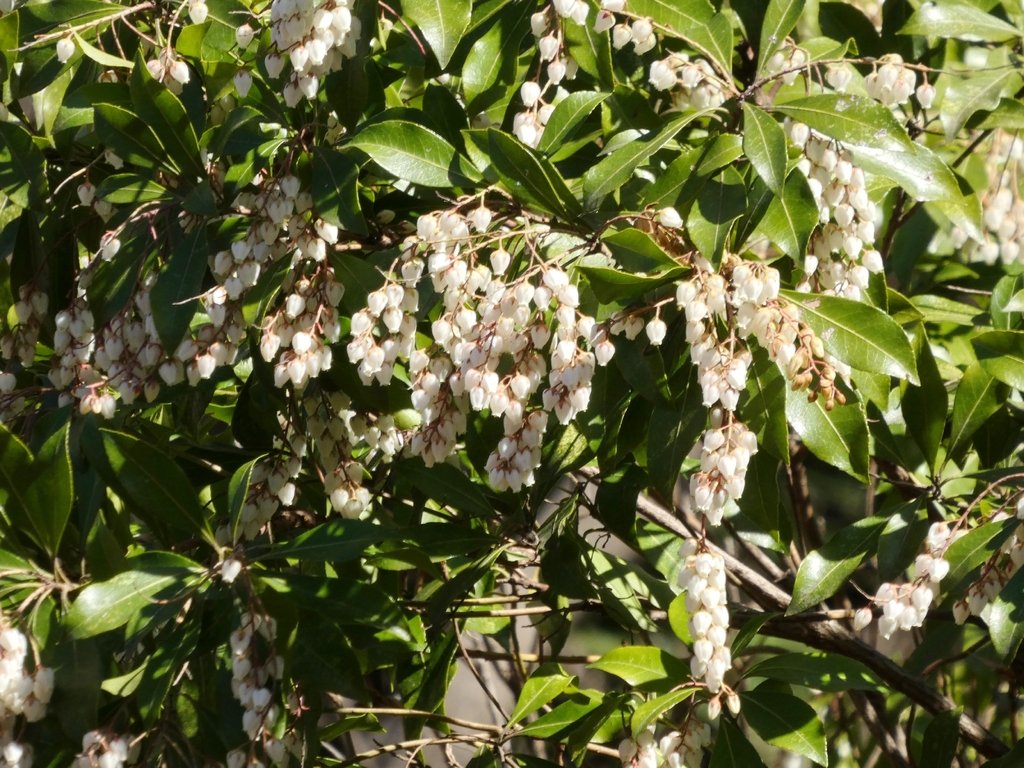
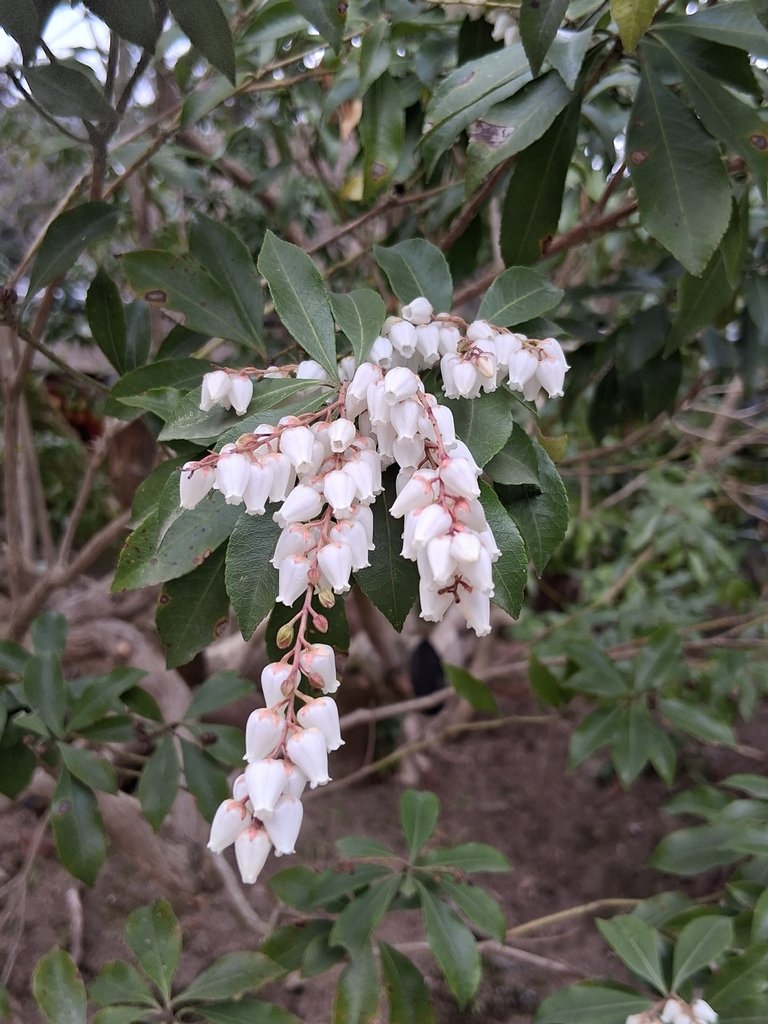
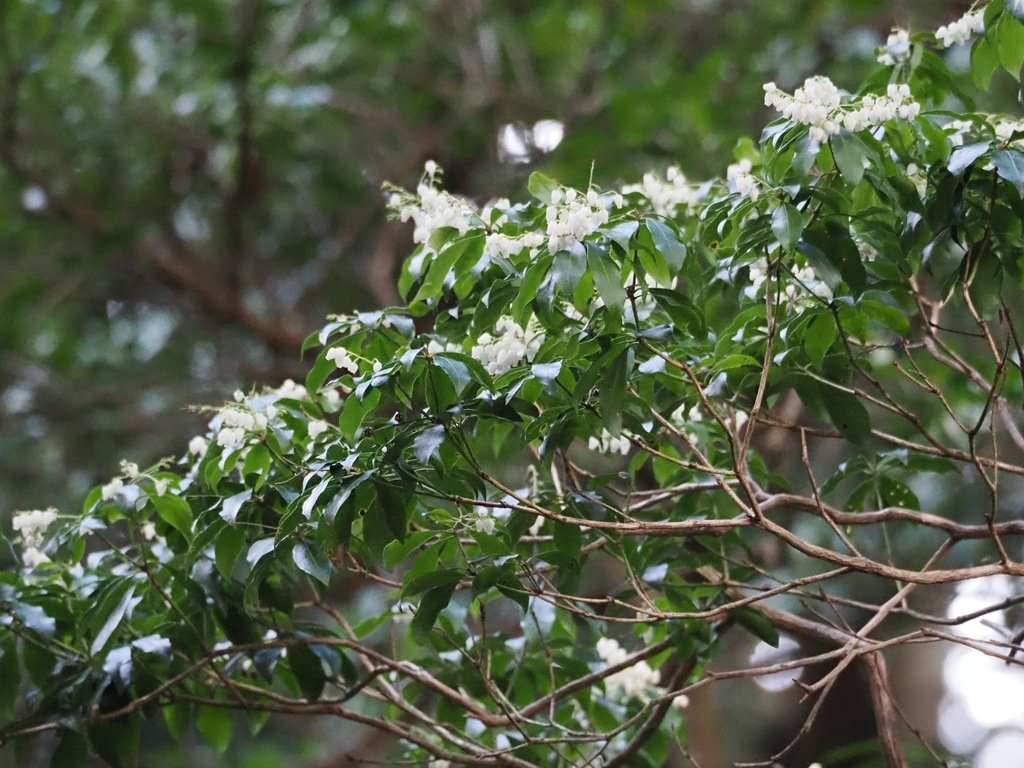
- Botanical name
- Pieris japonica
- Also known as
- Heath, Japanese Pieris, Japanese-Andromeda, Lily-of-the-Valley-Bush
- Family
- Ericaceae
- Genus
- Pieris
- Flowering period
- March to April
- Height
- 2–4 m
- Spread
- 1.5–3 m
- Hardiness
- Fully hardy (RHS H5)
- Reference
- World Flora Online
How to grow Japanese Pieris
Partial shade; shelter from early morning sun and cold wind
Moderate; keep evenly moist, never waterlogged
Moist, humus-rich, well-drained ericaceous soil
Acid; will not thrive above about pH 6
Planting
This needs genuinely acid soil. On neutral or chalky ground grow it in a container of ericaceous compost rather than trying to correct a border. Shelter matters: the flower trusses and the red young growth are both damaged by frost and wind.
Pruning
Very little needed. Deadhead the spent trusses and shorten any straggly shoots after flowering.
Propagation
Semi-ripe cuttings in late summer, kept humid. Rooting is slow.
Pests and diseases
Vine weevil grubs attack the roots, particularly in pots. Lace bug causes fine pale mottling on the upper leaf surface and is worse on plants in full sun.
Value to wildlife
Early bees visit the small bell flowers in March.
Notes
Yellowing between the leaf veins means the pH is too high and the plant cannot take up iron; sequestered iron treats the symptom but the position is wrong. In hard water areas, water containers with rainwater. Check its toxicity before planting where children or pets have access.
Some structured details on this page (such as tolerances, pH and hardiness) come from USDA PLANTS Database (public domain). The written guidance is GardenDecoded's own, researched as described in our editorial policy.
Other names for this plant
These names have all been used for Pieris japonica but are no longer the accepted name. You may still meet them on old labels, in books, or in nursery catalogues.
Andromeda japonica
Lyonia polita
Lyonia popowii
Pieris japonica var. taiwanensis
Pieris polita
Pieris taiwanensis
Others in Pieris
GardenDecoded is an educational gardening reference. Botanical data comes from World Flora Online and GBIF; growing guidance is our own. Always check a plant's toxicity and local invasiveness status before planting, and never eat or apply a plant based on this site alone.