Photinia × fraseri
Taiwanese photinia
Photinia serratifolia
(Desf.) Kalkman Species
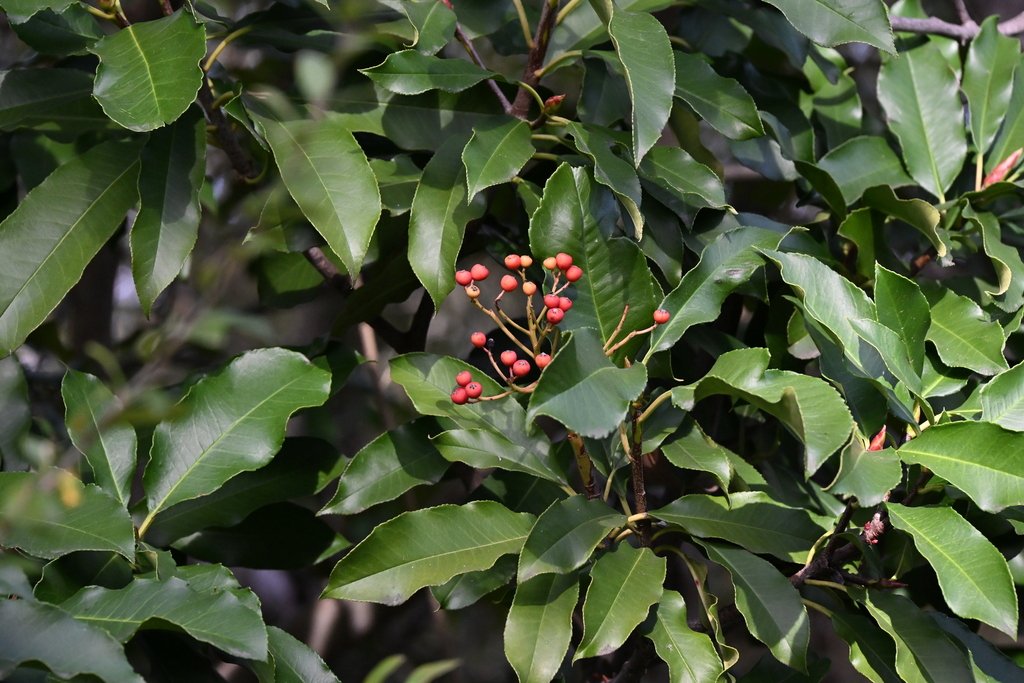
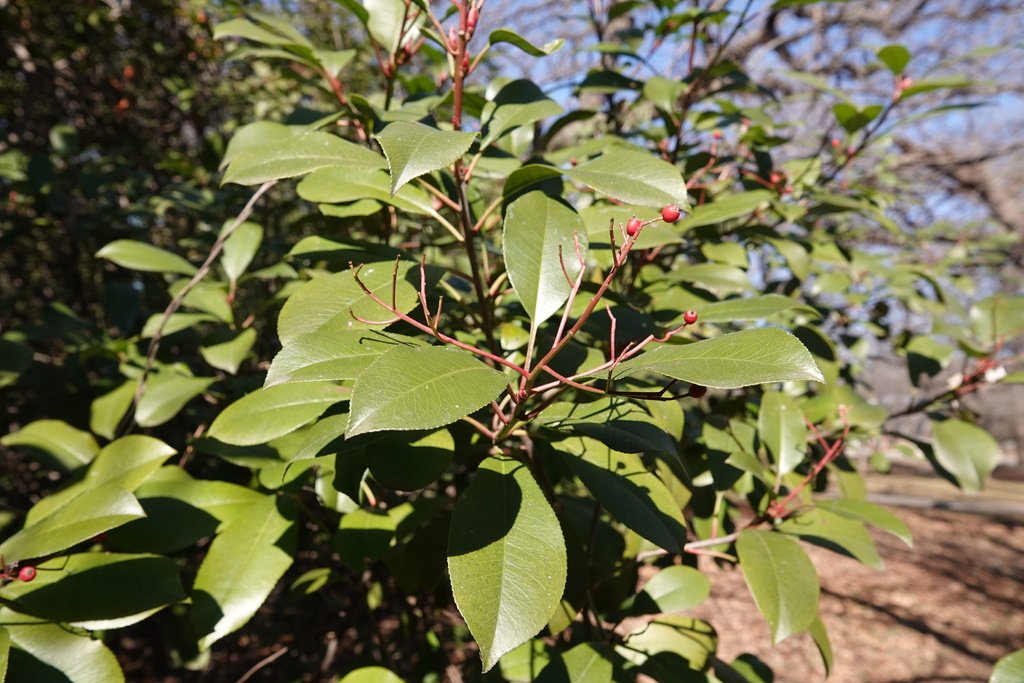
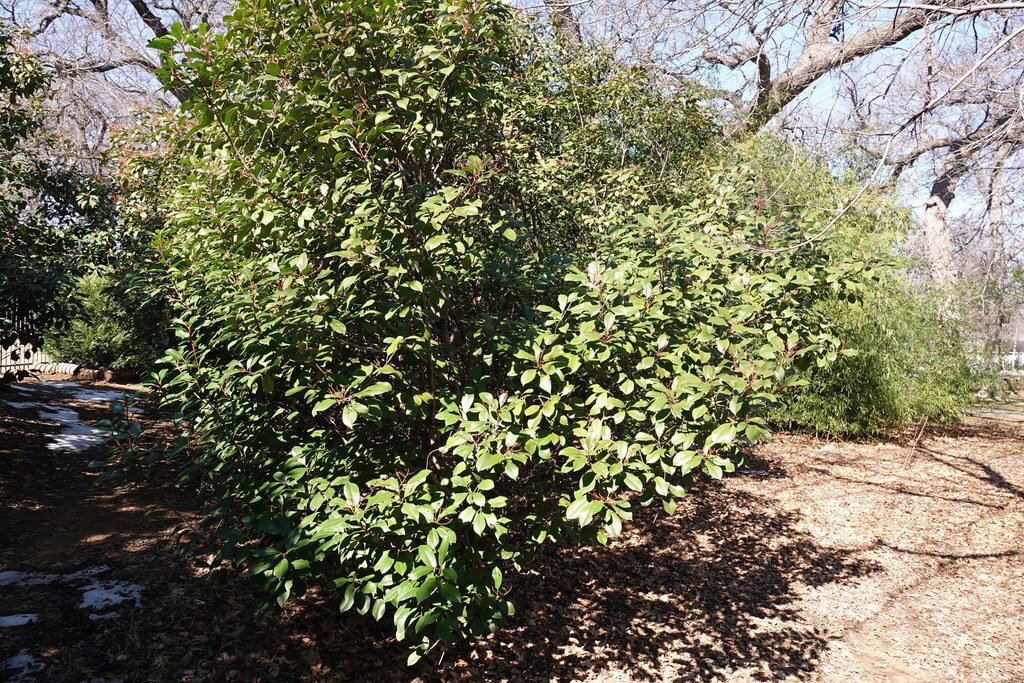
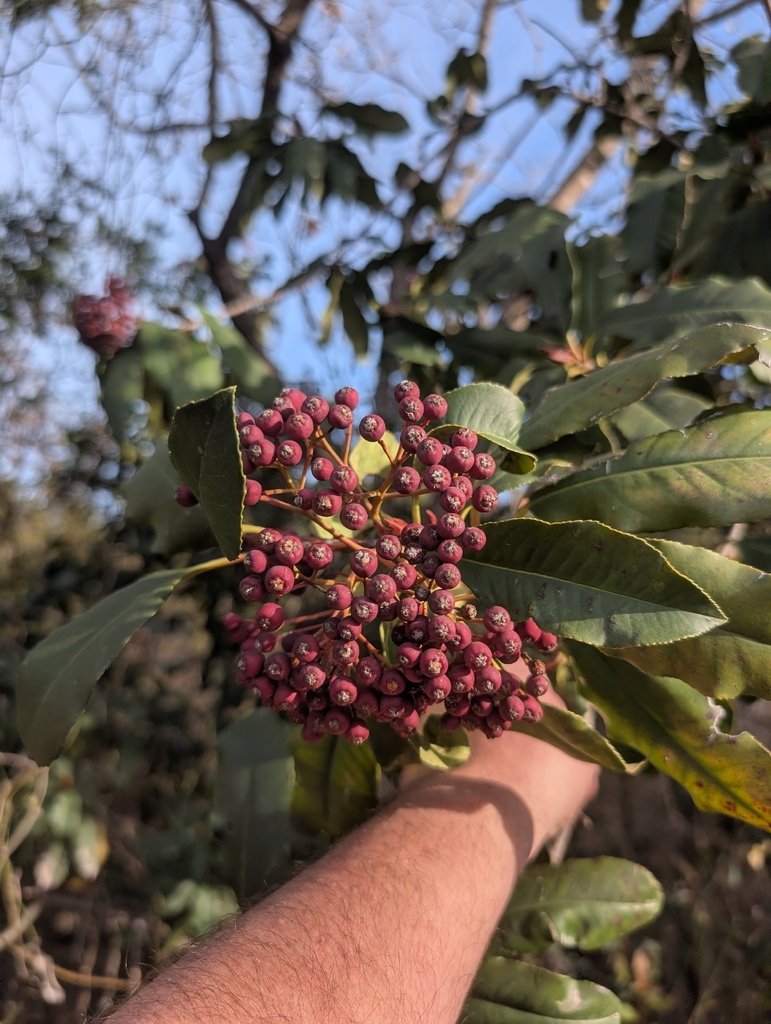
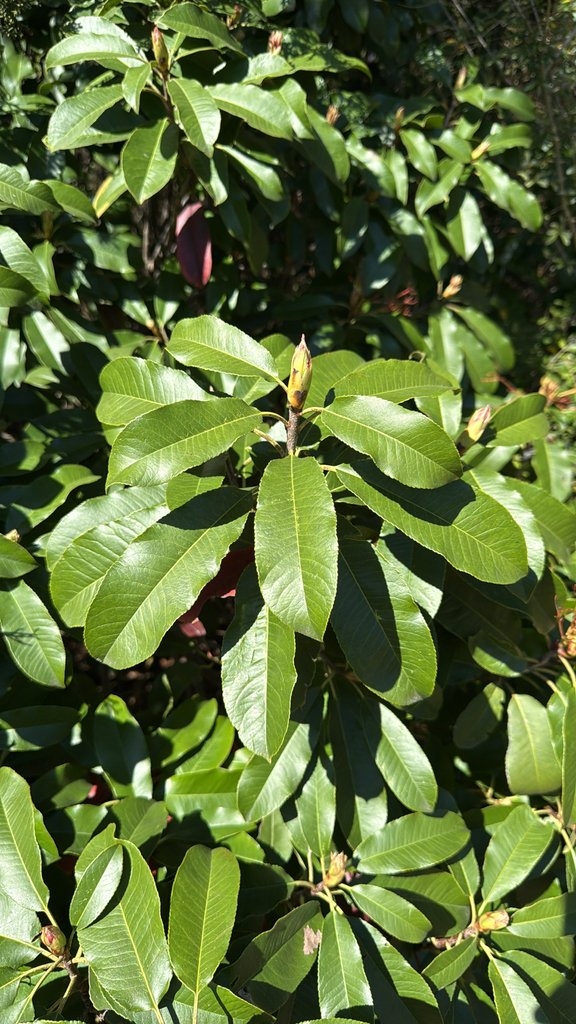
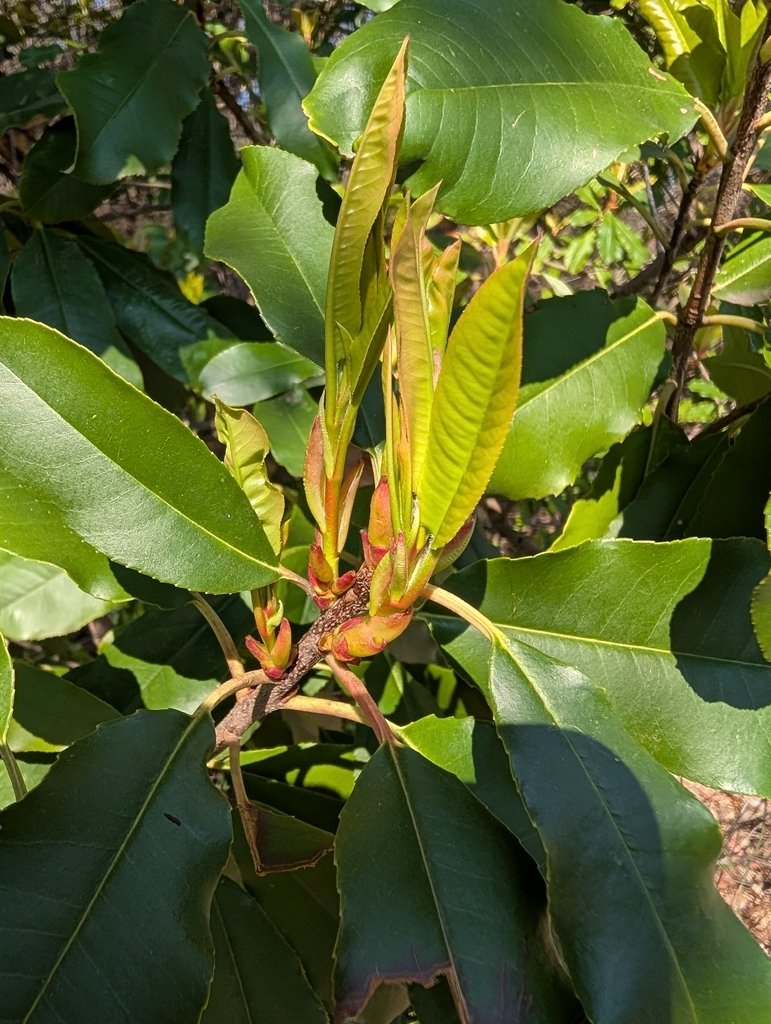
- Botanical name
- Photinia serratifolia
- Family
- Rosaceae
- Genus
- Photinia
- Flowering period
- April to May
- Height
- 4–7 m
- Spread
- 3–5 m
- Hardiness
- Fully hardy (RHS H5)
- Reference
- World Flora Online
How to grow Taiwanese photinia
Full sun to partial shade
Moderate; water through dry spells while young
Fertile, well-drained
Planting
A large evergreen needing shelter from cold winds, which scorch the foliage. Allow considerably more room than the common Photinia × fraseri hedging plants — this species makes a substantial small tree in time.
Pruning
Prune in spring after the worst frosts. Cutting stimulates the coloured young growth, but repeated hard clipping stresses the plant.
Pests and diseases
Photinia leaf spot causes dark purple blotches and premature leaf fall, particularly in wet seasons and on crowded plants. Clear fallen leaves and improve airflow.
Notes
Much less commonly grown in the UK than Photinia × fraseri, so local experience is thin and the figures above should be treated as approximate.
This guidance was researched and written by GardenDecoded — see our editorial policy for how guides are checked and reviewed.
Other names for this plant
These names have all been used for Photinia serratifolia but are no longer the accepted name. You may still meet them on old labels, in books, or in nursery catalogues.
Crataegus serratifolia
Pyrus serratifolia
Others in Photinia
GardenDecoded is an educational gardening reference. Botanical data comes from World Flora Online and GBIF; growing guidance is our own. Always check a plant's toxicity and local invasiveness status before planting, and never eat or apply a plant based on this site alone.