Philadelphus affinis
Mock Orange
Philadelphus coronarius
L. Species


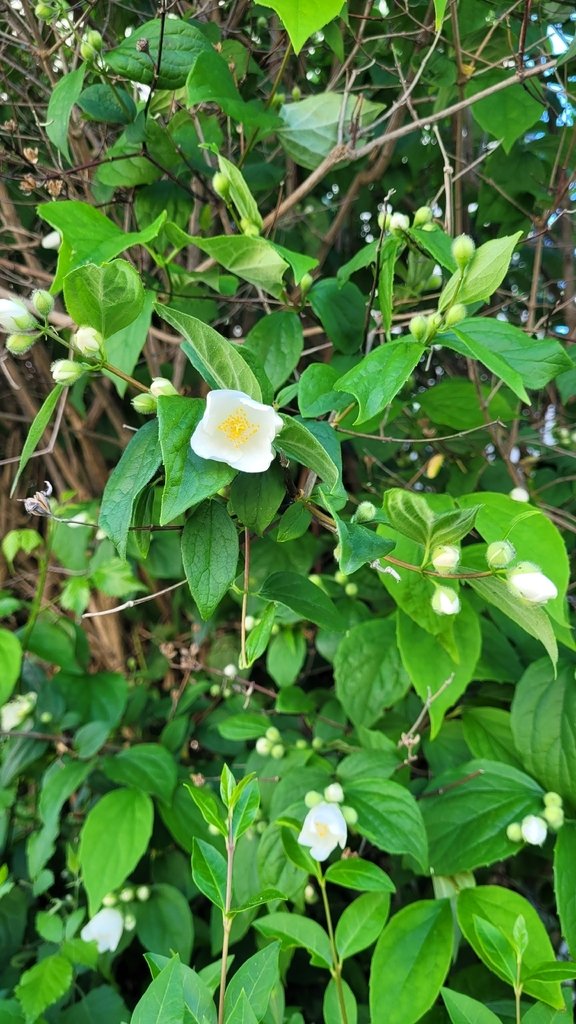
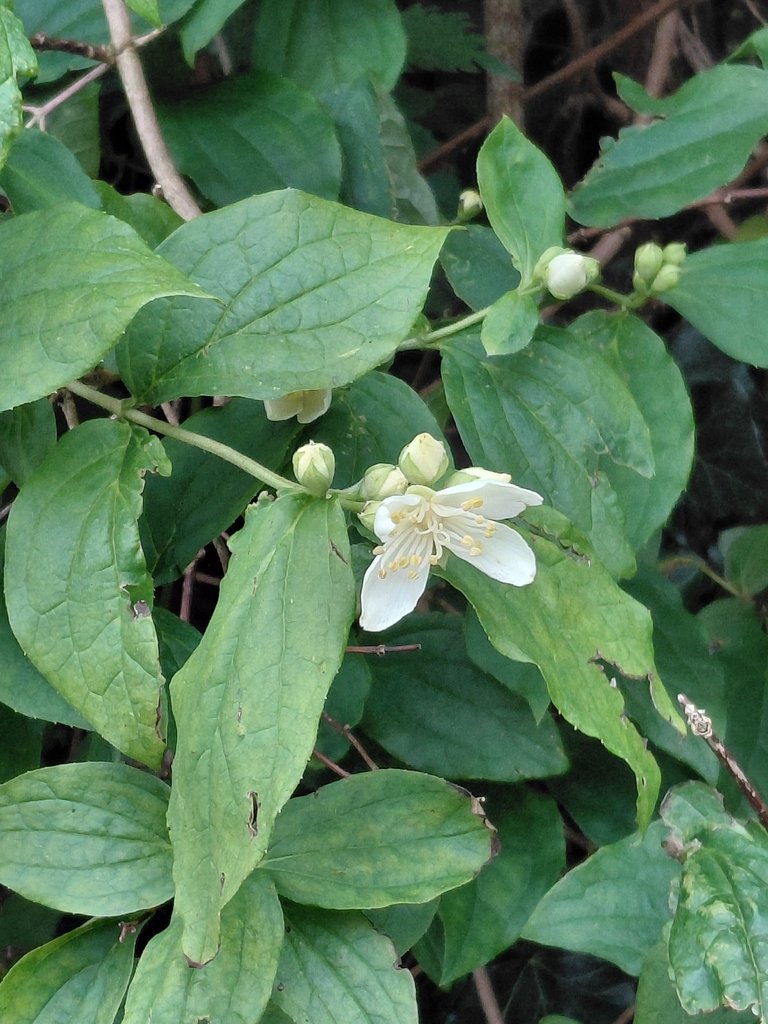


- Botanical name
- Philadelphus coronarius
- Also known as
- European Mock-Orange, Mock Orange, Mock-Orange, Philadelphia Mock-Orange, Sweet Mock Orange, Sweet Mock-Orange
- Family
- Hydrangeaceae
- Genus
- Philadelphus
- Flowering period
- June
- Height
- 2.5–3 m
- Spread
- 200–250 cm
- Hardiness
- Fully hardy (RHS H6)
- Reference
- World Flora Online
How to grow Mock Orange
Full sun to partial shade
Low once established
Most soils including chalk and poor dry ground
Acid to alkaline
Planting
Tough and unfussy, and one of the better shrubs for poor chalky soil. The scent is the point, so plant it within reach of a path or window rather than at the back of a border.
Pruning
Prune immediately after flowering: cut the flowered shoots back to strong new growth lower down, and remove a quarter to a third of the oldest stems at the base. Pruning in spring removes the flower buds — this is the commonest reason a mock orange does not flower.
Propagation
Softwood cuttings in early summer or hardwood cuttings in autumn; both take readily.
Pests and diseases
Blackfly can colonise the shoot tips heavily in early summer. Otherwise little trouble.
Value to wildlife
Open, scented flowers are visited by bees and hoverflies.
Notes
It has about three weeks of interest and eleven months of plain green. Site it accordingly — as a backdrop or in a mixed planting, not as a specimen where it will be looked at all year.
Some structured details on this page (such as tolerances, pH and hardiness) come from USDA PLANTS Database (public domain). The written guidance is GardenDecoded's own, researched as described in our editorial policy.
Other names for this plant
These names have all been used for Philadelphus coronarius but are no longer the accepted name. You may still meet them on old labels, in books, or in nursery catalogues.
Philadelphus aromaticus
Philadelphus caucasicus
Philadelphus caucasicus var. glabratus
Philadelphus coronarius f. aureus
Philadelphus coronarius f. deutziiflorus
Philadelphus coronarius f. duplex
Philadelphus coronarius f. primuliflorus
Philadelphus coronarius f. pumilus
Philadelphus coronarius f. salicifolius
Philadelphus coronarius f. variegatus
Philadelphus coronarius var. aureus
Philadelphus coronarius var. deutziiflorus-plenus
Philadelphus coronarius var. duplex
Philadelphus coronarius var. glabratus
Philadelphus coronarius var. grandiflorus
Philadelphus coronarius var. primuliflorus-plenus
Philadelphus coronarius var. pumilus
Philadelphus coronarius var. rosiflorus-plenus
Philadelphus coronarius var. variegatus
Philadelphus deyrolleanus
Philadelphus grandiflorus
Philadelphus keteleeri
Philadelphus kochianus
Philadelphus nanus
Philadelphus pallidus
Philadelphus primuliflorus
Philadelphus salicifolius
Philadelphus salzmannii
Philadelphus speciosus
Philadelphus umbellatus
Philadelphus uniflorus
Philadelphus zeyheri
Philadelphus zeyheri var. kochianus
Philadelphus zeyheri var. umbellatus
Syringa alba
Syringa suaveolens
Others in Philadelphus
GardenDecoded is an educational gardening reference. Botanical data comes from World Flora Online and GBIF; growing guidance is our own. Always check a plant's toxicity and local invasiveness status before planting, and never eat or apply a plant based on this site alone.