Petroselinum crispum subsp. crispum
Parsley
Petroselinum crispum
(Mill.) Fuss Species


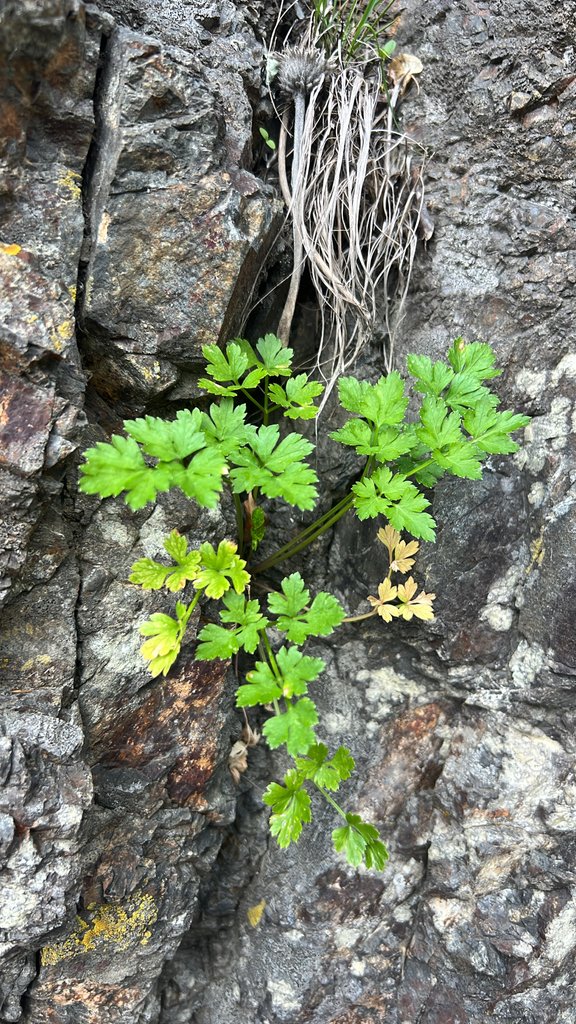


- Botanical name
- Petroselinum crispum
- Family
- Apiaceae
- Genus
- Petroselinum
- Flowering period
- June to August
- Height
- 25–60 cm
- Spread
- 20–30 cm
- Hardiness
- Hardy (RHS H5)
- Reference
- World Flora Online
How to grow Parsley
Full sun to partial shade
Regular; bolts quickly if it dries out
Moist, fertile, well-drained
Neutral
Planting
Sow from March to July where it is to grow, or in modules. Germination is slow and uneven — three to five weeks is normal, and warm soil helps. Sow a second batch in midsummer for autumn and winter picking, and thin to about 15 cm apart.
Pruning
Pick outer stems from the base rather than shearing the top, and the plant keeps producing. Remove flowering stems if they appear in the first year.
Propagation
From seed only. It does not transplant well once the taproot is established, so sow direct or use modules and plant out young.
Pests and diseases
Carrot fly attacks the roots of parsley as well as carrots; a fine mesh cover or a fleece barrier is the practical answer. Slugs take seedlings, and aphids gather on flowering stems.
Value to wildlife
If left to flower in its second year the flat umbels attract hoverflies and small parasitic wasps.
Notes
Parsley is biennial: it makes leaf in year one, flowers and sets seed in year two, then dies. Sow fresh every year rather than trying to keep old plants going. Flat-leaved types generally have more flavour, curled types stand winter better.
This guidance was researched and written by GardenDecoded — see our editorial policy for how guides are checked and reviewed.
Other names for this plant
These names have all been used for Petroselinum crispum but are no longer the accepted name. You may still meet them on old labels, in books, or in nursery catalogues.
Apium crispum
Carum petroselinum var. crispum
Petroselinum crispum
Petroselinum crispum var. angustifolium
Petroselinum hortense var. crispum
Petroselinum sativum var. crispum
Petroselinum vulgare var. crispum
Others in Petroselinum
GardenDecoded is an educational gardening reference. Botanical data comes from World Flora Online and GBIF; growing guidance is our own. Always check a plant's toxicity and local invasiveness status before planting, and never eat or apply a plant based on this site alone.