Osmanthus armatus
Delavay osmanthus
Osmanthus delavayi
Franch. Species
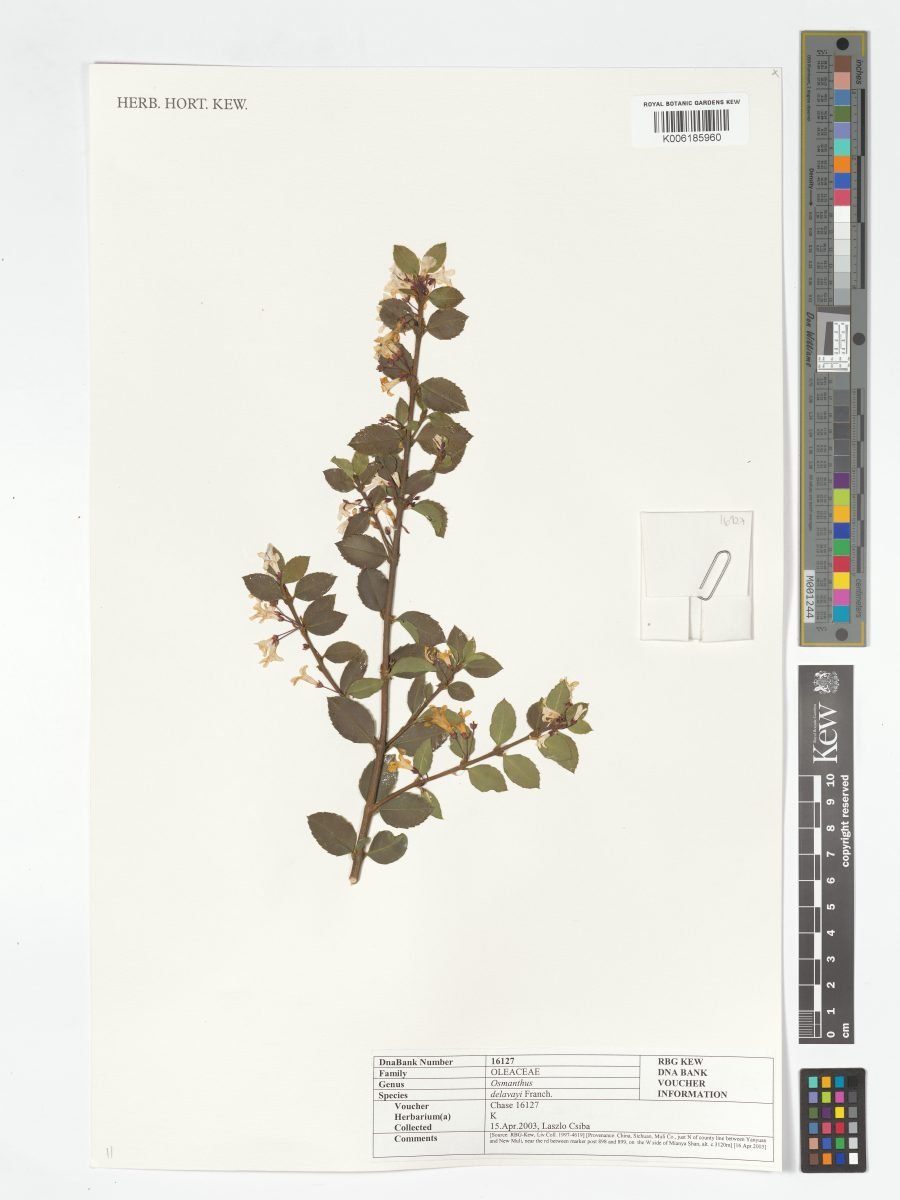
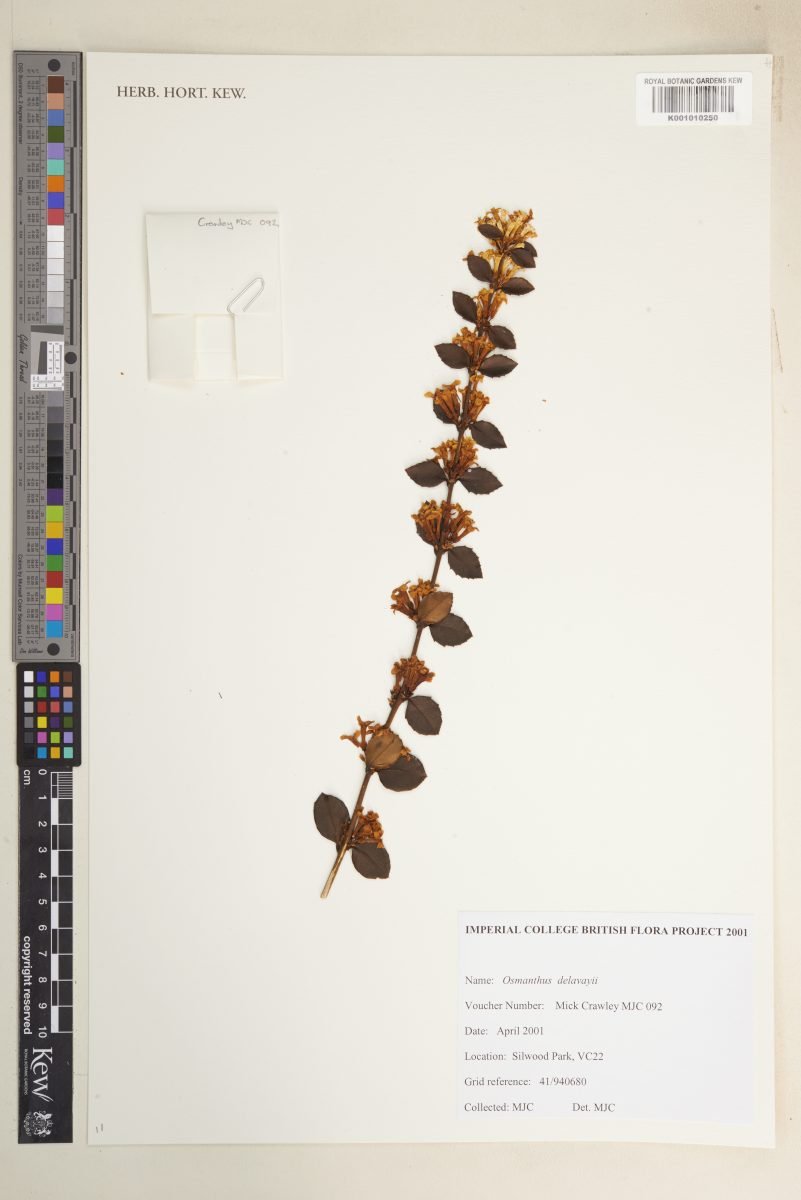


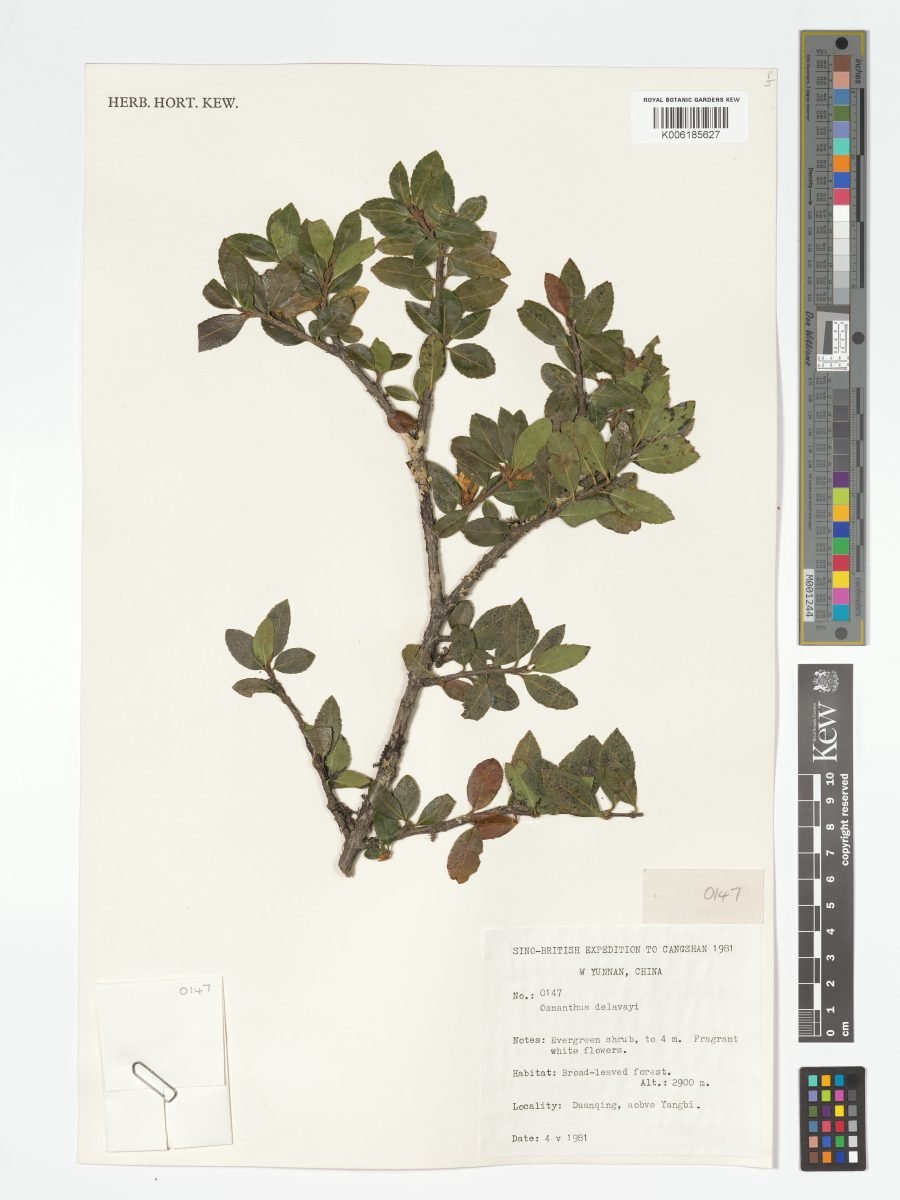
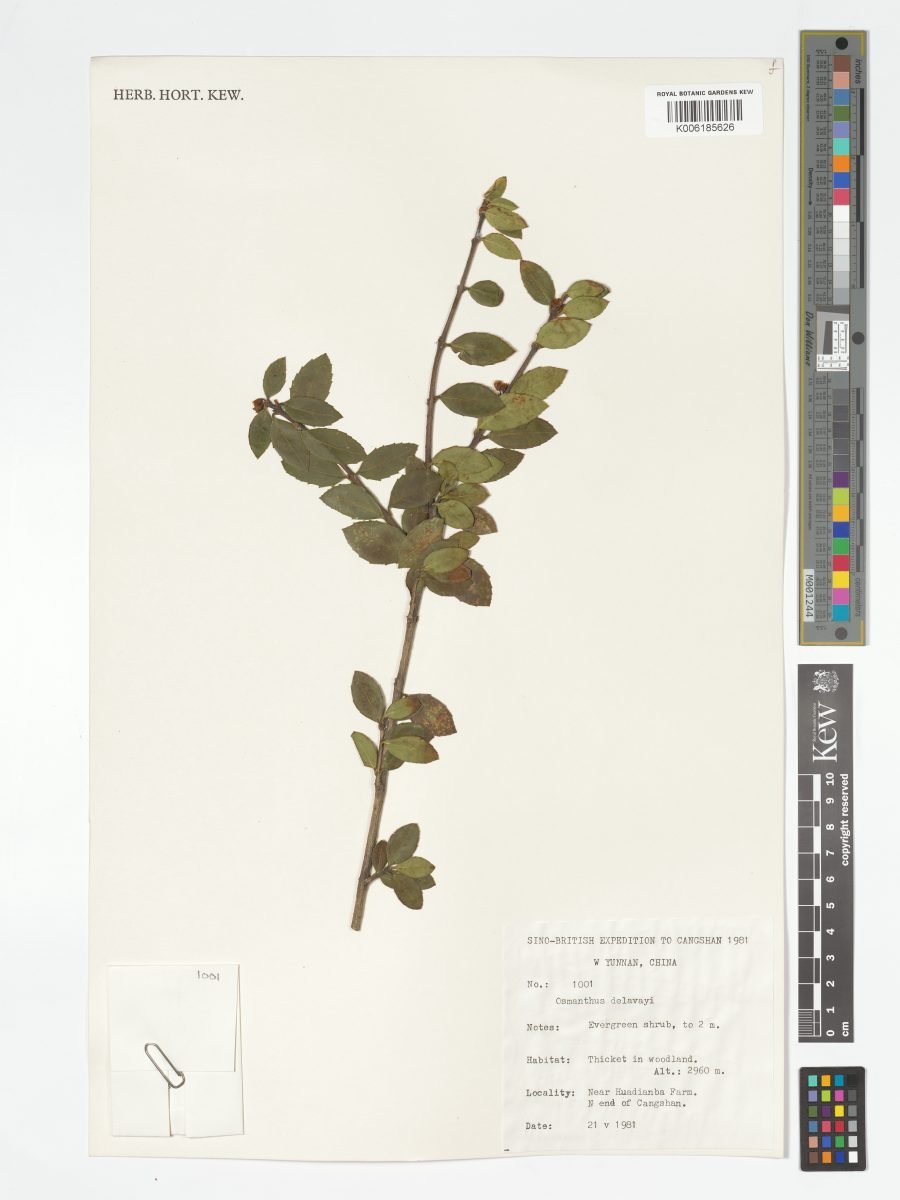
- Botanical name
- Osmanthus delavayi
- Family
- Oleaceae
- Genus
- Osmanthus
- Flowering period
- April
- Height
- 2–4 m
- Spread
- 2–4 m
- Hardiness
- Fully hardy (RHS H5)
- Reference
- World Flora Online
How to grow Delavay osmanthus
Full sun to partial shade
Low to moderate once established
Fertile, well-drained
Planting
Best given shelter from cold drying winds, which brown the small evergreen leaves. Site it where the spring scent will be noticed — it carries a surprising distance for such small flowers.
Pruning
Trim straight after flowering. It clips well and makes a good informal hedge, but cutting later in the season removes the following spring's flower buds.
Propagation
Semi-ripe cuttings in late summer with bottom heat. They are slow but reasonably reliable.
Pests and diseases
Few problems. Scale insects occasionally, and leaf browning is usually wind scorch rather than disease.
Value to wildlife
Early nectar for bees at a time when little else is open.
Notes
Growth is slow, so buy the largest plant you can afford rather than expecting a small one to fill a space quickly.
This guidance was researched and written by GardenDecoded — see our editorial policy for how guides are checked and reviewed.
Other names for this plant
These names have all been used for Osmanthus delavayi but are no longer the accepted name. You may still meet them on old labels, in books, or in nursery catalogues.
Ligustrum phillyrea
Siphonosmanthus delavayi
Others in Osmanthus
GardenDecoded is an educational gardening reference. Botanical data comes from World Flora Online and GBIF; growing guidance is our own. Always check a plant's toxicity and local invasiveness status before planting, and never eat or apply a plant based on this site alone.