Monarda bradburyana
Fragrant Balm
Monarda didyma
L. Species


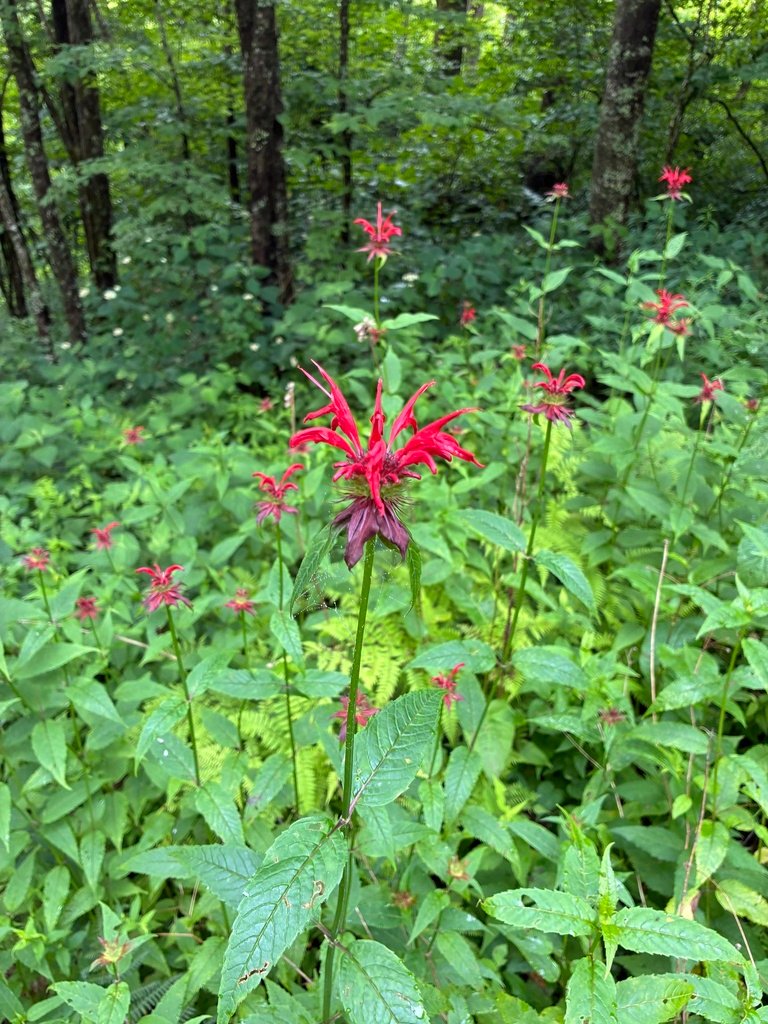
- Botanical name
- Monarda didyma
- Also known as
- Beebalm, Bergamot, Fragrant Balm, Fragrantbalm, Mountain Mint, Mountain-Mint, Oswego Tea, Oswego-Tea, Scarlet Beebalm
- Family
- Lamiaceae
- Genus
- Monarda
- Flowering period
- July to September
- Height
- 90–120 cm
- Spread
- 45–60 cm
- Hardiness
- Fully hardy (RHS H6)
- Reference
- World Flora Online
How to grow Fragrant Balm
Full sun to partial shade
Generous; keep the soil moist through summer
Fertile, moisture-retentive but not waterlogged in winter
Neutral to slightly acid
Planting
Plant in spring in soil improved with compost. Dry roots are the usual cause of failure and of bad mildew, so pick a spot that stays moist and mulch in spring. Give it air movement as well — a crowded, still corner makes mildew worse.
Pruning
Deadhead to extend flowering. Cut stems back in late autumn or leave the seed heads standing for winter and cut down in early spring.
Propagation
Divide in spring every two or three years, keeping the vigorous outer growth. Basal cuttings in spring root easily.
Pests and diseases
Powdery mildew is the recurring problem, and a dry summer will bring it on almost every time. Keeping the roots moist and dividing regularly helps more than anything sprayed on the leaves.
Value to wildlife
Very good for bees, and the shaggy tubular flowers are worked by long-tongued bumblebees in particular. Leaving seed heads gives winter food for small birds.
Notes
It spreads by shallow runners and the centre of the clump goes bare after a few years. Regular division keeps it both vigorous and in bounds.
This guidance was researched and written by GardenDecoded — see our editorial policy for how guides are checked and reviewed.
Other names for this plant
These names have all been used for Monarda didyma but are no longer the accepted name. You may still meet them on old labels, in books, or in nursery catalogues.
Monarda coccinea
Monarda contorta
Monarda didyma var. angustifolia
Monarda didynama
Monarda kalmiana
Monarda oswegoensis
Monarda purpurascens
Monarda purpurea
Others in Monarda
GardenDecoded is an educational gardening reference. Botanical data comes from World Flora Online and GBIF; growing guidance is our own. Always check a plant's toxicity and local invasiveness status before planting, and never eat or apply a plant based on this site alone.