Malus × zumi
Crab Apple
Malus sylvestris
(L.) Mill. Species




- Botanical name
- Malus sylvestris
- Also known as
- Crab Apple, European Crab Apple, European Crabapple, European Wild Apple, Pommier Sauvage
- Family
- Rosaceae
- Genus
- Malus
- Flowering period
- May
- Height
- 5–10 m
- Spread
- 4–8 m
- Hardiness
- Fully hardy (RHS H6)
- Reference
- World Flora Online
How to grow Crab Apple
Full sun to light shade
Low to moderate once established
Most reasonably drained soils, including clay
Acid, neutral or alkaline
Planting
Our native crab apple, best planted bare-root in winter in a hedgerow, wildlife planting or as a small specimen tree. It suits full sun for the heaviest blossom and fruit, but tolerates a degree of shade at a woodland edge.
Pruning
Prune in winter when dormant, taking out dead, crossing and congested growth to keep an open centre. It needs far less attention than a dessert apple and should not be pruned to a formal framework.
Propagation
Sow seed in autumn outdoors after cleaning it from the fruit; germination follows a winter's cold. Seedlings vary and may show hybridisation with orchard apples.
Pests and diseases
Apple scab causes dark blotches on leaves and fruit. Mildew, canker and woolly aphid all occur, though the wild species is generally tougher than cultivated apples.
Value to wildlife
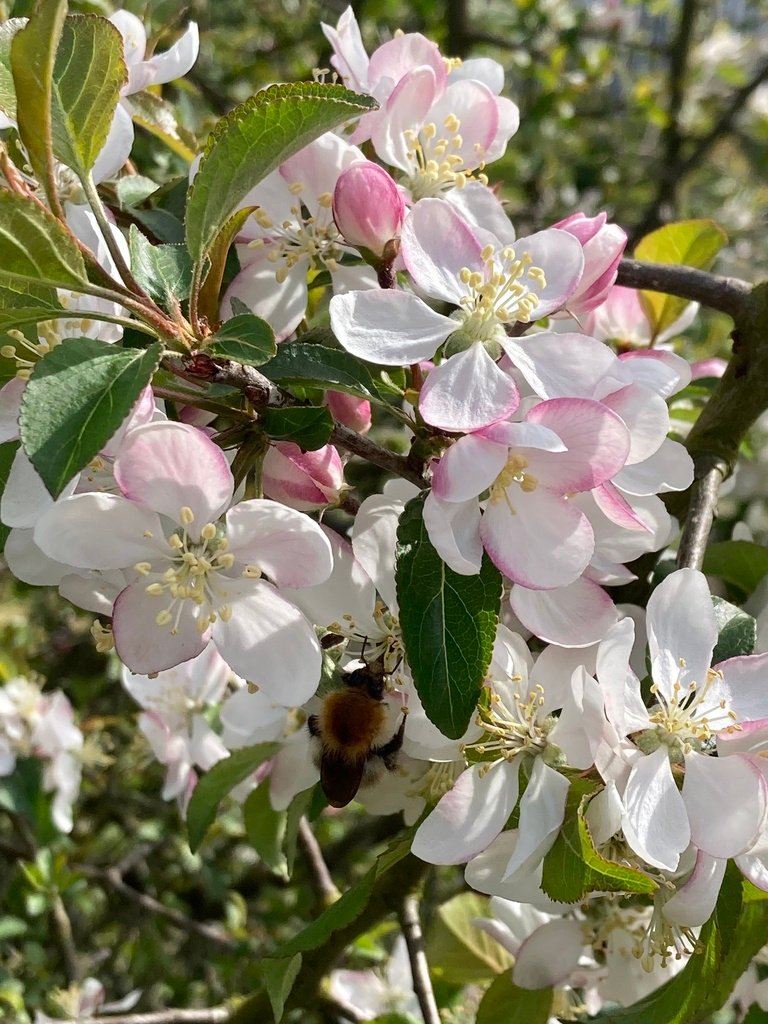
Very good. The blossom is an important early nectar source, and the small hard fruits persist into winter and are eaten by blackbirds, thrushes and fieldfares once softened by frost.
Notes
The fruits are far too sour to eat raw but are high in pectin and traditionally used in jelly. Note that the true wild species is often confused with escaped orchard seedlings, so buy from a nursery that specialises in native stock if provenance matters.
Some structured details on this page (such as tolerances, pH and hardiness) come from USDA PLANTS Database (public domain). The written guidance is GardenDecoded's own, researched as described in our editorial policy.
Other names for this plant
These names have all been used for Malus sylvestris but are no longer the accepted name. You may still meet them on old labels, in books, or in nursery catalogues.
Malus acerta
Malus communis subsp. sylvestris
Malus communis var. sylvestris
Pyrus acerba
Pyrus malus subsp. sylvestris
Pyrus malus var. sylvestris
Pyrus pomum
Pyrus sylvestris
Others in Malus
GardenDecoded is an educational gardening reference. Botanical data comes from World Flora Online and GBIF; growing guidance is our own. Always check a plant's toxicity and local invasiveness status before planting, and never eat or apply a plant based on this site alone.