Jasminum × stephanense
Common Jasmine
Jasminum officinale
L. Species


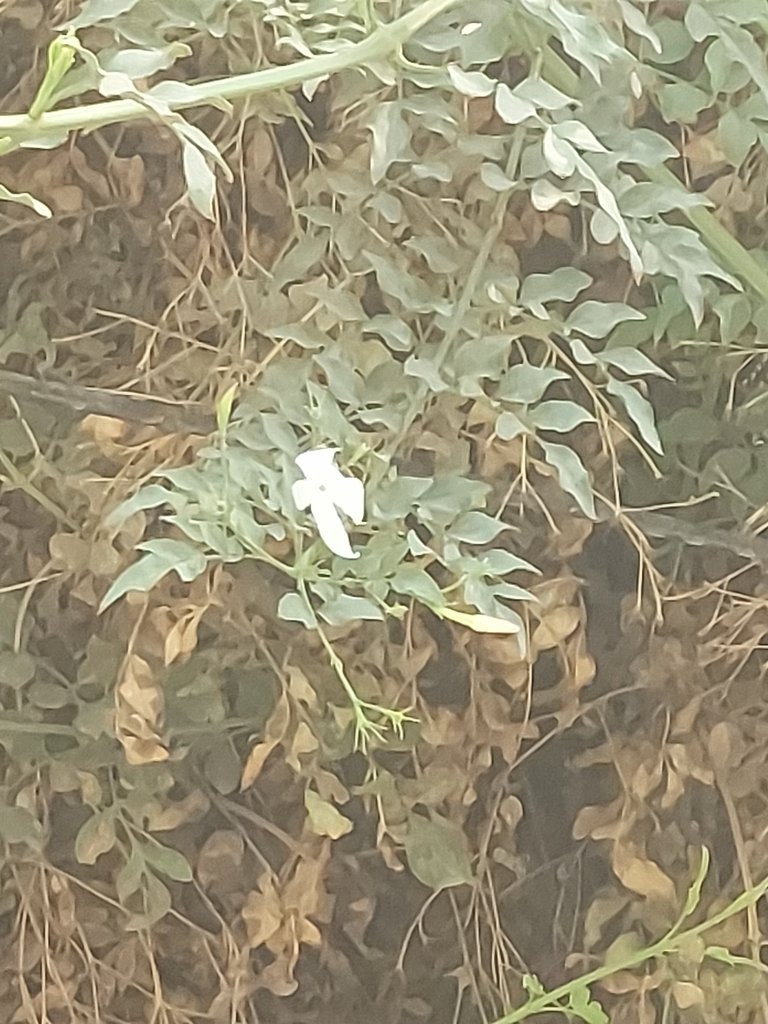
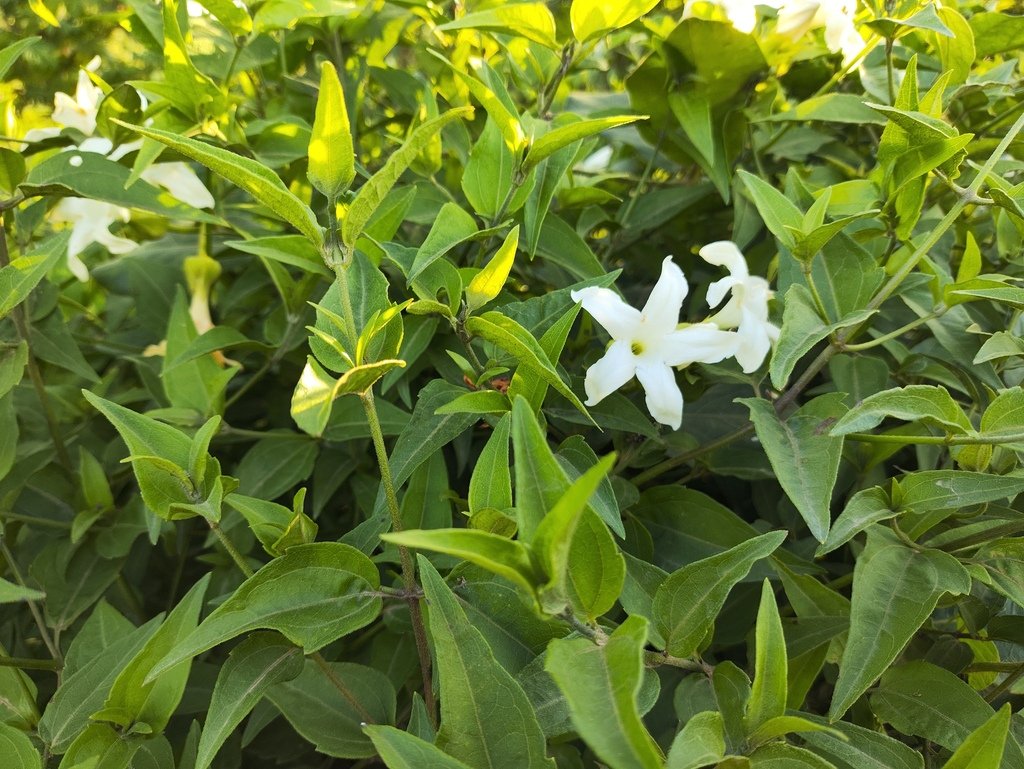
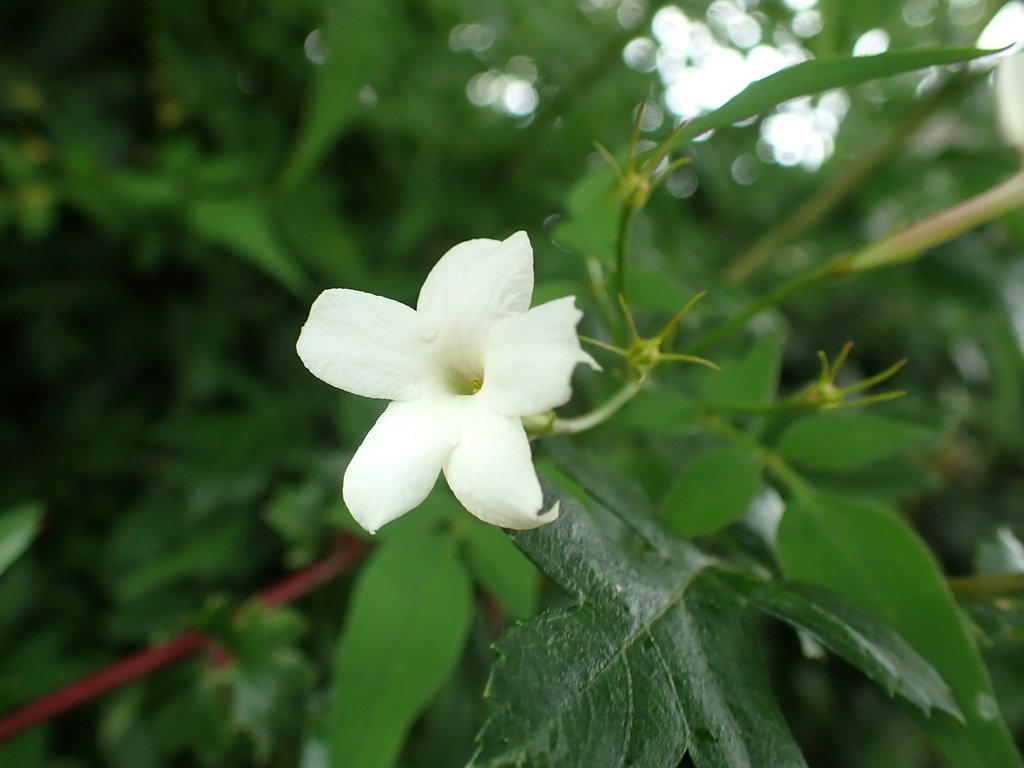
- Botanical name
- Jasminum officinale
- Also known as
- Common Jasmine, Jasmine, Jessamine, Poet's Jasmine, Summer Jasmine, White Jasmine
- Family
- Oleaceae
- Genus
- Jasminum
- Flowering period
- June to September
- Height
- 4–10 m
- Hardiness
- Hardy in most of the UK (RHS H4)
- Reference
- World Flora Online
How to grow Common Jasmine
Full sun; will grow in part shade but flowers less
Moderate; water in dry spells, especially against a wall
Fertile, well-drained
Planting
Give it a warm sheltered wall or a sturdy pergola and tie in the main stems as they extend — it twines but needs guidance to cover evenly. Plant near a door or seat where the evening scent is worth having.
Pruning
Thin out after flowering, taking whole old stems back to the base rather than shortening every shoot. Left alone it turns into a tangled mass of dead wood with flowers only at the top.
Propagation
Semi-ripe cuttings in summer, or layer a low stem into the soil in autumn and separate it the following year.
Pests and diseases
Aphids on young growth are the usual complaint. Little else troubles it.
Value to wildlife
The scent is strongest at dusk and attracts moths.
Notes
In cold inland gardens it can be cut back by a hard winter but usually reshoots from the base. It gets heavy with age — check that the support will still hold it in ten years.
This guidance was researched and written by GardenDecoded — see our editorial policy for how guides are checked and reviewed.
Other names for this plant
These names have all been used for Jasminum officinale but are no longer the accepted name. You may still meet them on old labels, in books, or in nursery catalogues.
Jasminum affine
Jasminum ochroleucum
Jasminum officinale f. affine
Jasminum officinale f. aureovariegatum
Jasminum officinale var. acutum
Jasminum officinale var. affine
Jasminum officinale var. argenteovariegatum
Jasminum officinale var. aureovariegatum
Jasminum officinale var. aureum
Jasminum officinale var. bosphoricum
Jasminum officinale var. officinale
Jasminum officinale var. piliferum
Jasminum officinale var. pumilum
Jasminum officinale var. tenuifolium
Jasminum officinale var. tibeticum
Jasminum viminale
Jasminum vulgatius
Others in Jasminum
GardenDecoded is an educational gardening reference. Botanical data comes from World Flora Online and GBIF; growing guidance is our own. Always check a plant's toxicity and local invasiveness status before planting, and never eat or apply a plant based on this site alone.