Helleborus colchicus
Black Helleborus
Helleborus niger
L. Species


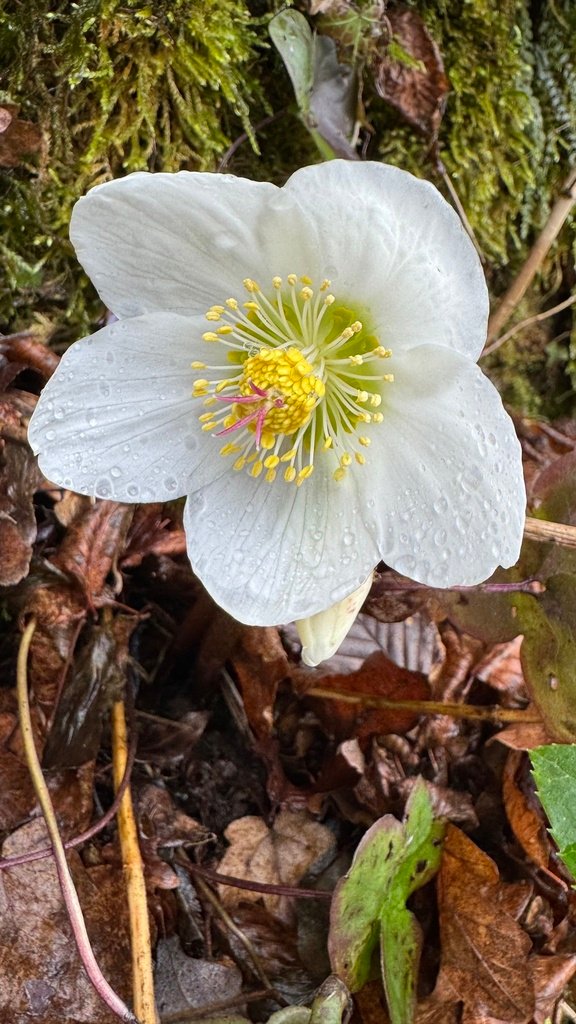


- Botanical name
- Helleborus niger
- Also known as
- Black Hellebore, Black Helleborus, Christmas Rose, Christmas-Rose
- Family
- Ranunculaceae
- Genus
- Helleborus
- Flowering period
- December to March
- Height
- 23–30 cm
- Spread
- 30–45 cm
- Hardiness
- Fully hardy (RHS H7)
- Native range
- Mountains of central and southern Europe
- Reference
- World Flora Online
How to grow Black Helleborus
Partial shade
Moderate; never waterlogged
Fertile, well-drained, humus-rich
Neutral to alkaline
Planting
Plant in autumn in a sheltered spot with shade in summer and light in winter — the base of a deciduous shrub suits it well. It dislikes being moved, so choose the position carefully and leave it alone.
A chalky soil is fine; heavy wet clay is not. Improve drainage with grit before planting if in doubt.
Pruning
Cut away last year's leathery leaves in late autumn, before the flower buds push through. This shows the flowers off properly and removes the main source of hellebore leaf spot.
Propagation
Divide established clumps in early autumn, though it resents disturbance and may sulk for a season. Seed is slow and seedlings vary.
Pests and diseases
Hellebore leaf spot causes dark blotches — remove and destroy affected leaves. Aphids can gather under the flowers.
Value to wildlife
One of very few things flowering in midwinter, so valuable to any bumblebee queen that emerges on a mild day.
This guidance was researched and written by GardenDecoded — see our editorial policy for how guides are checked and reviewed.
Other names for this plant
These names have all been used for Helleborus niger but are no longer the accepted name. You may still meet them on old labels, in books, or in nursery catalogues.
Helleborus altifolius
Helleborus grandiflorus
Others in Helleborus
GardenDecoded is an educational gardening reference. Botanical data comes from World Flora Online and GBIF; growing guidance is our own. Always check a plant's toxicity and local invasiveness status before planting, and never eat or apply a plant based on this site alone.