Hamamelis japonica
Chinese Witch-Hazel
Hamamelis mollis
Oliv. Species


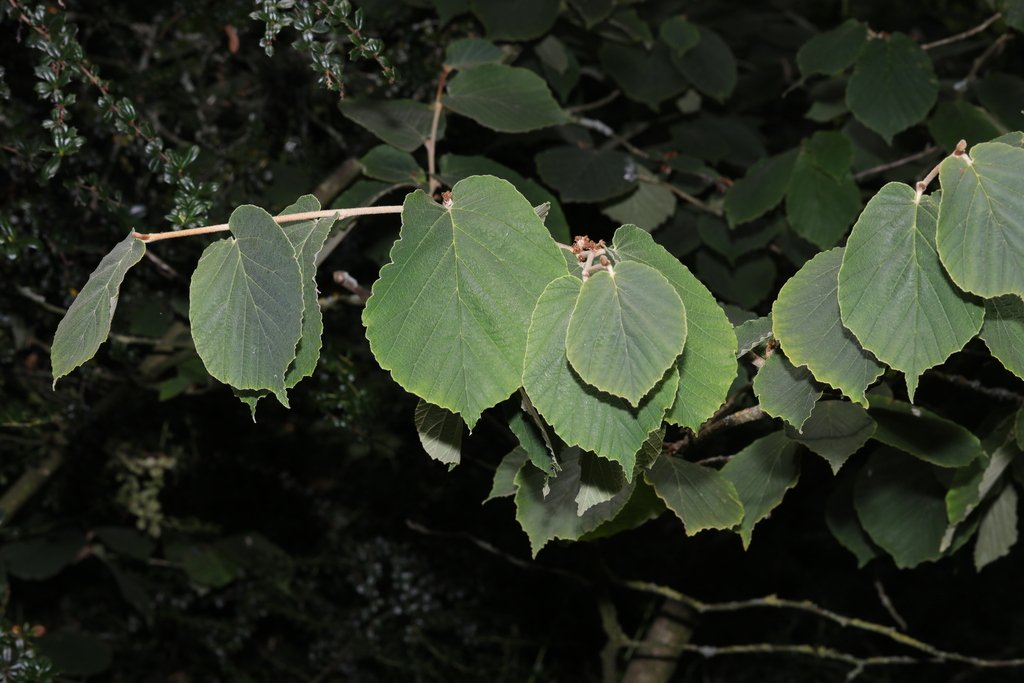

- Botanical name
- Hamamelis mollis
- Also known as
- Chinese Witch-Hazel
- Family
- Hamamelidaceae
- Genus
- Hamamelis
- Flowering period
- January to February
- Height
- 3–4 m
- Spread
- 3–4 m
- Hardiness
- Fully hardy (RHS H6)
- Reference
- World Flora Online
How to grow Chinese Witch-Hazel
Full sun to light shade; needs open sky for good flowering
Moderate; does not tolerate drying out, particularly when young
Moist, humus-rich, well-drained; dislikes shallow chalk
Acid to neutral
Planting
Plant in autumn in an open position where you will pass it in January - the spidery yellow flowers are strongly scented and worth siting near a path or a window. It needs genuine space; it is slow but eventually wide, and it does not take kindly to being cut back to fit.
Pruning
Very little. Remove crossing or dead wood after flowering. Any suckers or shoots appearing from below the graft union must be cut off flush as soon as you see them - the rootstock is usually a different, vigorous species that will take over if left.
Propagation
Almost always grafted commercially, which is why plants are expensive. Layering is possible for the patient; seed is very slow and can take two years to germinate.
Pests and diseases
Generally trouble-free. Poor flowering usually means dry soil in the previous summer, too much shade, or a plant still settling in.
Value to wildlife
One of the very few winter nectar sources, taken by any bees or hoverflies flying on mild days.
Notes
It flowers on the previous season's wood and needs to be growing well in summer to bud up, so mulch and water in dry spells. Do not expect much for the first few years; it is slow to establish and slow to build a decent flowering display.
This guidance was researched and written by GardenDecoded — see our editorial policy for how guides are checked and reviewed.
Other names for this plant
These names have all been used for Hamamelis mollis but are no longer the accepted name. You may still meet them on old labels, in books, or in nursery catalogues.
Hamamelis mollis var. oblongifolia
Hamamelis virginiana var. japonica
Others in Hamamelis
GardenDecoded is an educational gardening reference. Botanical data comes from World Flora Online and GBIF; growing guidance is our own. Always check a plant's toxicity and local invasiveness status before planting, and never eat or apply a plant based on this site alone.