Gypsophila adenophylla
Bachelor's Button
Gypsophila paniculata
L. Species


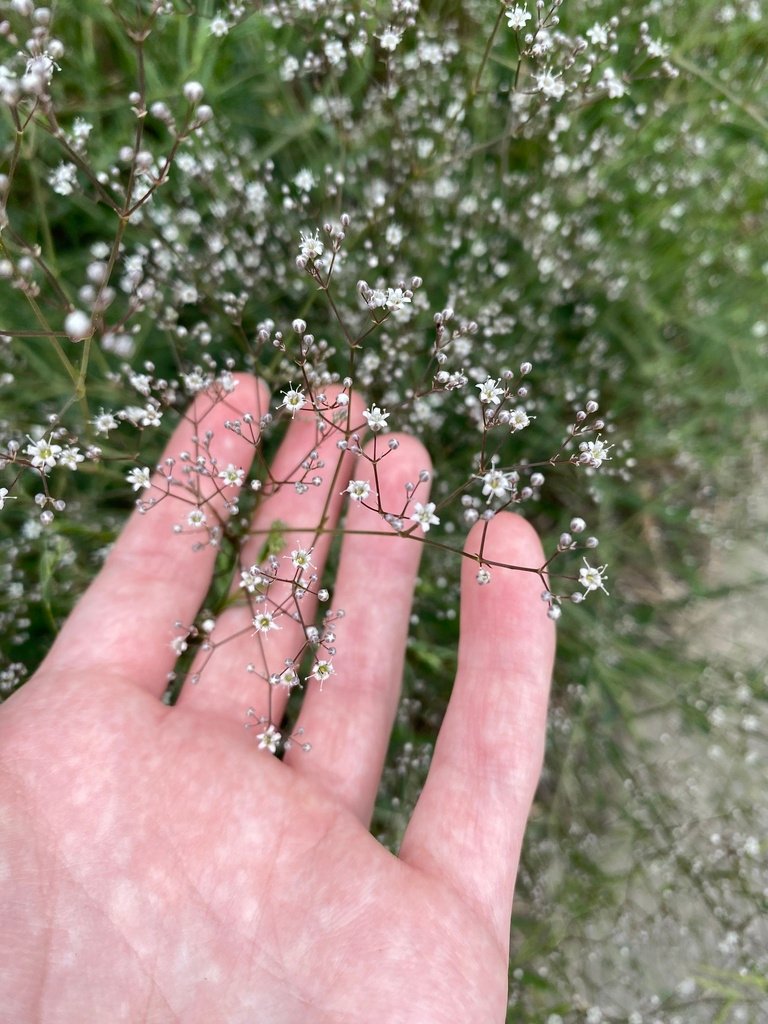

- Botanical name
- Gypsophila paniculata
- Also known as
- Baby's Breath, Baby's-Breath, Babysbreath, Babysbreath Gypsophila, Bachelor's Button, Perennial Baby's-Breath, Perfoliate Baby's Breath, Tall Baby's-Breath
- Family
- Caryophyllaceae
- Genus
- Gypsophila
- Flowering period
- June to August
- Height
- 90–120 cm
- Spread
- 90–120 cm
- Hardiness
- Fully hardy (RHS H7)
- Reference
- World Flora Online
How to grow Bachelor's Button
Full sun
Low; drought tolerant once established
Deep, sharply drained; does well on chalk
Neutral to alkaline
Planting
Plant in spring in full sun and deep, free-draining, preferably limy soil. It sends down a long taproot and will not tolerate being moved afterwards, nor will it survive a heavy wet winter in clay. Give it plenty of room; a mature plant makes a wide airy dome.
Pruning
Cut the flowered stems back after blooming, which sometimes brings a smaller second flush. Cut the plant to the ground in late autumn or leave the skeleton until early spring.
Propagation
Named double forms are usually grafted and are not practical to propagate at home. The single species can be raised from seed sown in spring. Softwood cuttings in early summer are possible but not always reliable.
Pests and diseases
Little troubles it above ground. Crown and root rot in wet or badly drained soil is the usual cause of loss.
Value to wildlife
The clouds of tiny flowers attract small bees, hoverflies and other short-tongued insects in large numbers.
Notes
It needs support despite its airy look, because a mature plant collapses onto its neighbours after rain. Put a wide, low hoop or a ring of pea sticks in place in late spring while the stems are still short.
This guidance was researched and written by GardenDecoded — see our editorial policy for how guides are checked and reviewed.
Other names for this plant
These names have all been used for Gypsophila paniculata but are no longer the accepted name. You may still meet them on old labels, in books, or in nursery catalogues.
Arrostia paniculata
Gypsophila effusa
Gypsophila hungarica
Gypsophila manginii
Gypsophila paniculata var. adenopoda
Gypsophila paniculata var. paniculata
Gypsophila parviflora
Gypsophila tatarica
Others in Gypsophila
GardenDecoded is an educational gardening reference. Botanical data comes from World Flora Online and GBIF; growing guidance is our own. Always check a plant's toxicity and local invasiveness status before planting, and never eat or apply a plant based on this site alone.