Foeniculum subinodorum
Sweet Fennel
Foeniculum vulgare
Mill. Species


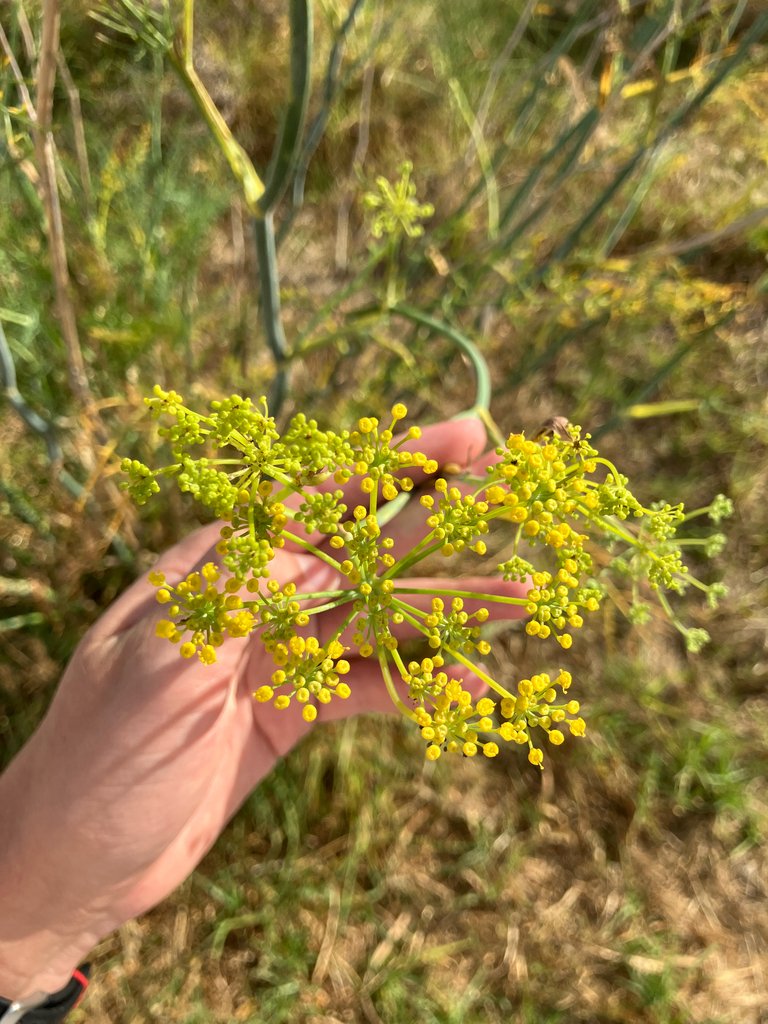


- Botanical name
- Foeniculum vulgare
- Also known as
- Aniseed-Weed, Fennel, Sweet Fennel, Venkel
- Family
- Apiaceae
- Genus
- Foeniculum
- Flowering period
- July to September
- Height
- 120–200 cm
- Spread
- 45–60 cm
- Hardiness
- Fully hardy (RHS H5)
- Reference
- World Flora Online
How to grow Sweet Fennel
Full sun
Low once established; herb fennel is notably drought-tolerant
Free-draining, moderately fertile; dislikes heavy wet clay
Neutral to alkaline
Planting
Sow direct in spring, or plant a young plant in a sunny, well-drained spot at the back of a border — the herb form is a perennial that returns each year and reaches shoulder height. Florence fennel, grown for the swollen bulb, is a different proposition: sow it direct after midsummer, as early sowings bolt, and keep it well watered.
Pruning
Cut the whole plant back to the ground in late autumn or late winter. Cutting the flower stems out in midsummer prompts a fresh flush of feathery leaf, at the cost of the seed crop.
Propagation
From seed, sown direct. Established clumps can be divided in spring, though the taproot makes this less reliable than with most perennials. It self-seeds abundantly.
Pests and diseases
Little troubles it. Aphids can gather on the flower heads, and Florence fennel bulbs may rot at the base in cold wet soil.
Value to wildlife
The large flat umbels are among the best border plants for hoverflies, small solitary bees and parasitic wasps in late summer.
Notes
It self-seeds hard — deadhead before the seed ripens unless you want it everywhere. Keep it away from dill, which it crosses with. The bronze-leaved form is the usual garden choice and comes largely true from seed.
This guidance was researched and written by GardenDecoded — see our editorial policy for how guides are checked and reviewed.
Other names for this plant
These names have all been used for Foeniculum vulgare but are no longer the accepted name. You may still meet them on old labels, in books, or in nursery catalogues.
Anethum dulce
Anethum foeniculum
Anethum foeniculum var. dulce
Anethum minus
Anethum panmori
Anethum panmorium
Anethum pannorium
Anethum rupestre
Foeniculum azoricum
Foeniculum capillaceum
Foeniculum capillaceum prol. dulce
Foeniculum capillaceum var. macrocarpum
Foeniculum divaricatum
Foeniculum dulce
Foeniculum foeniculum
Foeniculum giganteum
Foeniculum officinale
Foeniculum officinale subsp. dulce
Foeniculum officinale subsp. pateri
Foeniculum officinale subsp. sativum
Foeniculum officinale var. dulce
Foeniculum officinale var. dulce
Foeniculum officinale var. hortorum
Foeniculum officinale var. sativum
Foeniculum officinale var. silvestre
Foeniculum panmorium
Foeniculum piperitum subsp. divaricatum
Foeniculum piperitum var. pluriradiatum
Foeniculum rigidum
Foeniculum vulgare
Foeniculum vulgare
Foeniculum vulgare f. dulce
Foeniculum vulgare f. pateri
Foeniculum vulgare subsp. capillaceum
Foeniculum vulgare subsp. pateri
Foeniculum vulgare subsp. sativum
Foeniculum vulgare var. azoricum
Foeniculum vulgare var. capillaceum
Foeniculum vulgare var. dulce
Foeniculum vulgare var. inodorum
Foeniculum vulgare var. sativum
Ligusticum foeniculum
Ligusticum foeniculum
Meum foeniculum
Meum piperatum
Meum piperinum
Ozodia foeniculacea
Selinum foeniculum
Seseli dulce
Seseli foeniculum
Seseli piperitum
Tenoria romana
Others in Foeniculum
GardenDecoded is an educational gardening reference. Botanical data comes from World Flora Online and GBIF; growing guidance is our own. Always check a plant's toxicity and local invasiveness status before planting, and never eat or apply a plant based on this site alone.