Euphorbia × angustata
Mediterranean Spurge
Euphorbia characias
L. Species


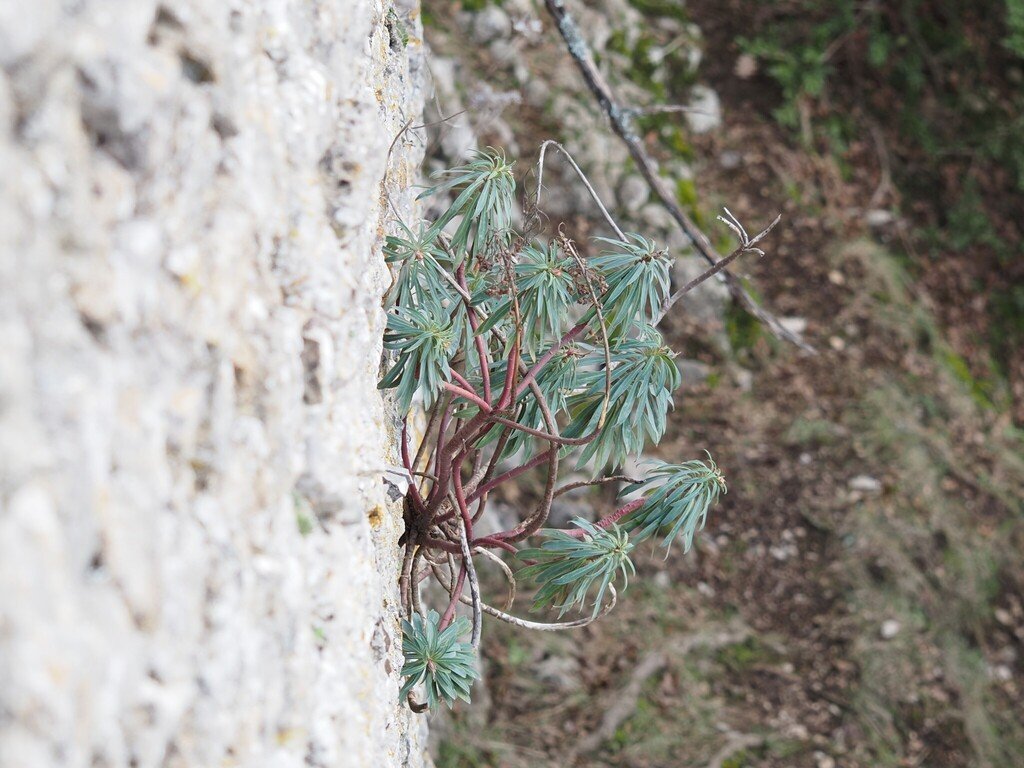


- Botanical name
- Euphorbia characias
- Also known as
- Mediterranean Spurge
- Family
- Euphorbiaceae
- Genus
- Euphorbia
- Flowering period
- March to May
- Height
- 90–120 cm
- Spread
- 90–120 cm
- Hardiness
- Hardy (RHS H5)
- Reference
- World Flora Online
How to grow Mediterranean Spurge
Full sun
Low; drought tolerant once established
Poor to moderately fertile, sharply drained
Acid, neutral or alkaline
Planting
Plant in spring in full sun with sharp drainage and shelter from cold drying winds. It is an evergreen sub-shrub and gives structure through winter, so give it a position where that counts. It resents heavy wet soil and root disturbance.
Pruning
The flowered stems are biennial: each shoot grows one year and flowers the next, then dies. Cut those spent stems right down to the base once the flowerheads fade in early summer, leaving the current year's new shoots untouched for next spring.
Propagation
Take basal cuttings in spring, dipping the cut end in water to stop the sap flow before potting. It also self-seeds moderately and seedlings transplant well when small.
Pests and diseases
Generally trouble-free. Aphids sometimes gather on new shoots, and plants in wet ground rot at the base.
Value to wildlife
The early flowerheads open in March and are a useful nectar source for bees and hoverflies well before most border plants start.
Notes
The milky sap is a well-known irritant. Wear gloves and long sleeves when pruning, keep it away from your eyes, and check the plant's safety information before siting it where children or pets have access.
This guidance was researched and written by GardenDecoded — see our editorial policy for how guides are checked and reviewed.
Other names for this plant
These names have all been used for Euphorbia characias but are no longer the accepted name. You may still meet them on old labels, in books, or in nursery catalogues.
Esula characias
Tithymalus characias
Others in Euphorbia
GardenDecoded is an educational gardening reference. Botanical data comes from World Flora Online and GBIF; growing guidance is our own. Always check a plant's toxicity and local invasiveness status before planting, and never eat or apply a plant based on this site alone.