Erigeron acer var. khasiana
Mexican Fleabane
Erigeron karvinskianus
DC. Species


- Botanical name
- Erigeron karvinskianus
- Also known as
- Bony-Tip Fleabane, Karwinsky's Fleabane, Latin American Fleabane, Mexican Fleabane, Santa Barbera Daisy
- Family
- Asteraceae
- Genus
- Erigeron
- Flowering period
- May to October
- Height
- 15–30 cm
- Spread
- 45–90 cm
- Hardiness
- Hardy in most of the UK (RHS H4)
- Reference
- World Flora Online
How to grow Mexican Fleabane
Full sun
Low; very drought tolerant
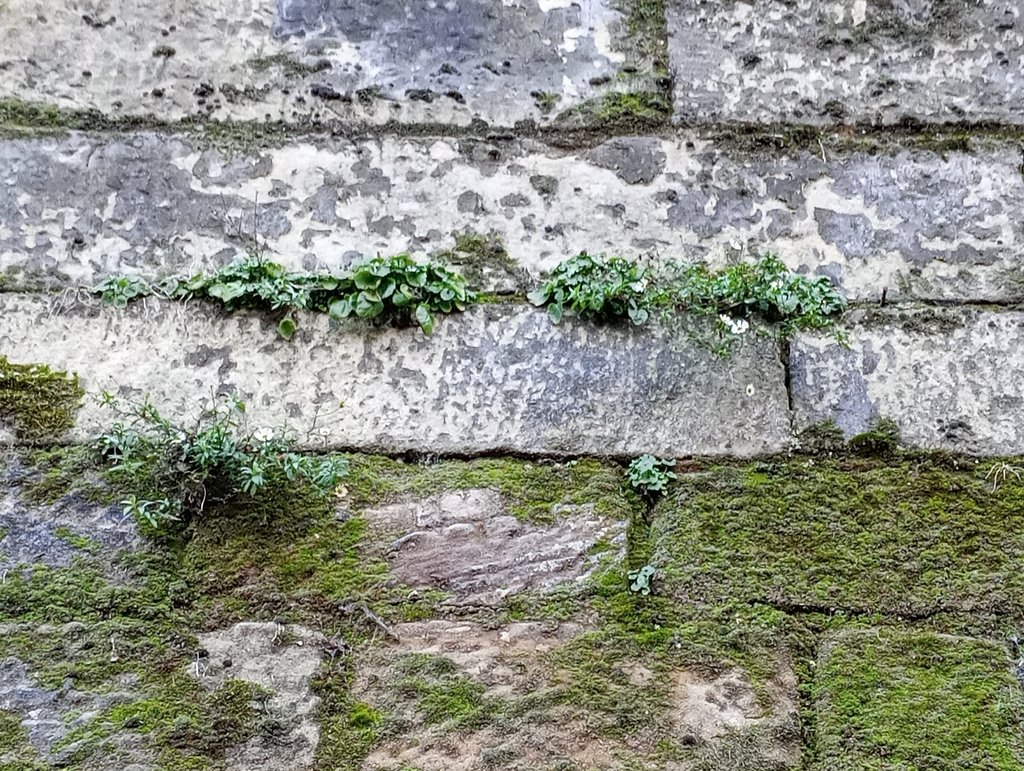
Poor, sharply drained; thrives in wall crevices and gravel
Acid, neutral or alkaline
Planting
Plant in spring into paving joints, wall tops, steps, gravel or the front of a sunny border. It needs almost no soil and dislikes rich damp ground. To establish it in a wall, push a small plant into a crevice with a little compost and keep it watered for the first few weeks.
Pruning
Shear the whole plant back by about half in early spring to remove winter-damaged growth and keep it compact. During the season it needs nothing; it deadheads itself and flowers continuously.
Propagation
It self-seeds freely, and moving young seedlings in spring is the simplest approach. Division in spring also works.
Pests and diseases
Effectively trouble-free. Plants in cold, heavy, wet soil may not survive the winter.
Value to wildlife
The small daisies are worked by hoverflies, solitary bees and small butterflies from late spring until the first hard frost, which is an unusually long season.
Notes
It seeds itself around enthusiastically into paving and gravel, which is either the whole point or a nuisance depending on the garden. In cold inland gardens it can be short-lived, so let some seed set as insurance.
This guidance was researched and written by GardenDecoded — see our editorial policy for how guides are checked and reviewed.
Other names for this plant
These names have all been used for Erigeron karvinskianus but are no longer the accepted name. You may still meet them on old labels, in books, or in nursery catalogues.
Erigeron deamii
Erigeron karvinskianus var. karvinskianus
Erigeron karvinskianus var. mucronatum
Erigeron karvinskianus var. mucronatus
Erigeron karvinskianus var. mucronatus
Erigeron mucronatus
Erigeron pacayensis
Erigeron trilobus
Erigeron tripartitus
Others in Erigeron
GardenDecoded is an educational gardening reference. Botanical data comes from World Flora Online and GBIF; growing guidance is our own. Always check a plant's toxicity and local invasiveness status before planting, and never eat or apply a plant based on this site alone.