Echinops × pellenzianus
Globe Thistle
Echinops ritro
L. Species


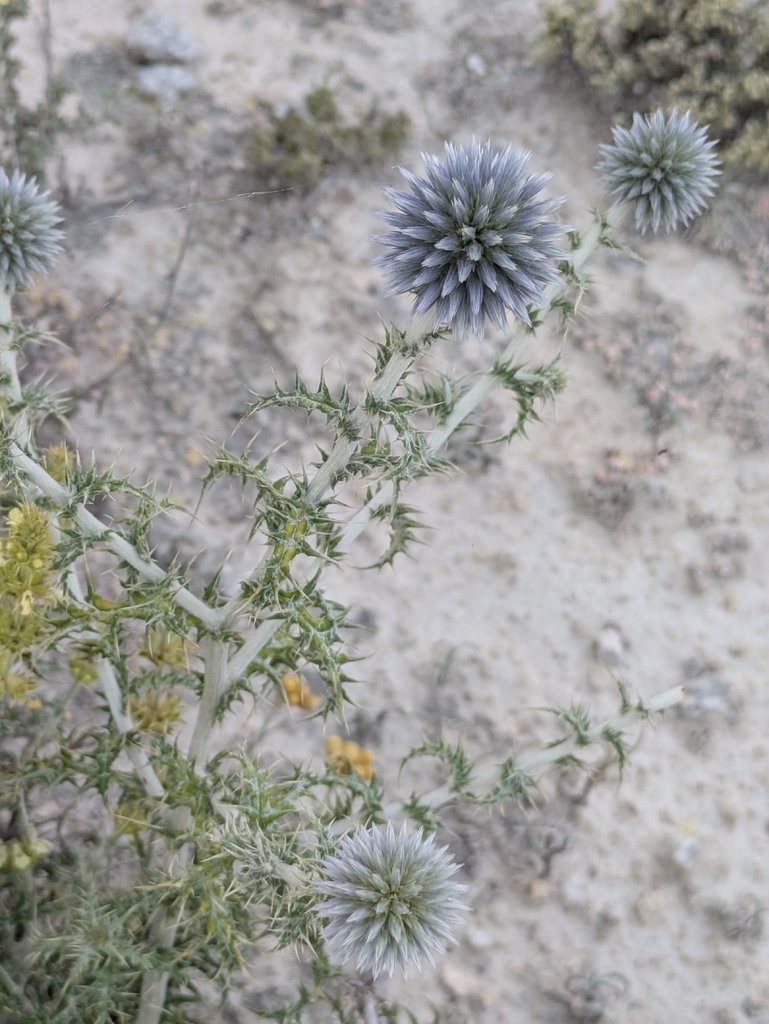
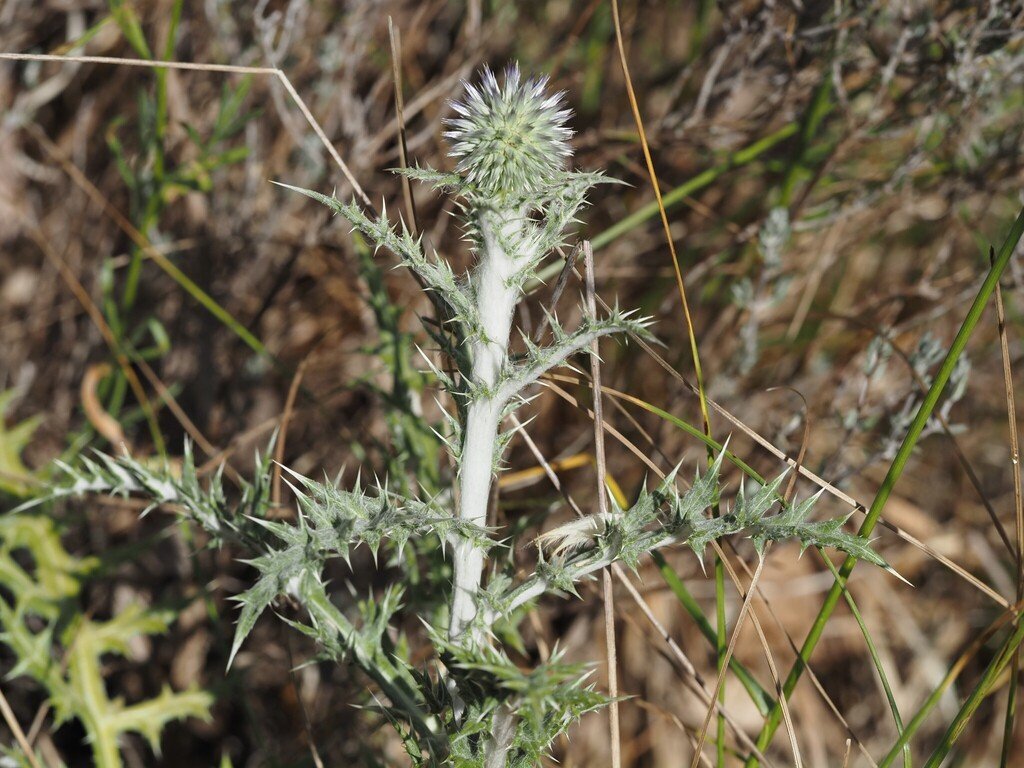
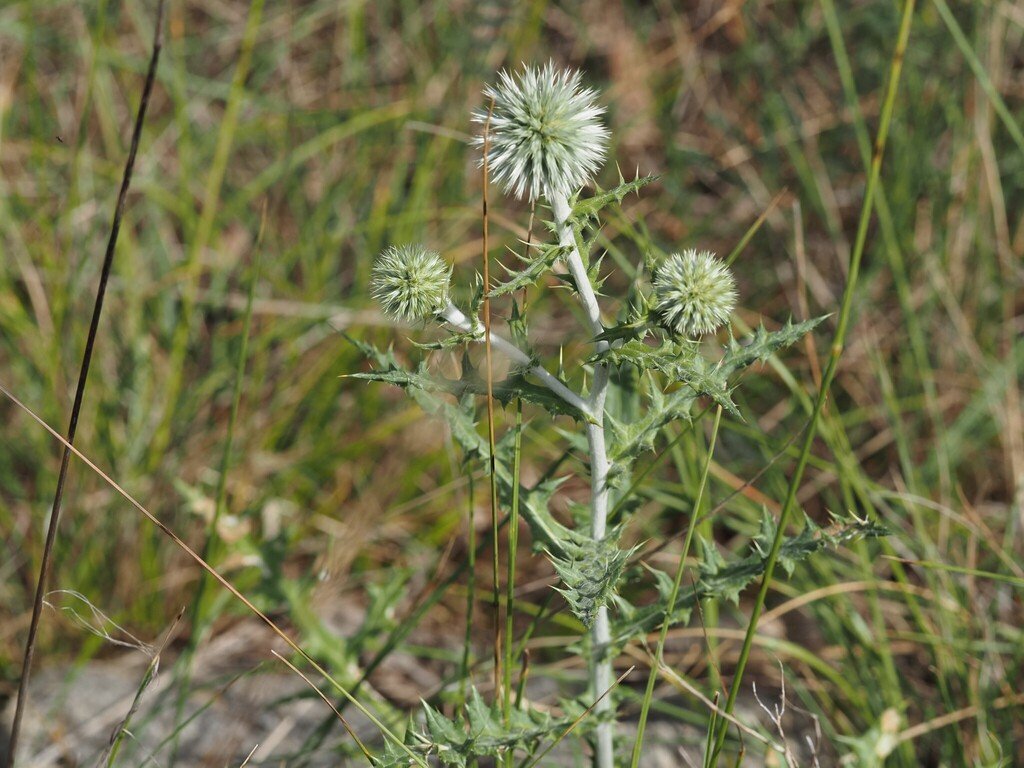
- Botanical name
- Echinops ritro
- Also known as
- Globe Thistle, Small Globe Thistle, Southern Globethistle
- Family
- Asteraceae
- Genus
- Echinops
- Flowering period
- July to September
- Height
- 60–120 cm
- Spread
- 45–60 cm
- Hardiness
- Fully hardy (RHS H7)
- Reference
- World Flora Online
How to grow Globe Thistle
Full sun
Low; drought tolerant once established
Poor to moderately fertile, sharply drained
Acid, neutral or alkaline
Planting
Plant in spring or autumn in an open sunny site with sharp drainage. It has a deep taproot, copes well with drought and does not transplant easily once settled, so choose the position with care. Poor soil produces sturdier plants than rich soil.
Pruning
Cut spent stems back after flowering if you want a second, lighter flush, or leave the spherical heads standing into winter, which is usually the better option visually. Cut everything down in early spring.
Propagation
Divide in spring or autumn, or take root cuttings in winter. Seed germinates readily and self-sown seedlings appear where conditions suit.
Pests and diseases
Aphids sometimes cluster on the stems. Otherwise little troubles it; poor drainage is a greater risk than any pest.
Value to wildlife
Exceptional for bees. The steel-blue globes are covered in bumblebees and honeybees through August, and the seedheads feed finches later on.
Notes
The foliage looks coarse and can flop in rich, moist soil. Keep it lean and sunny, and it will stand without staking.
This guidance was researched and written by GardenDecoded — see our editorial policy for how guides are checked and reviewed.
Other names for this plant
These names have all been used for Echinops ritro but are no longer the accepted name. You may still meet them on old labels, in books, or in nursery catalogues.
Echinops ritro var. ritro
Echinops ritro var. tenuifolius
Echinops tauricus
Echinops tenuifolius
Others in Echinops
GardenDecoded is an educational gardening reference. Botanical data comes from World Flora Online and GBIF; growing guidance is our own. Always check a plant's toxicity and local invasiveness status before planting, and never eat or apply a plant based on this site alone.