Dianthus × cincinnatus
Bearded Pink
Dianthus barbatus
L. Species


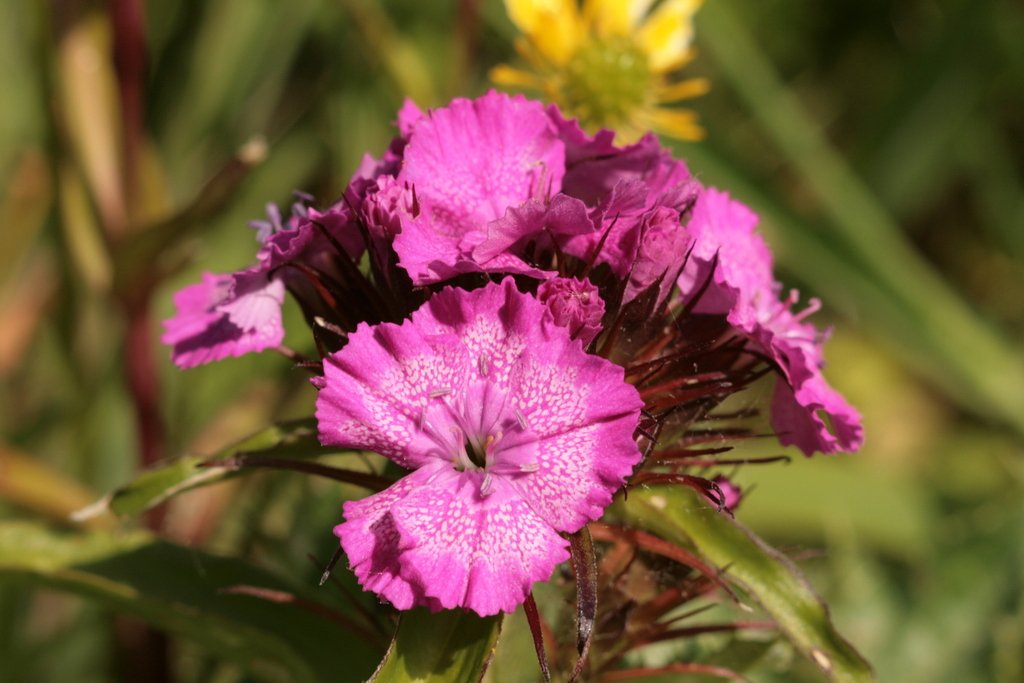
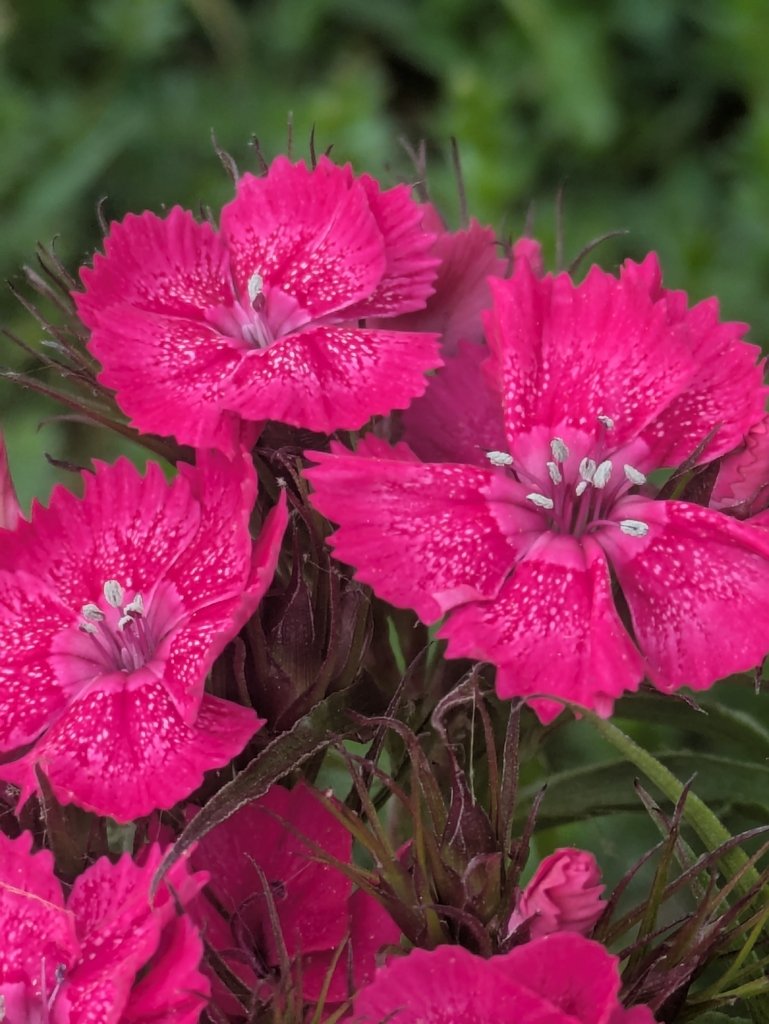
- Botanical name
- Dianthus barbatus
- Also known as
- Bearded Pink, Sweet William, Sweet-William, Sweetwilliam
- Family
- Caryophyllaceae
- Genus
- Dianthus
- Flowering period
- May to July
- Height
- 30–60 cm
- Spread
- 20–30 cm
- Hardiness
- Fully hardy (RHS H6)
- Reference
- World Flora Online
How to grow Bearded Pink
Full sun
Moderate
Well-drained, moderately fertile
Neutral to alkaline
Planting
This is a biennial in practice: sow in late spring or early summer, grow the plants on through summer, and plant them into their flowering positions in autumn for flowers the following year. It does well on chalk and dislikes heavy wet ground over winter. Space about 25 cm apart.
Pruning
Deadhead as flowers fade to extend the display. Most plants are pulled out after flowering, though some will survive a further year if cut back hard; the second-year display is usually weaker.
Propagation
Seed sown in a nursery bed or trays in May or June is the standard method and is straightforward. Plants also self-seed where the soil is open.
Pests and diseases
Rust and leaf spot in damp conditions. Slugs damage young plants, and stem rot occurs in soil that stays wet in winter.
Value to wildlife
The scented flowerheads attract bees, butterflies and day-flying moths through early summer.
Notes
The main mistake is treating it as a permanent perennial. Sow a fresh batch every year, and you will have a reliable succession rather than a gap every other summer.
This guidance was researched and written by GardenDecoded — see our editorial policy for how guides are checked and reviewed.
Other names for this plant
These names have all been used for Dianthus barbatus but are no longer the accepted name. You may still meet them on old labels, in books, or in nursery catalogues.
Caryophyllus barbatus
Cylichnanthus barbatus
Dianthus aggregatus
Dianthus barbatus var. asiaticus
Dianthus barbatus var. barbatus
Dianthus barbatus var. latifolius
Dianthus barbatus var. paniculatus
Dianthus barbatus var. pedunculosus
Dianthus corymbosus
Dianthus girardinii
Dianthus hispanicus
Dianthus latifolius
Dianthus pulcherrimus
Dianthus splendidissimus
Silene barbata
Tunica barbata
Others in Dianthus
GardenDecoded is an educational gardening reference. Botanical data comes from World Flora Online and GBIF; growing guidance is our own. Always check a plant's toxicity and local invasiveness status before planting, and never eat or apply a plant based on this site alone.