Daucus aleppicus
Wild Carrot
Daucus carota
L. Species


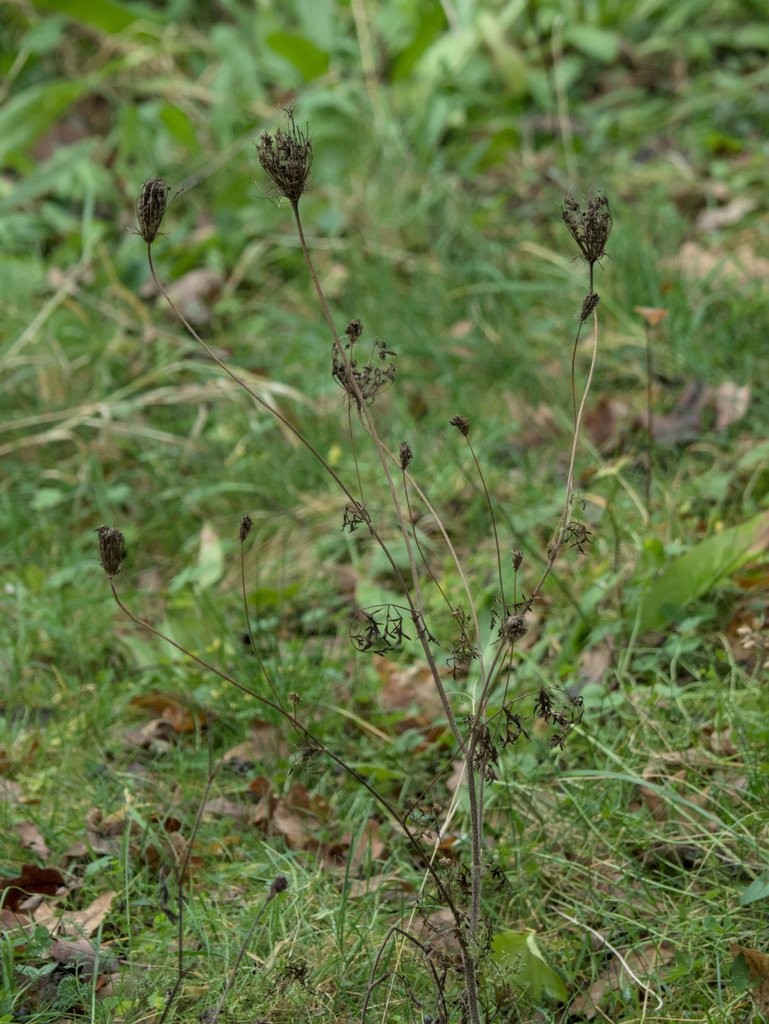


- Botanical name
- Daucus carota
- Also known as
- Carrot, Queen Anne's Lace, Wild Carrot
- Family
- Apiaceae
- Genus
- Daucus
- Height
- 30–100 cm
- Spread
- 10–30 cm
- Hardiness
- Fully hardy (RHS H5)
- Reference
- World Flora Online
How to grow Wild Carrot
Full sun
Moderate and even; alternating dry and wet causes splitting
Light, deep, stone-free sandy soil; no fresh manure
Neutral to slightly alkaline
Planting
Sow direct and thinly from March to July, 1 cm deep in rows 15–20 cm apart; carrots do not transplant. Thin to 5 cm, and do it in the evening, removing the thinnings from the plot — the crushed foliage smell is what draws carrot fly. On stony or heavy ground, grow short, stumpy varieties in a deep container of sieved compost rather than fighting the soil.
Propagation
From seed. It is biennial, so plants left in the ground flower and set seed the following summer.
Pests and diseases
Carrot fly is the main problem: the larvae tunnel through the roots, leaving rusty-brown channels. The low-flying adults are excluded by a 60 cm barrier of fine mesh or fleece around the bed, which works better than anything else. Aphids, violet root rot and cavity spot also occur.
Value to wildlife
Wild carrot's lacy white umbels are excellent for hoverflies and small solitary bees. Carrot is a larval food plant for the swallowtail butterfly's relatives and for several moths.
Notes
Freshly manured ground and heavy feeding produce forked, hairy roots — grow carrots on ground manured for a previous crop. Sowings made after early June often miss the main carrot fly generation. Leave maincrop carrots in the ground over winter under straw in well-drained soil, or lift and store in damp sand.
This guidance was researched and written by GardenDecoded — see our editorial policy for how guides are checked and reviewed.
Other names for this plant
These names have all been used for Daucus carota but are no longer the accepted name. You may still meet them on old labels, in books, or in nursery catalogues.
Caucalis carota
Daucus carota var. carota
Daucus communis subsp. carota
Daucus glaber
Daucus littoralis var. forsskalii
Others in Daucus
GardenDecoded is an educational gardening reference. Botanical data comes from World Flora Online and GBIF; growing guidance is our own. Always check a plant's toxicity and local invasiveness status before planting, and never eat or apply a plant based on this site alone.