Daphne × hendersonii
February Daphne
Daphne mezereum
L. Species

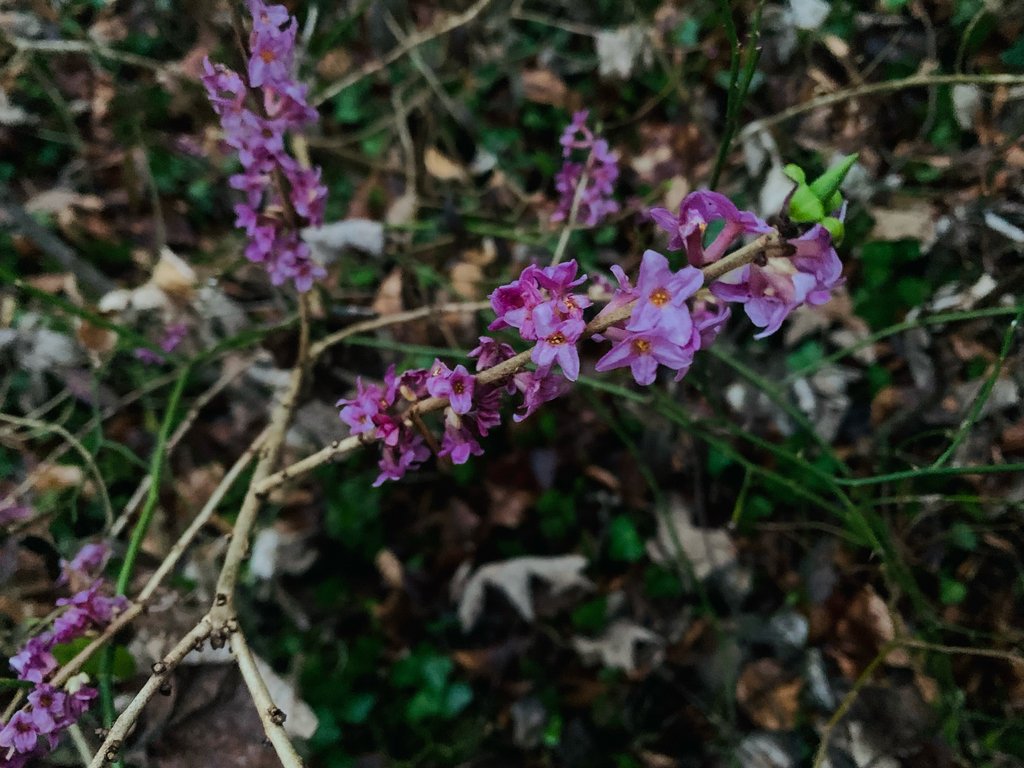

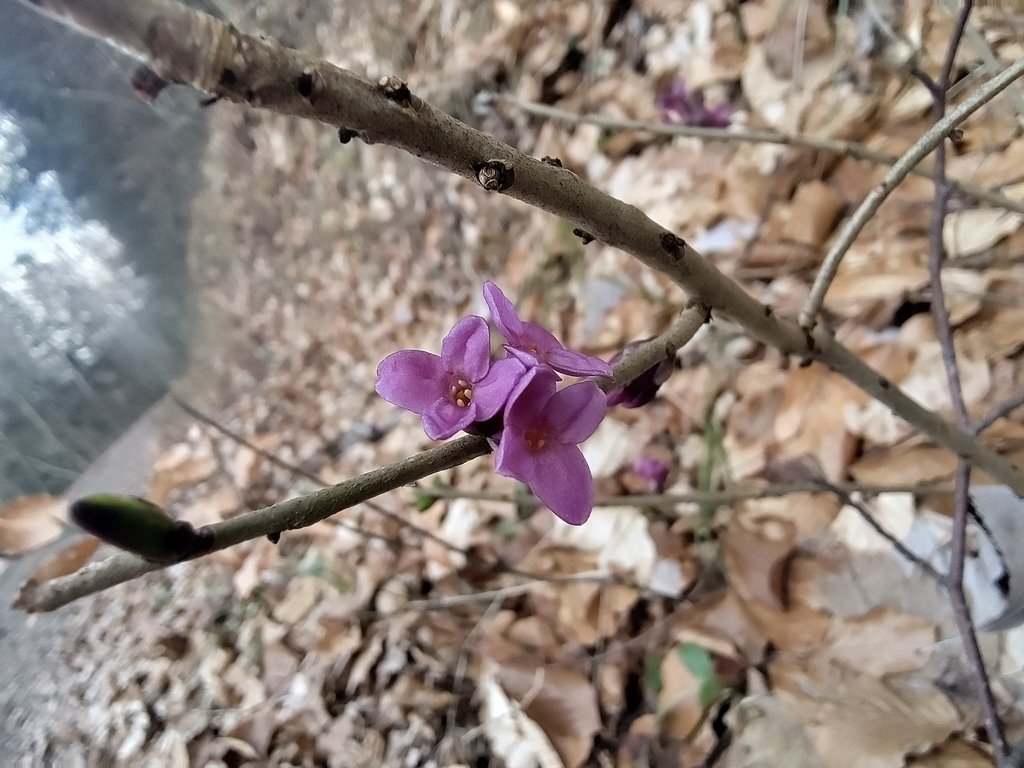
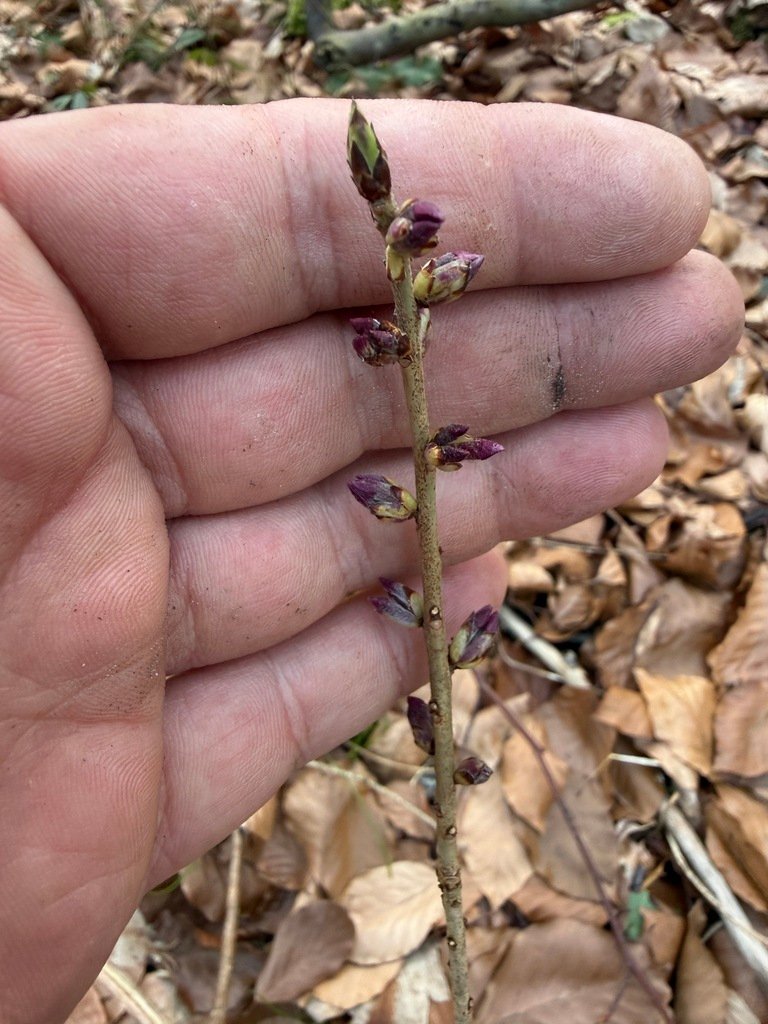

- Botanical name
- Daphne mezereum
- Also known as
- Daphne, February Daphne, Lady Laurel, Mezereon, Paradise Plant, Paradise-Plant
- Family
- Thymelaeaceae
- Genus
- Daphne
- Flowering period
- February to March
- Height
- 100–150 cm
- Spread
- 60–100 cm
- Hardiness
- Fully hardy (RHS H6)
- Reference
- World Flora Online
How to grow February Daphne
Partial shade or dappled sun
Moderate; keep evenly moist, never waterlogged
Moist, humus-rich, well-drained; happy on chalk
Neutral to alkaline
Planting
Plant a container-grown specimen in autumn or spring and choose the position carefully, because it hates being moved once settled. Somewhere near a door or path is worth it - the pink flowers open on bare stems in late winter and are strongly scented.
Pruning
Do not prune. It resents cutting and responds badly, and it has a naturally tidy shape. Remove dead wood only.
Propagation
Seed sown fresh in autumn, or semi-ripe cuttings in summer. Both are slow and unreliable; self-sown seedlings from bird-dropped berries are often the easiest source.
Pests and diseases
Sudden death of a healthy-looking plant is common and often unexplained; viruses and root problems are both implicated. Aphids can distort young shoots.
Value to wildlife
Very early nectar for bees and early moths, and the red berries are eaten by birds.
Notes
Treat it as short-lived - many plants die at around eight to ten years for no obvious reason, so do not blame yourself. Mulch to keep the roots cool and do not disturb the soil around it. Every part of the plant, especially the berries, is well known to be poisonous, so check its toxicity before planting where children or pets have access.
This guidance was researched and written by GardenDecoded — see our editorial policy for how guides are checked and reviewed.
Other names for this plant
These names have all been used for Daphne mezereum but are no longer the accepted name. You may still meet them on old labels, in books, or in nursery catalogues.
Daphne mezereum var. albaplena
Daphne mezereum var. album
Daphne mezereum var. rubrum
Thymelaea mezereum
Others in Daphne
GardenDecoded is an educational gardening reference. Botanical data comes from World Flora Online and GBIF; growing guidance is our own. Always check a plant's toxicity and local invasiveness status before planting, and never eat or apply a plant based on this site alone.