Crocosmia × crocosmiiflora
Golden montbretia, falling stars
Crocosmia aurea
(Pappe ex Hook.) Planch. Species
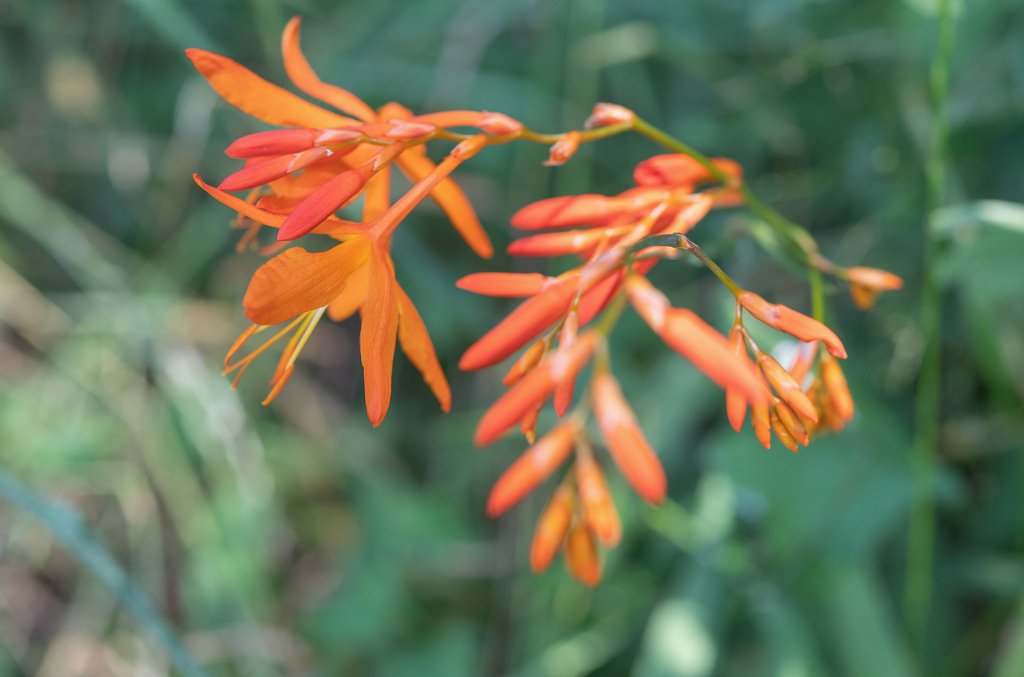

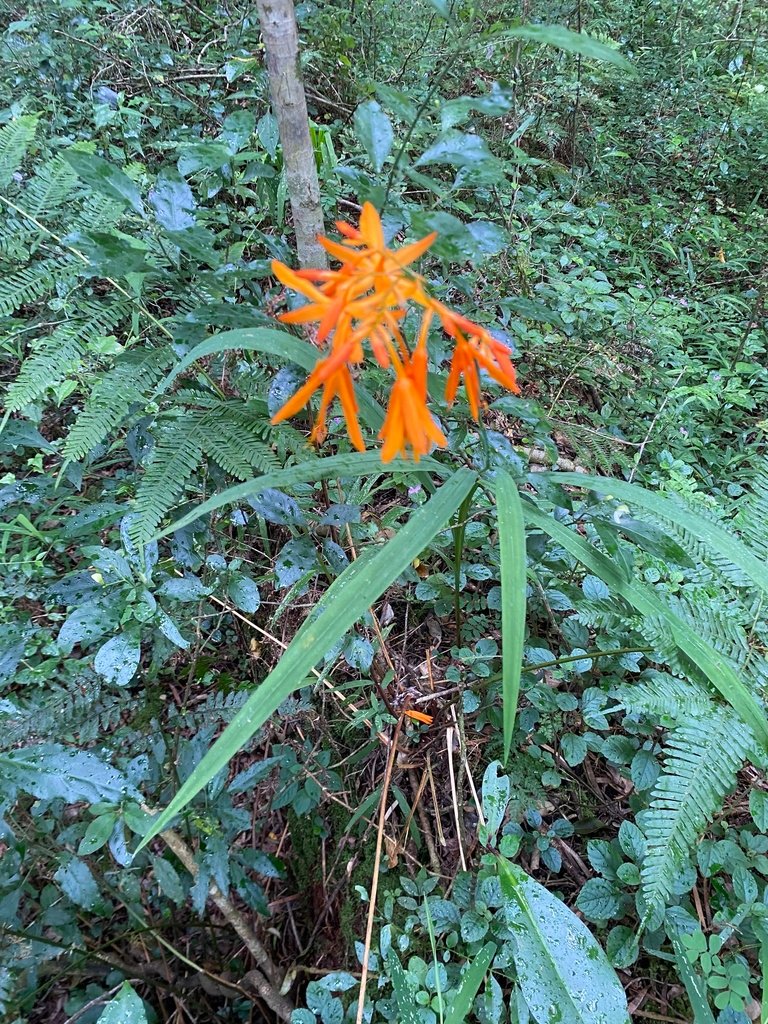
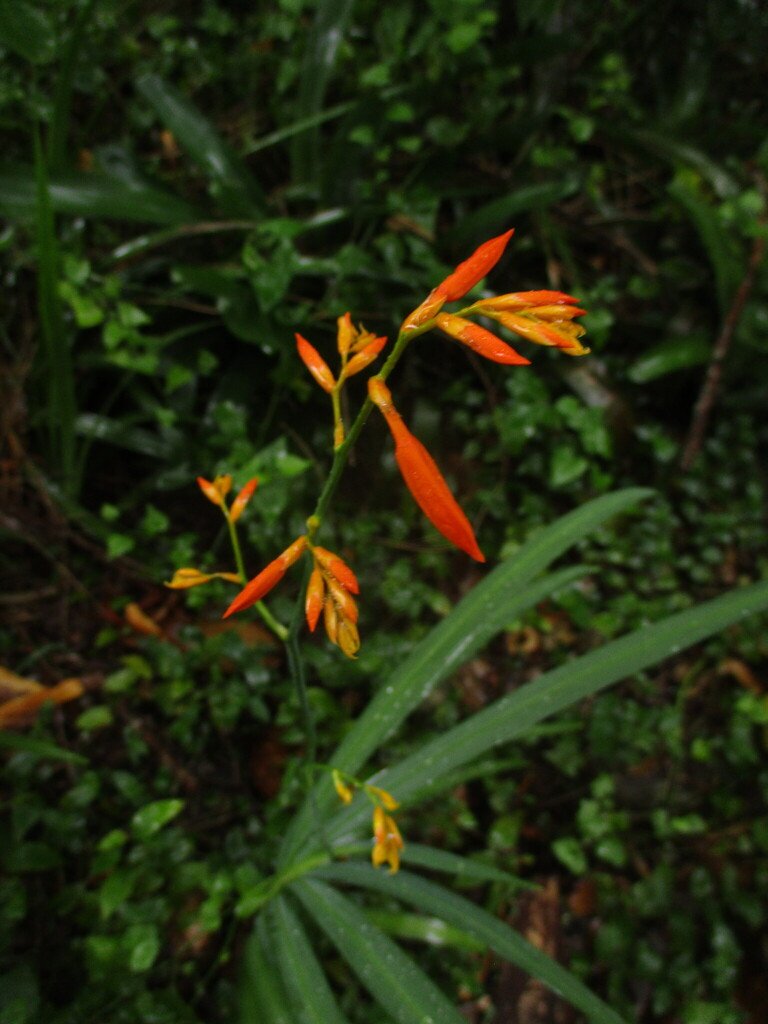

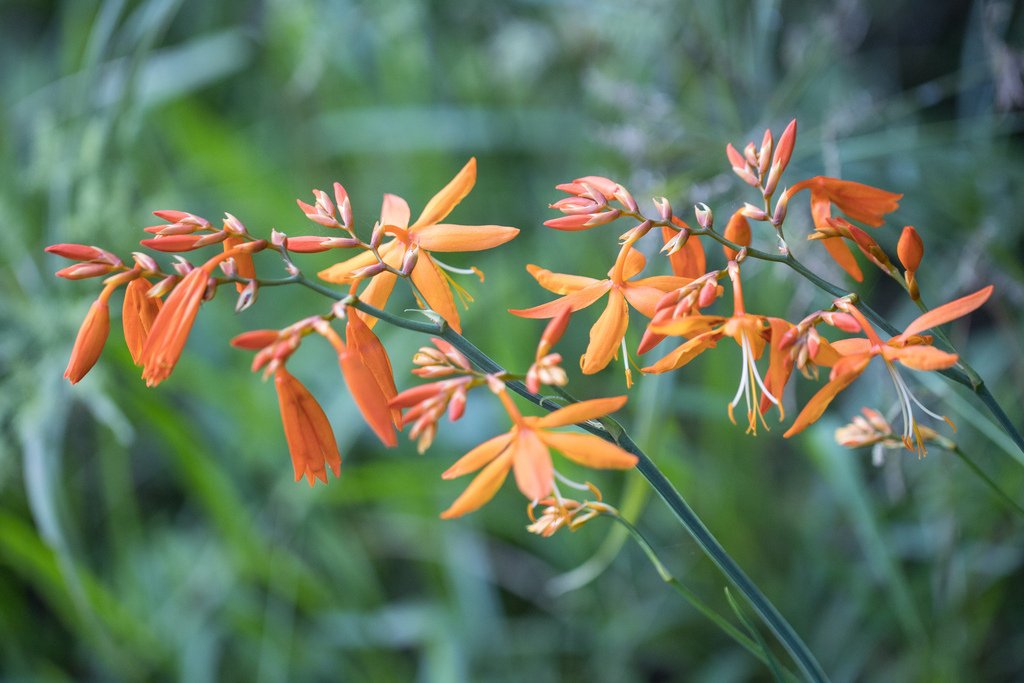
- Botanical name
- Crocosmia aurea
- Family
- Iridaceae
- Genus
- Crocosmia
- Flowering period
- July to September
- Height
- 60–100 cm
- Spread
- 20–30 cm
- Hardiness
- Half hardy in most of the UK (RHS H3)
- Reference
- World Flora Online
How to grow Golden montbretia, falling stars
Full sun to partial shade
Moderate through the growing season; keep drier in winter
Fertile, humus-rich, well-drained soil
Acid to neutral
Planting
Plant corms in spring, about 8–10 cm deep, in a sheltered, sunny spot with good drainage. This South African species is noticeably less hardy than the familiar garden hybrids, so in most of Britain it needs a warm wall, a deep dry mulch over winter, or lifting and storing frost-free.
Pruning
Remove flowered stems once they are over. Leave the foliage until it yellows, then cut it down; in colder gardens leave the dead growth in place over winter as extra insulation for the corms.
Propagation
Lift and separate the corm chains in spring as growth begins. Divide every few years — congested clumps produce plenty of leaves and few flowers.
Pests and diseases
Red spider mite in a hot dry position, and gladiolus thrips can mark the flowers. Corms rot in cold wet soil over winter, which is the usual cause of losses.
Value to wildlife
The arching sprays are visited by bees, and the tubular flowers suit long-tongued insects. In their native range crocosmias are bird-pollinated.
Notes
Do not assume this behaves like the vigorous orange montbretia naturalised in western Britain — that is Crocosmia x crocosmiiflora, and the true species is both more tender and less invasive. Treat it as a plant that needs a favoured spot rather than one that will look after itself.
This guidance was researched and written by GardenDecoded — see our editorial policy for how guides are checked and reviewed.
Other names for this plant
These names have all been used for Crocosmia aurea but are no longer the accepted name. You may still meet them on old labels, in books, or in nursery catalogues.
Babiana aurea
Crocosmia aurea var. aurea
Tritonia aurea
Others in Crocosmia
GardenDecoded is an educational gardening reference. Botanical data comes from World Flora Online and GBIF; growing guidance is our own. Always check a plant's toxicity and local invasiveness status before planting, and never eat or apply a plant based on this site alone.