Cotoneaster × crispii
Wall Cotoneaster
Cotoneaster horizontalis
Decne. Species


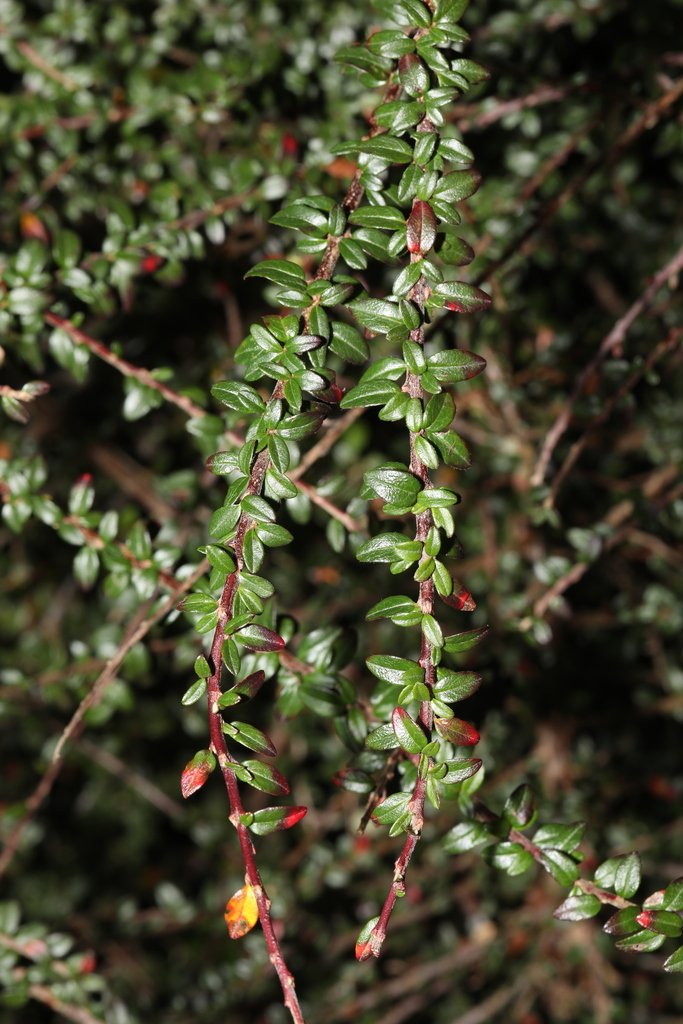

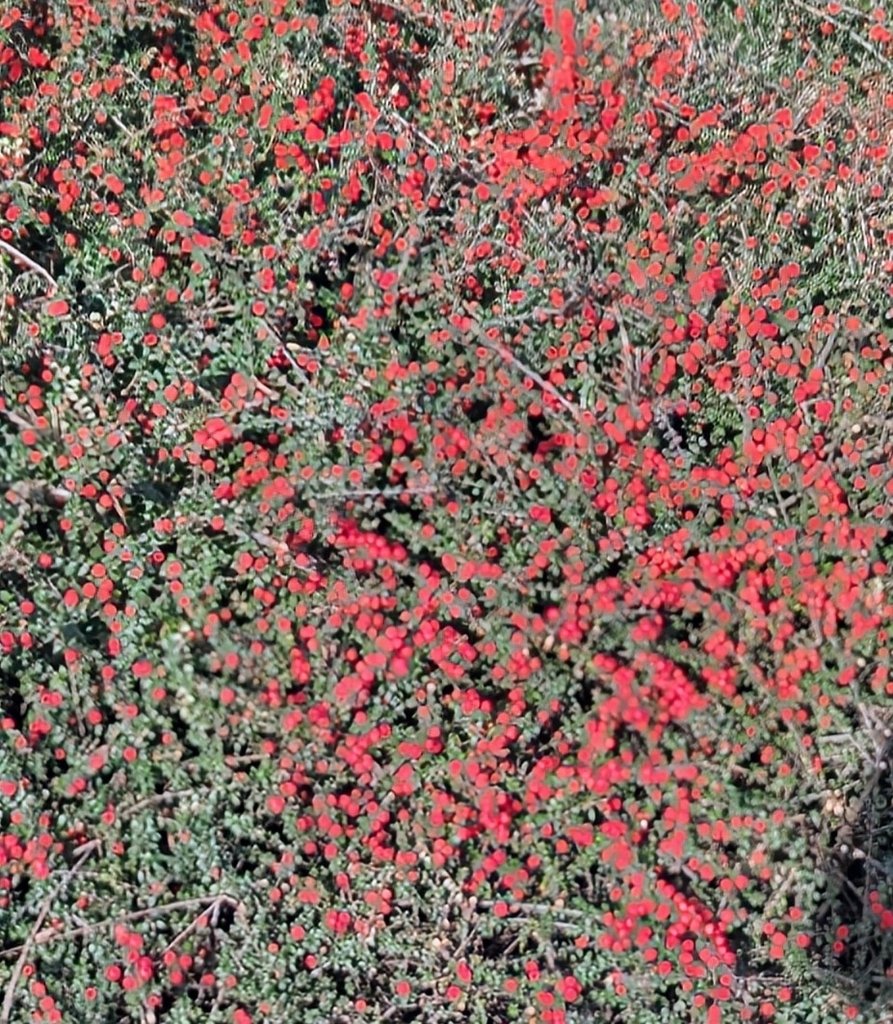
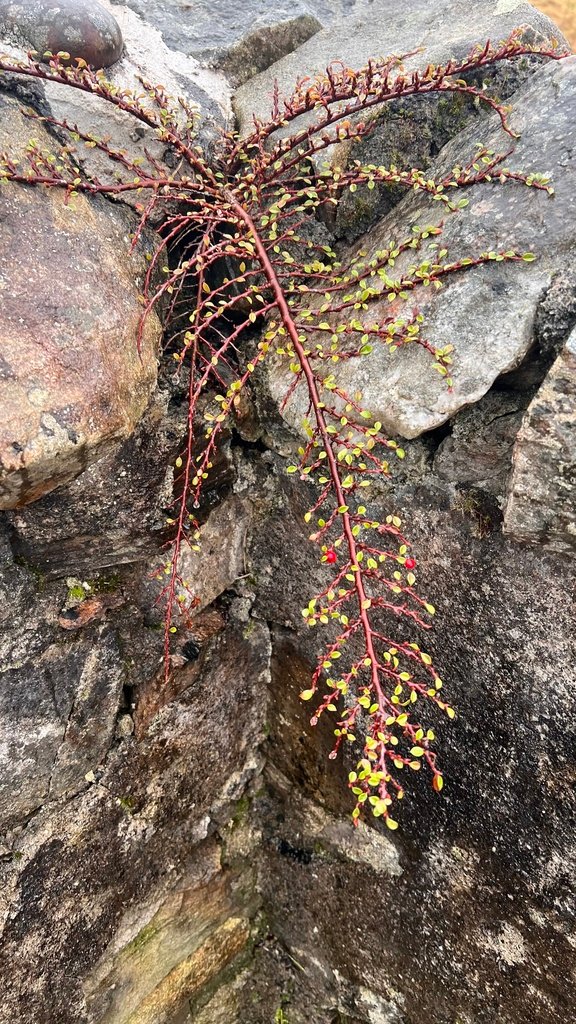
- Botanical name
- Cotoneaster horizontalis
- Also known as
- Herringbone Cotoneaster, Rock Cotoneaster, Rock-Spray, Rockspray, Rockspray Cotoneaster, Wall Cotoneaster, Wallspray
- Family
- Rosaceae
- Genus
- Cotoneaster
- Flowering period
- May to June
- Height
- 60–100 cm
- Spread
- 150–200 cm
- Hardiness
- Fully hardy (RHS H6)
- Reference
- World Flora Online
How to grow Wall Cotoneaster
Full sun to partial shade
Low; drought-tolerant once established
Any well-drained soil; tolerates poor, dry and chalky ground
Acid to alkaline
Planting
Plant in autumn or spring. The flat herringbone branch pattern presses against a wall or steps without needing support, and it also works as low ground cover on a dry bank.
Pruning
Little needed. Shorten or remove wayward shoots in late winter, cutting back to a branch junction so the herringbone pattern is not spoiled.
Propagation
Semi-ripe cuttings in summer, or seed after cold stratification. Self-sown seedlings from bird-dropped berries are common.
Pests and diseases
Fireblight can cause blackened, withered shoots that look scorched; cut well back into healthy wood and dispose of the prunings. Cotoneaster webber caterpillars occasionally spin up sections of foliage.
Value to wildlife
Very good value for its size - bees work the small pink-tinged flowers hard in late spring, and the red berries are taken by blackbirds, thrushes and waxwings.
Notes
This species is listed as an invasive non-native in Great Britain and it is an offence to plant it or cause it to grow in the wild; birds spread the seed readily into limestone grassland and old walls. If you already have it, that is not a problem, but think carefully before planting more, particularly near open countryside.
Some structured details on this page (such as tolerances, pH and hardiness) come from USDA PLANTS Database (public domain). The written guidance is GardenDecoded's own, researched as described in our editorial policy.
Other names for this plant
These names have all been used for Cotoneaster horizontalis but are no longer the accepted name. You may still meet them on old labels, in books, or in nursery catalogues.
Cotoneaster acuminatus unranked prostratus
Cotoneaster acuminatus var. prostratus
Cotoneaster atropurpureus
Cotoneaster atrovirens
Cotoneaster davidianus
Cotoneaster davidianus
Cotoneaster horizontalis f. variegatus
Cotoneaster horizontalis var. horizontalis
Cotoneaster horizontalis var. perpusillus
Cotoneaster horizontalis var. typicus
Cotoneaster horizontalis var. variegatus
Cotoneaster microphyllus
Cotoneaster perpusillus
Cotoneaster perpusillus
Cotoneaster symonsii
Diospyros chaffanjonii
Pyrus atroramosa
Pyrus atrovirens
Pyrus horizontalis
Pyrus perpusilla
Others in Cotoneaster
GardenDecoded is an educational gardening reference. Botanical data comes from World Flora Online and GBIF; growing guidance is our own. Always check a plant's toxicity and local invasiveness status before planting, and never eat or apply a plant based on this site alone.