Camassia quamash subsp. breviflora
Leichtlin's Camas
Camassia leichtlinii
(Baker) S.Watson Species


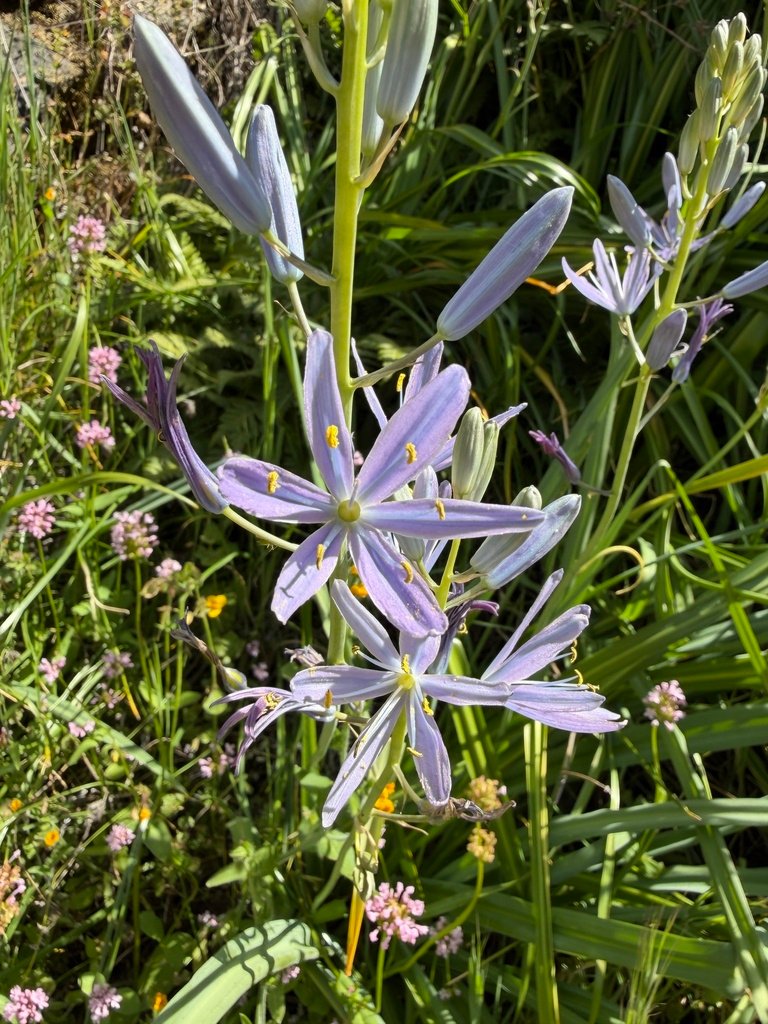


- Botanical name
- Camassia leichtlinii
- Also known as
- Great Camas, Large Camas, Leichtlin's Camas
- Family
- Asparagaceae
- Genus
- Camassia
- Flowering period
- May to June
- Height
- 60–120 cm
- Spread
- 10–20 cm
- Hardiness
- Fully hardy (RHS H5)
- Reference
- World Flora Online
How to grow Leichtlin's Camas
Full sun to partial shade
Moderate in spring; tolerates soil that is damp in winter and spring
Fertile, moisture-retentive soil; copes with heavy clay
Acid to neutral
Planting
Plant bulbs in autumn about 10–15 cm deep and 15 cm apart. Unusually for a bulb it does not need sharp drainage and grows well in the damp clay that would rot tulips, which makes it one of the better bulbs for naturalising in a meadow or a heavy border.
Pruning
Leave the foliage to die back before cutting or mowing — in grass, delay the first cut until at least six weeks after flowering. Seed heads can be left to ripen if you want it to spread.
Propagation
Lift and separate offsets when dormant in late summer. It also self-sows in grass, though seedlings take several years to flower.
Pests and diseases
Generally trouble-free. Slugs may take emerging shoots in a wet spring.
Value to wildlife
The spires of starry flowers are well used by bees in late spring, filling the gap between the spring bulbs and the main summer flowering.
Notes
It dislikes being lifted and dried out repeatedly, so plant it where it can stay. The clump builds slowly and is worth the wait; the foliage is bulky and needs a companion to grow through it as it fades.
This guidance was researched and written by GardenDecoded — see our editorial policy for how guides are checked and reviewed.
Other names for this plant
These names have all been used for Camassia leichtlinii but are no longer the accepted name. You may still meet them on old labels, in books, or in nursery catalogues.
Camassia esculenta var. leichtlinii
Camassia leichtlinii subsp. typica
Quamasia leichtlinii
Others in Camassia
GardenDecoded is an educational gardening reference. Botanical data comes from World Flora Online and GBIF; growing guidance is our own. Always check a plant's toxicity and local invasiveness status before planting, and never eat or apply a plant based on this site alone.