Callicarpa acuminata
Beauty berry
Callicarpa bodinieri
H.Lév. Species


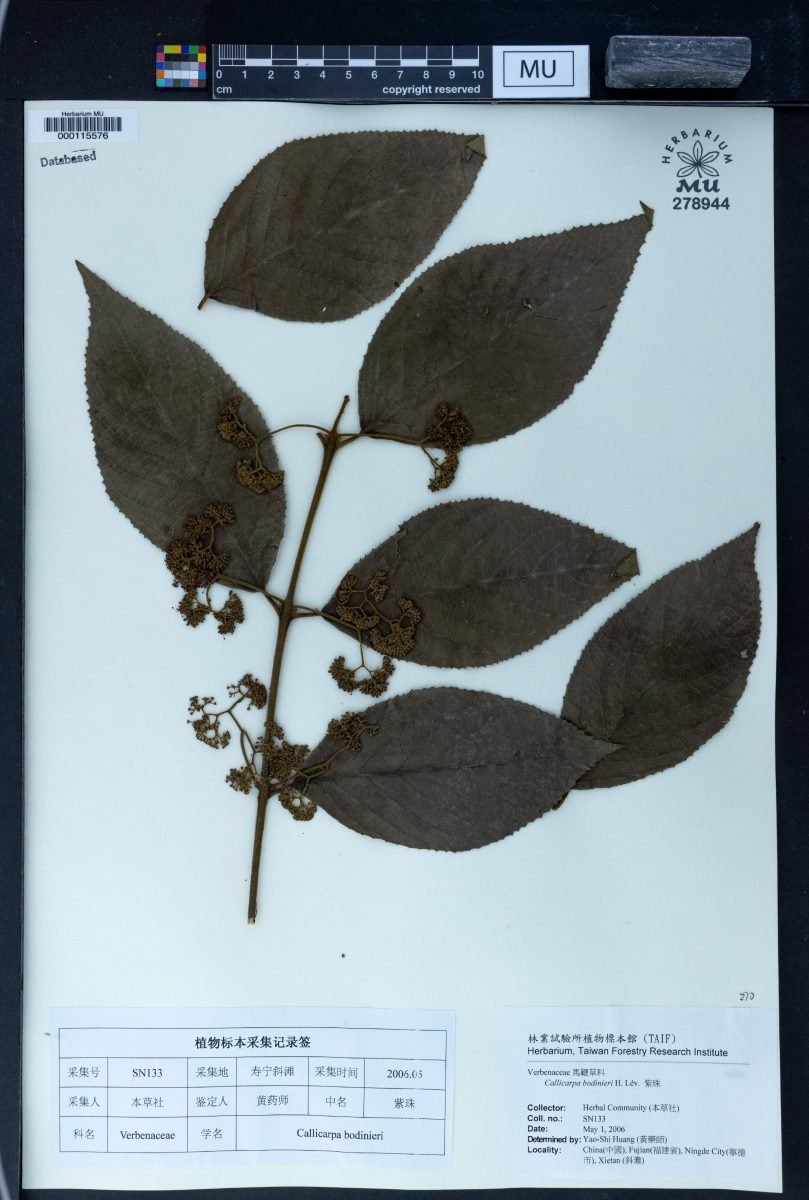

- Botanical name
- Callicarpa bodinieri
- Family
- Lamiaceae
- Genus
- Callicarpa
- Flowering period
- June to July
- Height
- 2–3 m
- Spread
- 150–250 cm
- Hardiness
- Fully hardy (RHS H5)
- Reference
- World Flora Online
How to grow Beauty berry
Full sun to light shade
Moderate; water in dry spells while establishing
Fertile, well-drained but not parched
Acid to neutral
Planting
Plant in autumn or spring. Plant in a group of three or more if you can - fruiting is much heavier with cross-pollination, and a lone specimen often disappoints.
Pruning
Prune in late winter or early spring, thinning out old stems and shortening the rest to keep the shrub furnished low down. It fruits on the previous season's wood, so do not cut everything back hard.
Propagation
Softwood cuttings in early summer, or semi-ripe cuttings later in the season.
Pests and diseases
Generally trouble-free.
Value to wildlife
The small summer flowers are worked by bees. Birds tend to leave the violet berries until late winter, which is partly why they last so well.
Notes
The plant is unremarkable for most of the year and then carries clusters of metallic violet berries from October well into winter. Put it where you will see it in autumn but where a plain green shrub in June does not matter.
This guidance was researched and written by GardenDecoded — see our editorial policy for how guides are checked and reviewed.
Others in Callicarpa
GardenDecoded is an educational gardening reference. Botanical data comes from World Flora Online and GBIF; growing guidance is our own. Always check a plant's toxicity and local invasiveness status before planting, and never eat or apply a plant based on this site alone.