Bergenia emeiensis var. rubellina
Elephant's ears
Bergenia crassifolia var. crassifolia
Variety
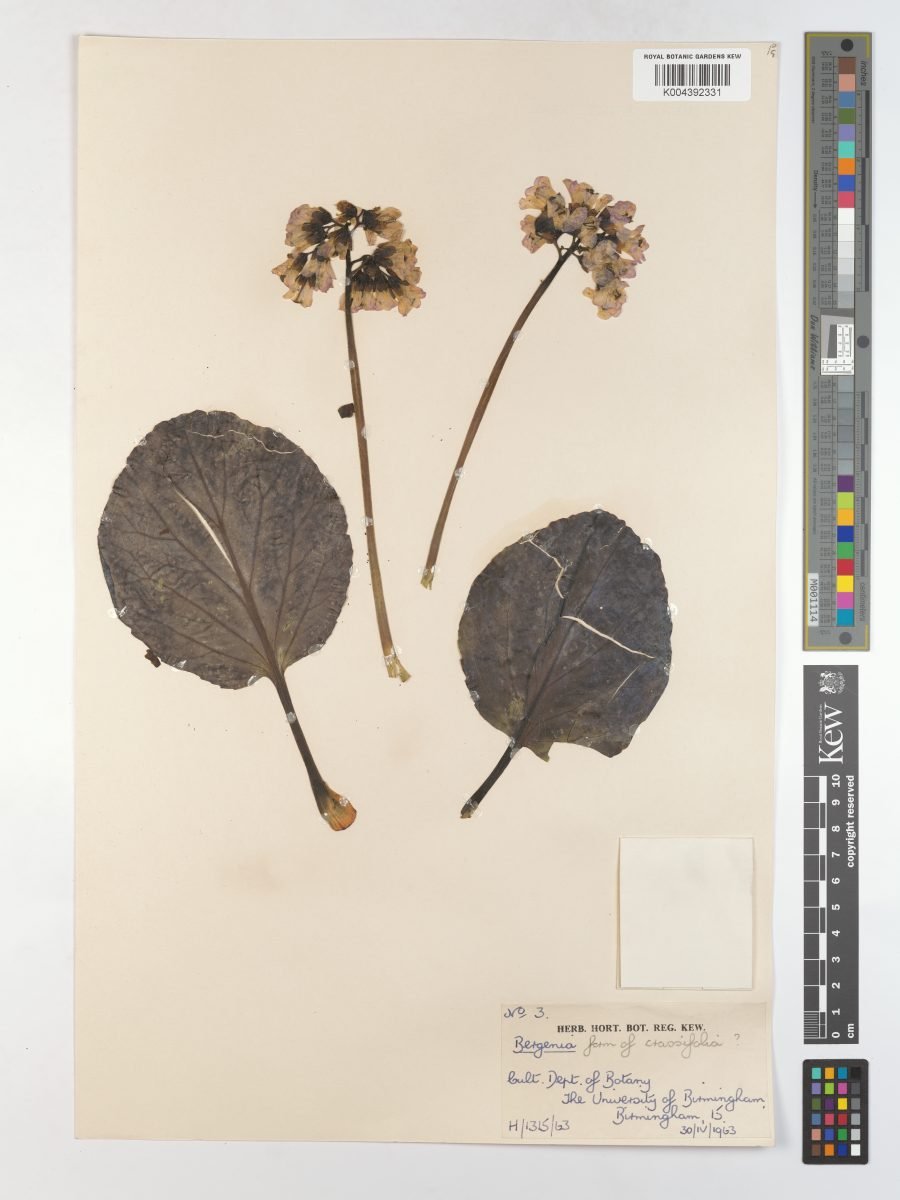
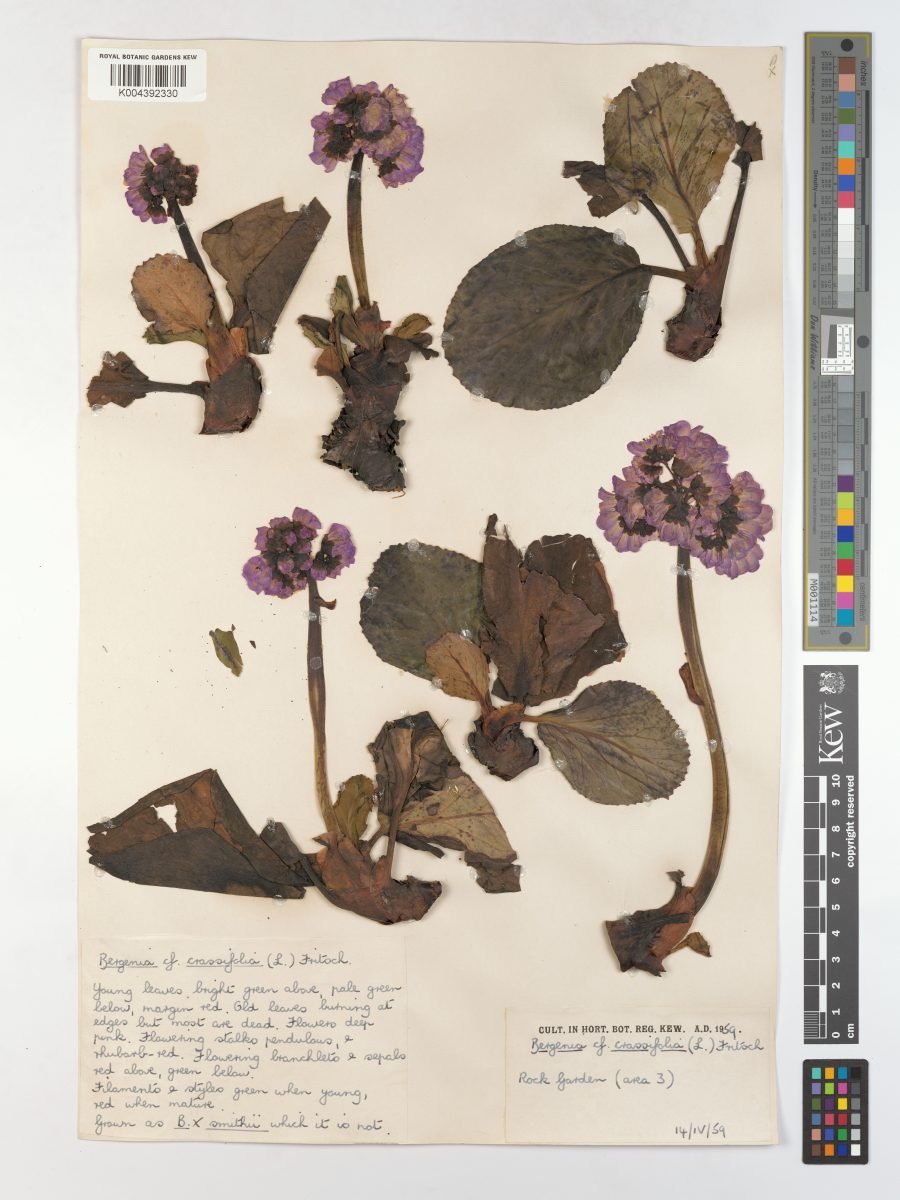
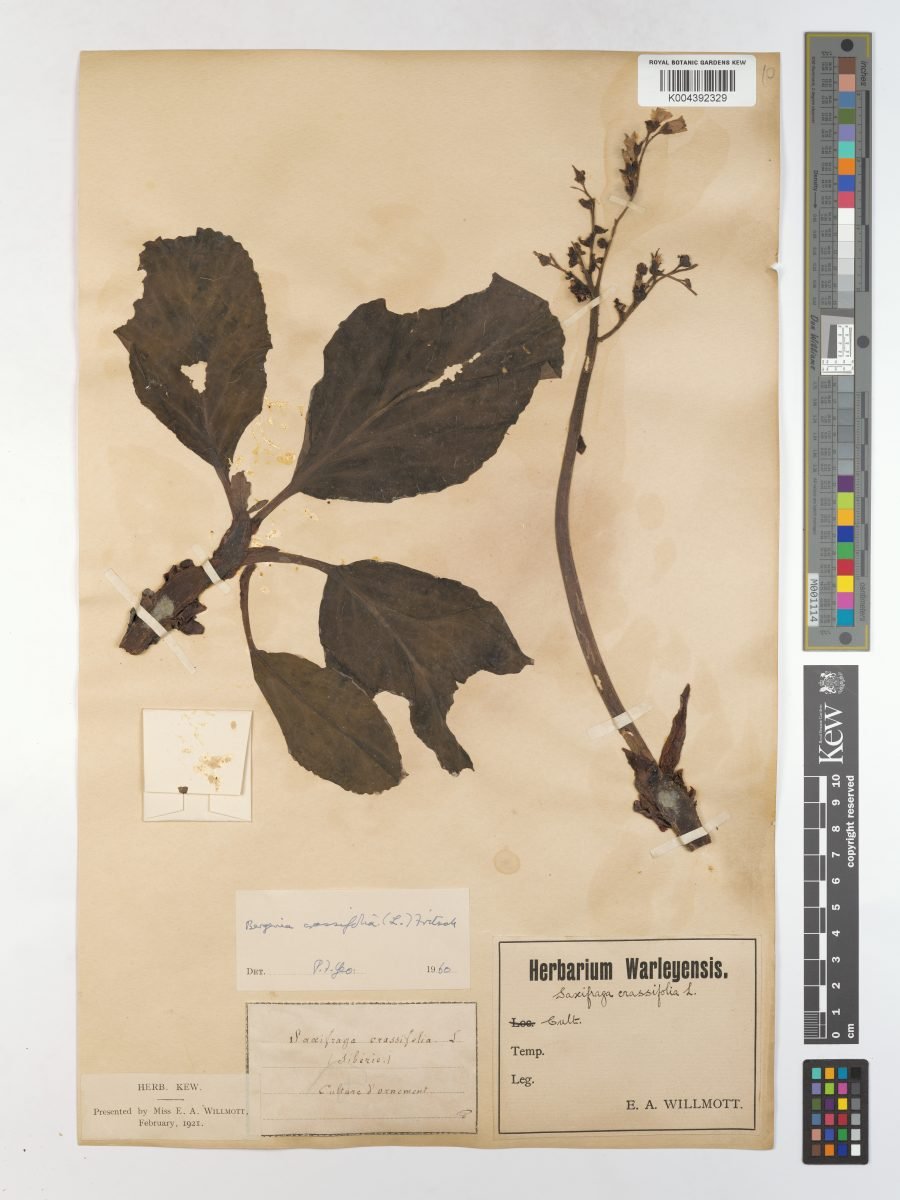
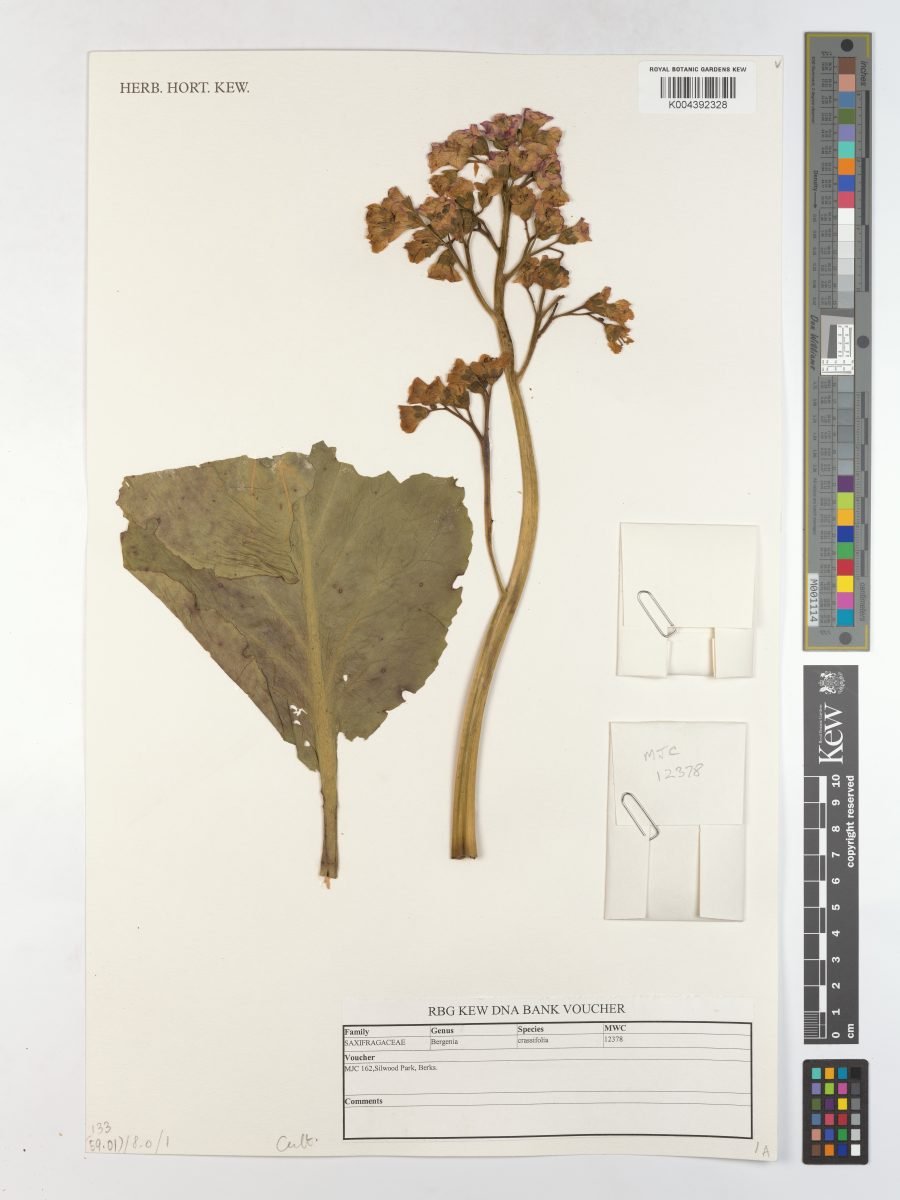
- Botanical name
- Bergenia crassifolia var. crassifolia
- Family
- Saxifragaceae
- Genus
- Bergenia
- Flowering period
- February to April
- Height
- 30–45 cm
- Spread
- 45–60 cm
- Hardiness
- Fully hardy (RHS H6)
- Reference
- World Flora Online
How to grow Elephant's ears
Full sun to partial shade
Low to moderate once established
Any reasonable well-drained soil
Acid, neutral or alkaline
Planting
Plant in autumn or spring; it is undemanding and will cope with poor soil, dry shade and exposure better than most evergreen perennials. A position with some winter sun brings out the red leaf colour. Plant the rhizomes shallowly, just at soil level.
Pruning
Pull or cut away dead and marked leaves in spring, and remove the flower stems once the blooms have gone over. Every few years lift and replant congested clumps, discarding the bare woody sections of rhizome.
Propagation
Divide the rhizomes after flowering or in autumn, keeping a fan of leaves on each piece. Sections of rhizome laid on compost will also root.
Pests and diseases
Vine weevil grubs are the main problem, particularly in containers, and can hollow out the rhizome. Slugs and snails chew the leaf margins.
Value to wildlife
The early flowers are useful to queen bumblebees emerging in late winter, and the evergreen leaves give ground-level cover year round.
Notes
The clumps go woody and bare in the middle after several years. Lift, split and replant the young outer growth roughly every four years to keep it looking like ground cover rather than a ring of leaves.
This guidance was researched and written by GardenDecoded — see our editorial policy for how guides are checked and reviewed.
Other names for this plant
These names have all been used for Bergenia crassifolia var. crassifolia but are no longer the accepted name. You may still meet them on old labels, in books, or in nursery catalogues.
Bergenia bifolia
Bergenia cordifolia
Bergenia coreana
Bergenia crassifolia var. cordifolia
Bergenia crassifolia var. sajanensis
Megasea cordifolia
Piarophyla cordifolia
Piarophyla elliptica
Saxifraga cordifolia
Saxifraga crassifolia var. elliptica
Saxifraga crassifolia var. obovata
Saxifraga crassifolia var. pauciflora
Others in Bergenia
GardenDecoded is an educational gardening reference. Botanical data comes from World Flora Online and GBIF; growing guidance is our own. Always check a plant's toxicity and local invasiveness status before planting, and never eat or apply a plant based on this site alone.