Alnus mandshurica
Common Alder
Alnus glutinosa
(L.) Gaertn. Species


- Botanical name
- Alnus glutinosa
- Also known as
- Alder, Black Alder, Common Alder, European Alder, European Black Alder
- Family
- Betulaceae
- Genus
- Alnus
- Flowering period
- February to March
- Height
- 15–25 m
- Spread
- 6–10 m
- Hardiness
- Fully hardy (RHS H7)
- Reference
- World Flora Online
How to grow Common Alder
Full sun to partial shade
High; thrives in permanently damp ground
Wet to moist soils; tolerates waterlogging and poor fertility
Acid to neutral
Planting
Plant bare-root in winter. This is the tree for ground that stays wet — pond margins, ditches, floodplain corners — where most other trees fail. It fixes nitrogen through root nodules, so it also copes with impoverished soil.
Pruning
Minimal. Remove dead wood in late summer. It coppices well if you want to keep it as a multi-stemmed shrub rather than a tree.
Propagation
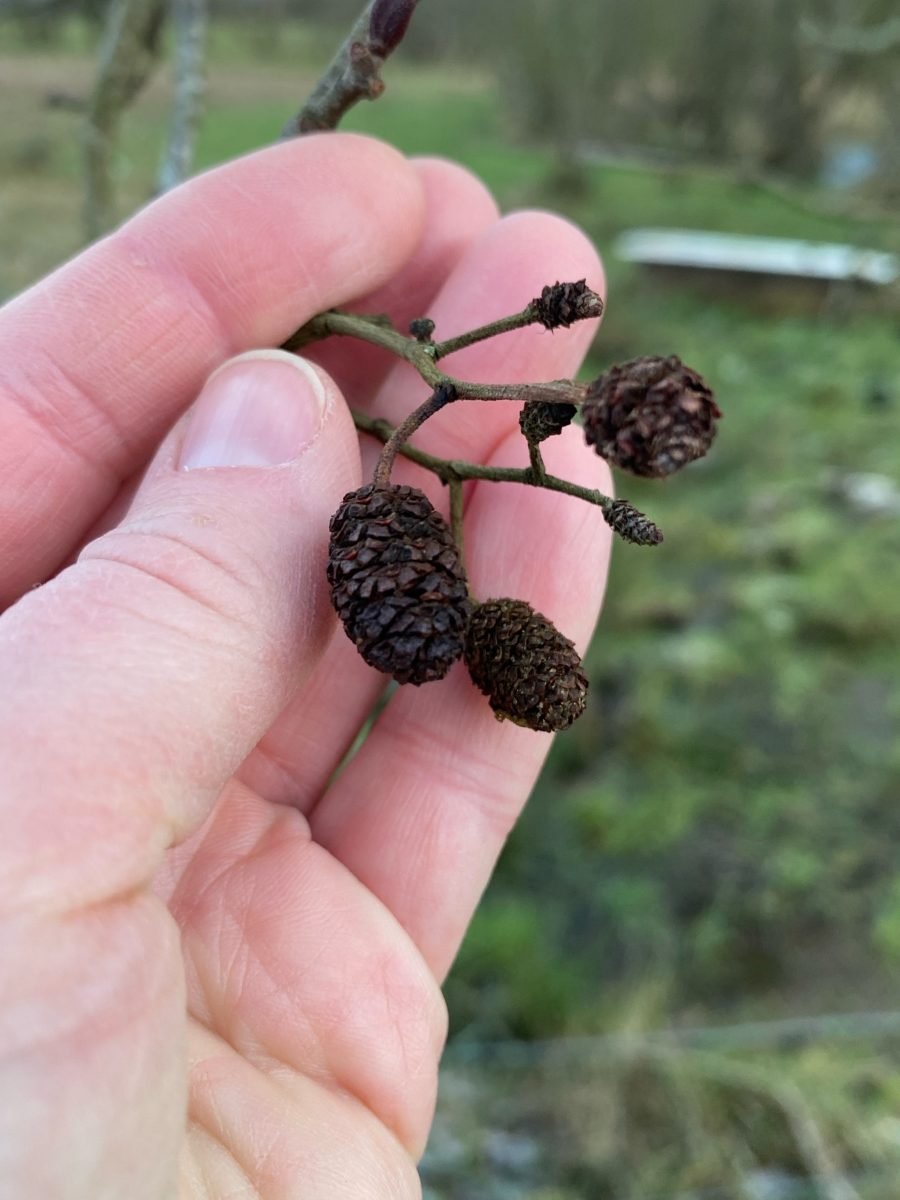
Sow seed from the small woody cones in autumn. Hardwood cuttings are also possible but less reliable.
Pests and diseases
Alder leaf beetle causes conspicuous leaf damage without lasting harm. Phytophthora root disease affects alders along watercourses and causes dieback and dark bleeding at the base of the trunk.
Value to wildlife
Excellent for wildlife: siskins and redpolls feed on the seed through winter, and the submerged roots shelter fish and invertebrates in streams and pond margins.
Notes
Catkins in late winter are the main ornamental feature, well before most trees are in leaf. It is short-lived by tree standards and grows fast, so it establishes a wet-ground planting quickly.
Some structured details on this page (such as tolerances, pH and hardiness) come from USDA PLANTS Database (public domain). The written guidance is GardenDecoded's own, researched as described in our editorial policy.
Other names for this plant
These names have all been used for Alnus glutinosa but are no longer the accepted name. You may still meet them on old labels, in books, or in nursery catalogues.
Alnus aurea
Alnus emarginata
Alnus glutinosa f. aurea
Alnus glutinosa f. imperialis
Alnus glutinosa f. incisa
Alnus glutinosa f. laciniata
Alnus glutinosa f. longipediculata
Alnus glutinosa f. parvifolia
Alnus glutinosa f. quercifolia
Alnus glutinosa f. quercifolia
Alnus glutinosa var. vulgaris
Alnus imperialis
Alnus vulgaris
Betula alnus subsp. glutinosa
Betula alnus var. glutinosa
Betula glutinosa
Others in Alnus
GardenDecoded is an educational gardening reference. Botanical data comes from World Flora Online and GBIF; growing guidance is our own. Always check a plant's toxicity and local invasiveness status before planting, and never eat or apply a plant based on this site alone.