Ajuga × adulterina
Common Bugle
Ajuga reptans
L. Species




- Botanical name
- Ajuga reptans
- Also known as
- Ajuga, Blue Bugle, Bugle, Bugleherb, Bugleweed, Carpet Bugle, Carpet Bugleweed, Common Bugle, Creeping Bugle, Creeping Bugleweed
- Family
- Lamiaceae
- Genus
- Ajuga
- Flowering period
- April to June
- Height
- 10–20 cm
- Spread
- 45–90 cm
- Hardiness
- Fully hardy (RHS H7)
- Reference
- World Flora Online
How to grow Common Bugle
Partial shade to full sun
Moderate; keep moist in sun
Moist but not waterlogged, reasonably fertile
Acid, neutral or alkaline
Planting
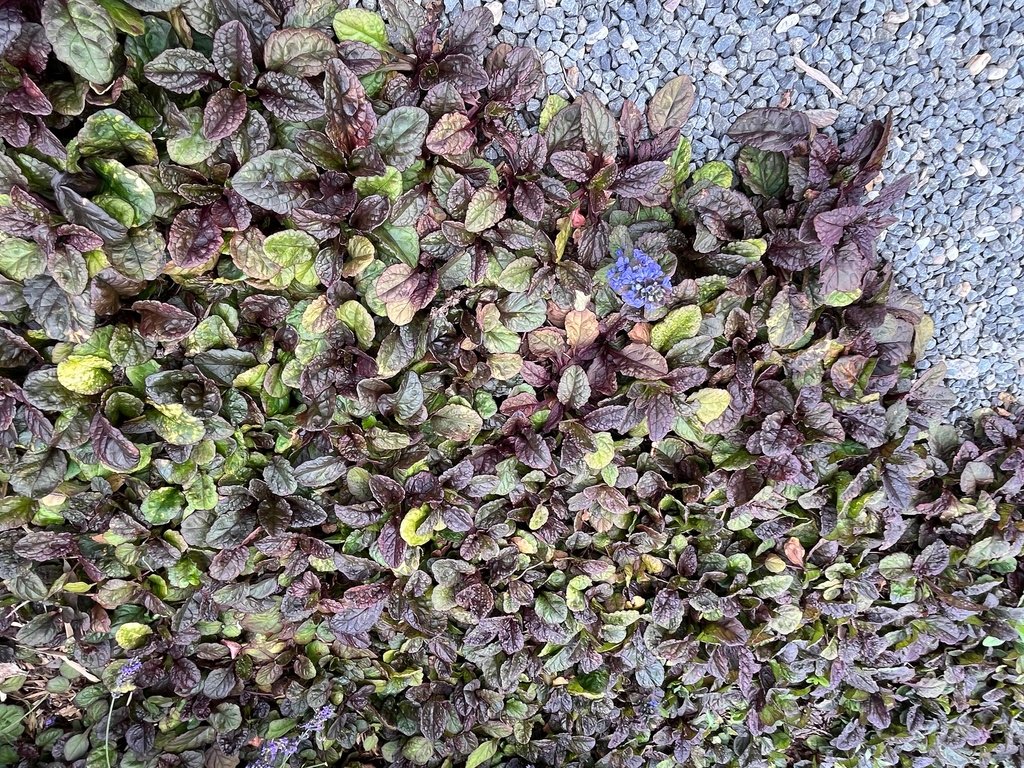
Plant in spring or autumn about 30 cm apart as ground cover; it will knit together within a season by running surface stolons. It is happiest in damp partial shade, and in full sun it needs consistently moist soil or the foliage scorches. The dark-leaved forms hold their colour best with a few hours of direct light.
Pruning
Shear off the spent flower spikes after blooming to keep the mat neat. Pull up runners that have travelled where you do not want them, which is easy work as they root only shallowly.
Propagation
Simply detach rooted runners at almost any point in the growing season and replant them. This is one of the easiest perennials to increase.
Pests and diseases
Powdery mildew in dry conditions, and crown rot in heavy waterlogged soil. Slugs and vine weevil sometimes damage plants in containers.
Value to wildlife
One of the more valuable spring ground covers for bees, particularly bumblebees and the early solitary species, and it flowers when little else at ground level does.
Notes
It spreads. In a mixed border it will creep into neighbouring plants, so use it under shrubs, along path edges or anywhere a running carpet is the point rather than a problem.
Some structured details on this page (such as tolerances, pH and hardiness) come from USDA PLANTS Database (public domain). The written guidance is GardenDecoded's own, researched as described in our editorial policy.
Other names for this plant
These names have all been used for Ajuga reptans but are no longer the accepted name. You may still meet them on old labels, in books, or in nursery catalogues.
Ajuga abnormis
Ajuga alpina
Ajuga barrelieri
Ajuga breviproles
Ajuga candolleana
Ajuga densiflora
Ajuga nanti
Ajuga pyramidalis
Ajuga repens
Ajuga reptans subvar. densiflora
Ajuga reptans var. alba
Ajuga reptans var. albiflora
Ajuga reptans var. alpina
Ajuga reptans var. caerulea
Ajuga reptans var. lerezana
Ajuga reptans var. pyramidata
Ajuga reptans var. rubra
Ajuga stolonifera
Ajuga vulgaris
Ajuga vulgaris prol. candolleana
Ajuga vulgaris subsp. abnormis
Ajuga vulgaris subsp. nantii
Ajuga vulgaris subsp. reptans
Ajuga vulgaris var. bifera
Ajuga vulgaris var. breviproles
Ajuga vulgaris var. stolonifera
Bugula decumbens
Bugula reptans
Bugula reptans var. hirsuta
Teucrium reptans
Others in Ajuga
GardenDecoded is an educational gardening reference. Botanical data comes from World Flora Online and GBIF; growing guidance is our own. Always check a plant's toxicity and local invasiveness status before planting, and never eat or apply a plant based on this site alone.