Acer × koenighoferae
Japanese Maple
Acer palmatum
Thunb. Species
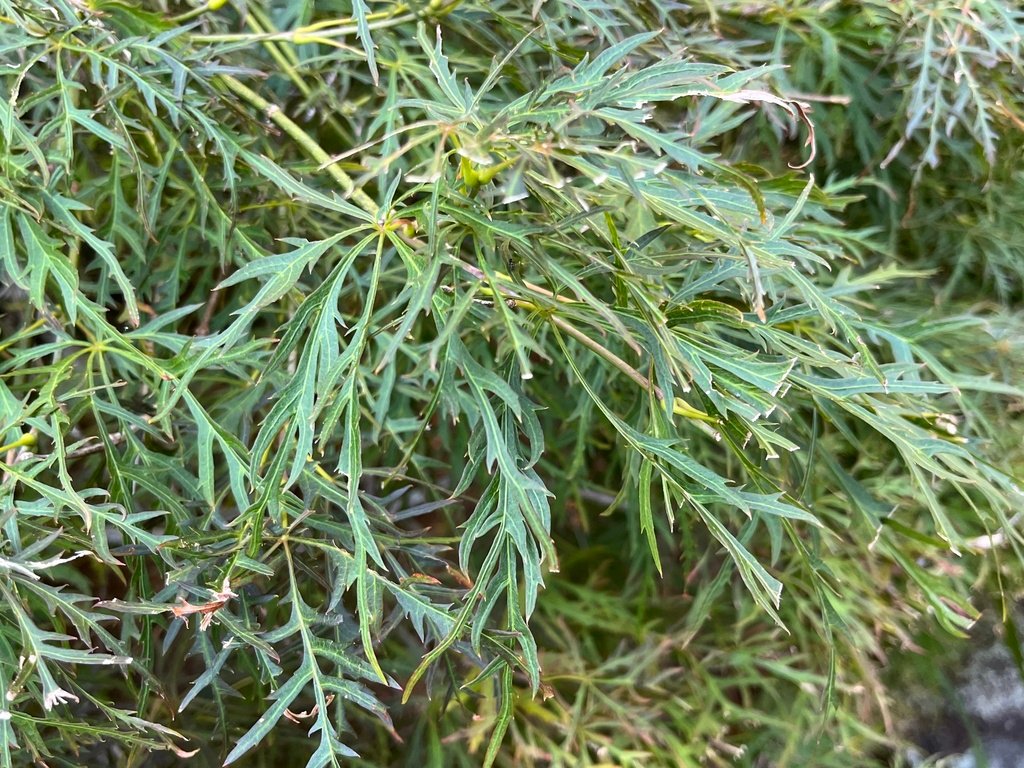


- Botanical name
- Acer palmatum
- Also known as
- Japanese Maple, Japanese-Maple, Purple Japanese-Maple, Smooth Japanese Maple, Smooth Japanese-Maple
- Family
- Sapindaceae
- Genus
- Acer
- Flowering period
- April to May
- Height
- 3–8 m
- Spread
- 3–6 m
- Hardiness
- Fully hardy (RHS H6)
- Reference
- World Flora Online
How to grow Japanese Maple
Dappled shade or morning sun; shelter from midday sun
Moderate; keep the root zone evenly moist, especially in containers
Moist, humus-rich, well-drained
Acid to neutral
Planting
Site is everything with this plant. Give it shelter from cold spring winds, which brown the emerging leaves, and from hot afternoon sun, which scorches the margins later on. Mulch with leaf mould or composted bark and avoid disturbing the shallow roots.
Pruning
Prune as little as possible, and only in late summer or autumn to avoid bleeding. Restrict cuts to removing dead, crossing or badly placed branches; the natural layered shape is the point of the tree.
Propagation
Seed of the species germinates after cold stratification, but seedlings vary. Named cultivars are grafted, which is not straightforward for an amateur.
Pests and diseases
Verticillium wilt is the serious one, causing sudden branch dieback with staining in the wood; there is no cure and infected soil should not be replanted with maples. Aphids and scale insects are common but minor.
Value to wildlife
Limited direct value to UK wildlife, though the dense canopy gives shelter and nesting cover.
Notes
Grows well in a large container if watered consistently and repotted every few years. The finely dissected forms are the most easily scorched and want the most sheltered positions.
This guidance was researched and written by GardenDecoded — see our editorial policy for how guides are checked and reviewed.
Other names for this plant
These names have all been used for Acer palmatum but are no longer the accepted name. You may still meet them on old labels, in books, or in nursery catalogues.
Acer decompositum
Acer formosum
Acer friederici-guillelmii
Acer incisum
Acer jucundum
Acer ornatum
Acer palmatum f. albomarginatum
Acer palmatum f. albovariegatum
Acer palmatum f. argenteomarginatum
Acer palmatum f. atrolineare
Acer palmatum f. atropurpureum
Acer palmatum f. aureum
Acer palmatum f. bicolor
Acer palmatum f. brevilobum
Acer palmatum f. caudatum
Acer palmatum f. crispum
Acer palmatum f. cuneatum
Acer palmatum f. elegans
Acer palmatum f. elegans-purpureum
Acer palmatum f. flavescens
Acer palmatum f. friederici-guillelmii
Acer palmatum f. hessei
Acer palmatum f. laciniatum
Acer palmatum f. latifolium-atropurpureum
Acer palmatum f. latilobum
Acer palmatum f. lineare
Acer palmatum f. linearilobum
Acer palmatum f. linearilobum-atropurpureum
Acer palmatum f. lobatum
Acer palmatum f. luteoflorum
Acer palmatum f. minor
Acer palmatum f. nicholsonii
Acer palmatum f. ornatum
Acer palmatum f. polychromum
Acer palmatum f. reticulatum
Acer palmatum f. rhodoneurum
Acer palmatum f. rhodophyllum
Acer palmatum f. roseomarginatum
Acer palmatum f. rubellum
Acer palmatum f. rubrolatifolium
Acer palmatum f. rubrum
Acer palmatum f. rufinerve
Acer palmatum f. sanguineum
Acer palmatum f. scolopendrifolium
Acer palmatum f. sessilifolium
Acer palmatum f. sinuatum
Acer palmatum f. tricolor
Acer palmatum f. van-houttei
Acer palmatum f. variegatum
Acer palmatum f. versicolor
Acer palmatum f. volubile
Acer palmatum var. amoenum
Acer palmatum var. crispum
Acer palmatum var. dissectum
Acer palmatum var. linearilobum
Acer palmatum var. linearilobum
Acer palmatum var. multifidum
Acer palmatum var. ornatum
Acer palmatum var. palmatum
Acer palmatum var. sessilifolium
Others in Acer
GardenDecoded is an educational gardening reference. Botanical data comes from World Flora Online and GBIF; growing guidance is our own. Always check a plant's toxicity and local invasiveness status before planting, and never eat or apply a plant based on this site alone.